
Introduction
As the global demand for renewable energy continues to rise, finding enough land for large-scale solar installations has become a growing challenge. At the same time, agriculture faces increasing pressure from climate change, water scarcity, and the need to produce more food for a growing population. Agrivoltaics
What if the same piece of land could generate clean electricity while producing crops?
This innovative concept is called agrivoltaics, a system that combines agriculture and solar energy production on the same land. By installing solar panels above crops, farmers can harvest sunlight twice—once for food production and once for electricity generation.
Agrivoltaics is rapidly gaining attention worldwide as a sustainable solution that improves land-use efficiency, boosts farm income, and supports renewable energy goals.
What Is Agrivoltaics?
Agrivoltaics (also known as agrophotovoltaics or dual-use solar farming) refers to the practice of using land simultaneously for agricultural production and solar power generation.
Unlike traditional solar farms that occupy farmland exclusively, agrivoltaic systems elevate or strategically space solar panels so crops, livestock, or other agricultural activities can continue underneath.
The goal is to maximize the productivity of every acre while reducing competition between food production and renewable energy development.
How Agrivoltaic Systems Work
Agrivoltaic installations are designed to allow sufficient sunlight to reach crops while capturing solar energy. Agrivoltaic Systems
Key Components
- Solar photovoltaic (PV) panels
- Elevated mounting structures
- Tracking systems (optional)
- Irrigation systems
- Crop management infrastructure
- Energy storage systems (optional)
Operating Principle
- Solar panels capture sunlight and generate electricity.
- Partial shade is created beneath the panels.
- Crops grow under controlled light conditions.
- Electricity is supplied to homes, businesses, or the power grid.
- Farmers earn revenue from both agriculture and energy production.
Types of Agrivoltaic Systems
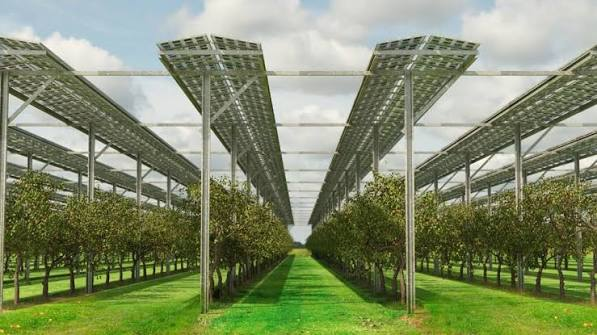
1. Elevated Solar Panels
Panels are mounted several meters above the ground, allowing tractors, machinery, and workers to operate beneath them.
Benefits:
- Supports large-scale farming
- Easy crop management
- Minimal disruption to existing operations
2. Vertical Solar Arrays
Panels are installed vertically with crops growing between rows.
Advantages:
- Reduced land coverage
- Better airflow
- Suitable for grazing livestock
3. Solar Greenhouses
Solar panels are integrated into greenhouse roofs.
Benefits:
- Controlled growing environments
- Additional energy generation
- Lower operational costs
4. Dynamic Agrivoltaics
Smart solar panels automatically adjust angles based on crop needs and sunlight conditions.
Advantages:
- Optimized crop growth
- Maximum electricity production
- Improved efficiency
Why Agrivoltaics Is Gaining Global Attention
Land availability is becoming one of the biggest challenges for renewable energy expansion.
Traditional solar farms often require large tracts of land that could otherwise be used for farming.
Agrivoltaics solves this problem by:
- Producing food and electricity simultaneously
- Reducing land-use conflicts
- Supporting climate adaptation
- Increasing rural economic opportunities
Research suggests agrivoltaic systems can improve land productivity significantly compared to using separate areas for agriculture and solar generation.
Benefits of Agrivoltaics for Farmers
Additional Income Source
Farmers can earn money through:
- Crop sales
- Solar electricity generation
- Leasing land to solar developers
- Renewable energy incentives
This diversified income reduces financial risks associated with weather fluctuations and market volatility.
Reduced Water Usage
Solar panels create partial shade that:
- Lowers soil temperatures
- Reduces evaporation
- Conserves moisture
Studies show some crops require substantially less irrigation under agrivoltaic systems.
Protection Against Extreme Weather
Panels can provide protection from:
- Excessive heat
- Hailstorms
- Heavy rainfall
- Drought conditions
This protection can improve crop resilience and reduce losses.
Improved Soil Health
Lower temperatures and increased moisture retention can support healthier soil ecosystems and beneficial microorganisms.
Crop Performance Under Solar Panels
One of the biggest concerns is whether crops can grow successfully beneath solar arrays.
Research shows that many crops perform surprisingly well under partial shading.
Crops That Thrive in Agrivoltaic Systems
Leafy Greens
- Lettuce
- Spinach
- Kale
- Swiss chard
These crops often benefit from reduced heat stress.
Vegetables
- Tomatoes
- Peppers
- Cucumbers
- Potatoes
Moderate shading can improve yields in hot climates.
Fruits
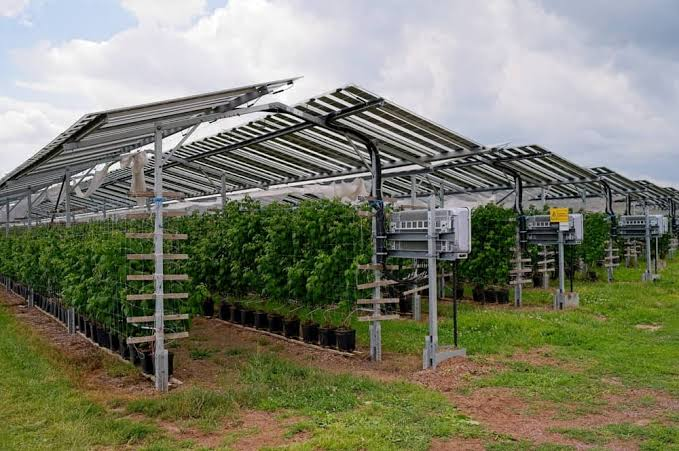
- Strawberries
- Blueberries
- Raspberries
Certain berry crops perform well under filtered sunlight.
Herbs
- Basil
- Mint
- Cilantro
- Parsley
Herbs often maintain quality while using less water.
Livestock Integration
Agrivoltaics isn’t limited to crops.
Animals can graze beneath solar panels, including:
- Sheep
- Goats
- Chickens
This approach reduces vegetation management costs while generating agricultural income.
Environmental Benefits
Increased Renewable Energy Production
Agrivoltaics helps accelerate clean energy deployment without sacrificing farmland.
Lower Carbon Emissions
Solar-generated electricity reduces dependence on fossil fuels and lowers greenhouse gas emissions.
Water Conservation
Shaded conditions can reduce irrigation requirements significantly in dry regions.
Biodiversity Enhancement
Pollinator-friendly vegetation around solar farms can support:
- Bees
- Butterflies
- Beneficial insects
Reduced Land Conversion
Dual-use systems decrease the need to clear additional land for renewable energy projects.
Economic Advantages
Higher Land Productivity
Agrivoltaics allows a single piece of land to produce:
- Food
- Electricity
- Environmental benefits
This increases overall economic value per acre.
Stable Long-Term Revenue
Electricity generation provides predictable income over the lifespan of the solar installation.
Reduced Operating Costs
Benefits include:
- Lower irrigation expenses
- Reduced heat-related crop losses
- Less vegetation maintenance
Rural Development
Agrivoltaic projects create jobs in:
- Construction
- Maintenance
- Agriculture
- Energy management
Global Adoption of Agrivoltaics
Germany
Germany pioneered many agrivoltaic research projects and commercial deployments.
France
French companies have developed advanced solar tracking systems specifically designed for crop optimization.
Japan
Limited farmland has encouraged Japan to become one of the earliest adopters of agrivoltaics.
United States
Agrivoltaic projects are expanding rapidly across states including:
- Arizona
- Colorado
- California
- Massachusetts
India
India has significant agrivoltaic potential due to:
- Large agricultural sector
- High solar radiation
- Growing energy demand
Several pilot projects are exploring solar-powered agriculture combined with crop production.
China
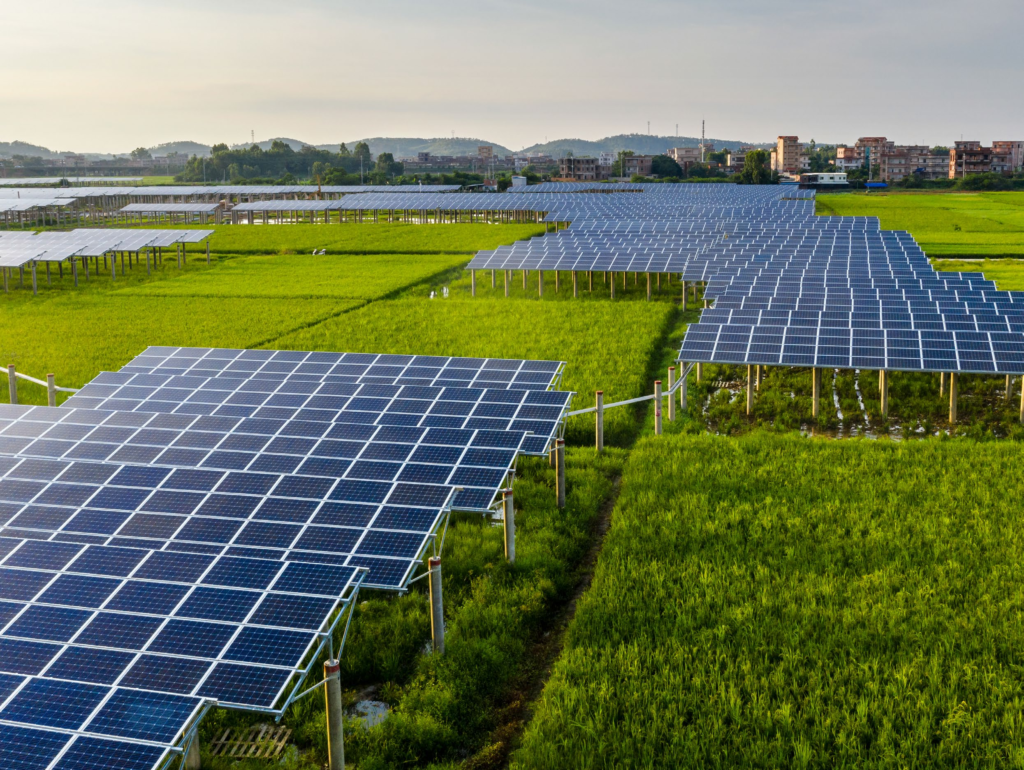
China is deploying large-scale agrivoltaic systems as part of its renewable energy transition strategy.
Challenges and Limitations
Despite its promise, agrivoltaics faces several obstacles.
Higher Installation Costs
Elevated structures and specialized designs cost more than traditional solar farms.
Complex System Design
Different crops require varying amounts of sunlight, making optimization challenging.
Agricultural Machinery Constraints
Farm equipment must be compatible with panel layouts and support structures.
Regulatory Issues
Many regions lack clear policies governing dual-use land systems.
Knowledge Gaps
Farmers and developers need training to effectively manage integrated operations.
Future of Agrivoltaics
Experts believe agrivoltaics could become a major component of future energy and agricultural systems.
Emerging technologies include:
- AI-powered solar tracking
- Smart irrigation integration
- Advanced crop monitoring
- High-efficiency bifacial solar panels
- Automated farm management systems
As solar costs continue to decline and climate challenges intensify, agrivoltaics may become one of the most effective ways to maximize land productivity.
Agrivoltaics vs Traditional Solar Farms
| Feature | Agrivoltaics | Traditional Solar Farm |
|---|---|---|
| Electricity Production | Yes | Yes |
| Crop Production | Yes | No |
| Water Conservation | High | Limited |
| Land Efficiency | Very High | Moderate |
| Farm Income | Multiple Sources | Single Source |
| Climate Resilience | Higher | Lower |
Conclusion
Agrivoltaics represents a powerful solution to two of humanity’s greatest challenges: producing enough food and generating enough clean energy. By combining solar power generation with agriculture on the same land, farmers can increase profitability, conserve water, improve resilience to climate change, and contribute to a cleaner energy future.
As governments, researchers, and farmers continue to invest in dual-use land systems, agrivoltaics is poised to play a major role in sustainable development worldwide. The ability to harvest both sunlight and crops from the same field could transform agriculture and renewable energy for decades to come.