Introduction
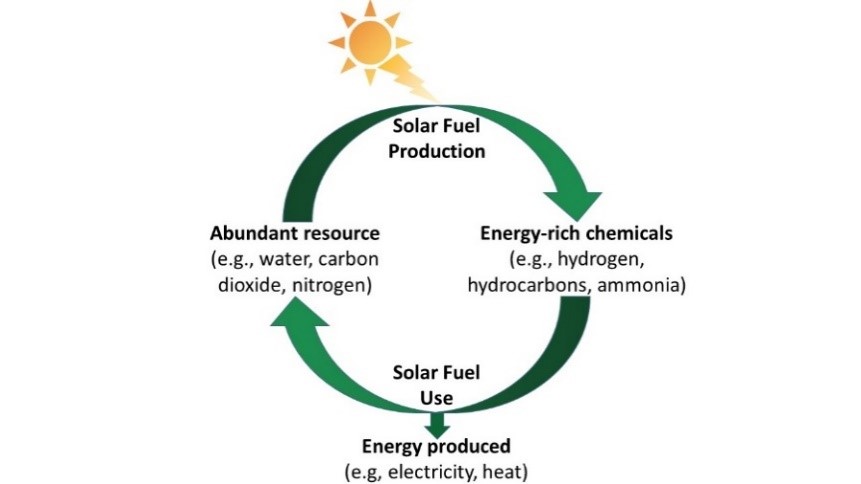
As the world searches for sustainable alternatives to fossil fuels, artificial photosynthesis has emerged as one of the most exciting clean energy technologies. Inspired by the natural process used by plants, scientists are developing systems that capture sunlight and convert water and carbon dioxide into clean fuels such as hydrogen, methanol, and synthetic hydrocarbons.
Unlike conventional solar panels that generate electricity, artificial photosynthesis stores solar energy directly in chemical bonds, creating fuels that can be transported, stored, and used whenever needed. If successfully commercialized, this technology could play a major role in achieving global net-zero emissions while reducing dependence on fossil fuels.
What Is Artificial Photosynthesis?
Artificial photosynthesis is a technology that mimics the natural process of photosynthesis but uses engineered materials instead of living plants.
Natural plants convert:
- Sunlight
- Water (H₂O)
- Carbon dioxide (CO₂)
into:
- Oxygen (O₂)
- Glucose (chemical energy)
Artificial systems instead produce:
- Green hydrogen
- Carbon-neutral fuels
- Synthetic gasoline
- Methanol
- Ammonia
- Other industrial chemicals
The goal is to create renewable fuels using nothing more than sunlight, water, and atmospheric CO₂.
Plants perform photosynthesis through chlorophyll molecules inside chloroplasts.
The simplified reaction is:
6CO₂ + 6H₂O + Sunlight → C₆H₁₂O₆ + 6O₂
This process stores solar energy in glucose molecules.
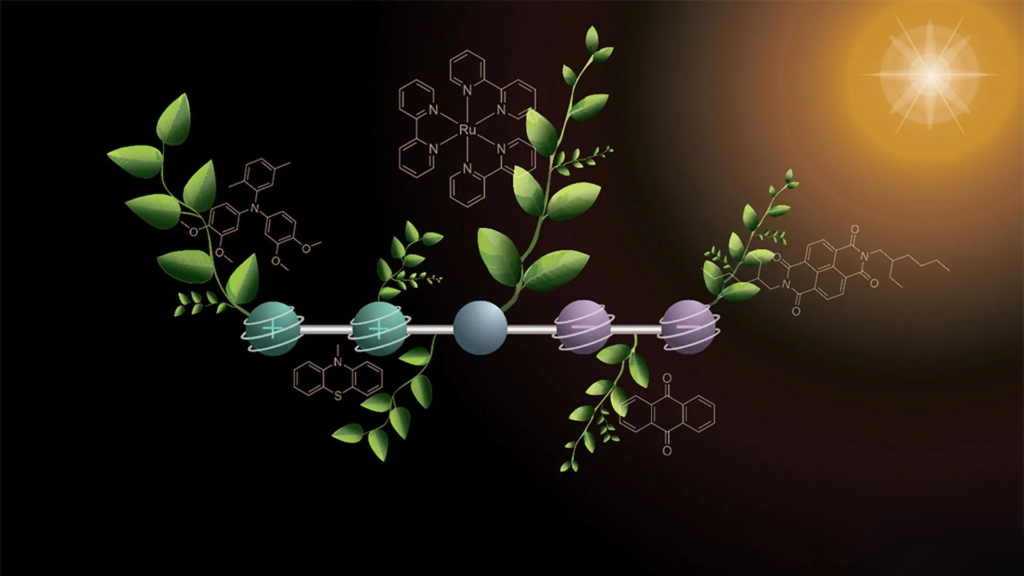
Scientists are attempting to replace chlorophyll with advanced semiconductors and catalysts that create usable fuels instead of sugars.
How Artificial Photosynthesis Works
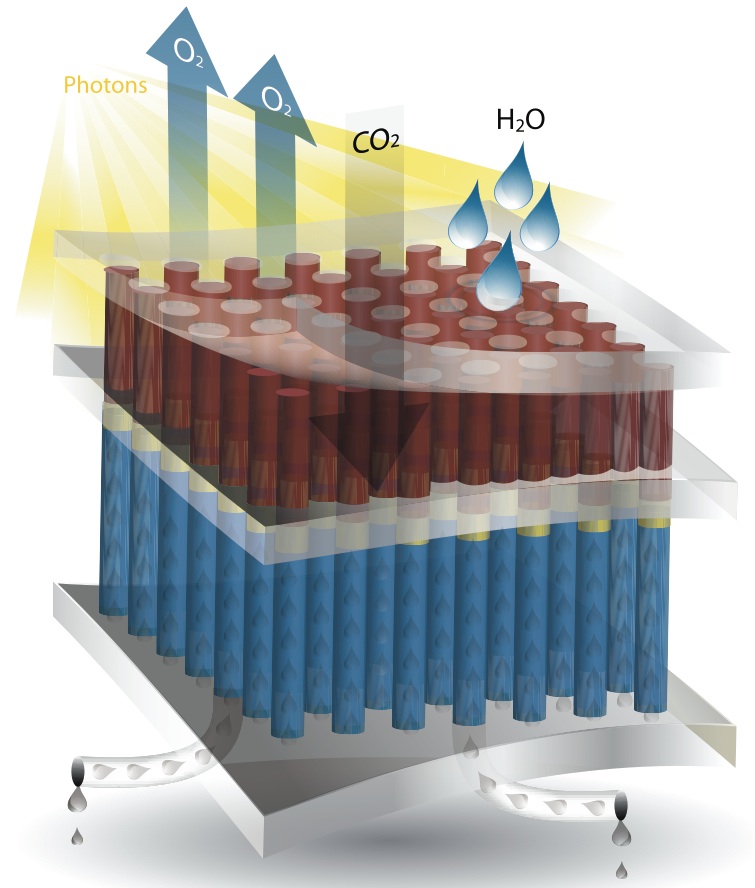
Artificial photosynthesis generally follows four major steps.
Step 1: Sunlight Capture
Solar absorbers collect sunlight using materials such as:
- Silicon
- Perovskites
- Metal oxides
- Gallium nitride
- Titanium dioxide
These materials absorb photons and generate electrical charges.
Step 2: Water Splitting
The generated energy separates water into:
- Hydrogen
- Oxygen
Reaction:
2H₂O → 2H₂ + O₂
Hydrogen becomes a clean fuel with zero carbon emissions during use.
Step 3: CO₂ Capture
Carbon dioxide is collected from:
- Air
- Industrial exhaust
- Power plants
- Cement factories
The captured CO₂ becomes the carbon source for synthetic fuels.
Step 4: Fuel Production
Catalysts combine hydrogen and CO₂ to produce fuels such as:
- Methanol
- Ethanol
- Synthetic diesel
- Aviation fuel
- Methane
- Ammonia
These fuels can be stored for months or transported worldwide.
Main Components of an Artificial Photosynthesis System
| Component | Purpose |
|---|---|
| Solar absorber | Captures sunlight |
| Catalyst | Drives chemical reactions |
| Water oxidation catalyst | Produces oxygen |
| Hydrogen evolution catalyst | Produces hydrogen |
| CO₂ reduction catalyst | Creates carbon-based fuels |
| Reactor | Controls the overall chemical process |
Types of Artificial Photosynthesis Technologies
1. Photoelectrochemical (PEC) Cells
These devices resemble solar panels but perform chemical reactions instead of producing electricity.
Advantages:
- High efficiency
- Direct hydrogen production
- Minimal moving parts
Challenges:
- Expensive materials
- Catalyst degradation
2. Photocatalytic Systems
Powder catalysts suspended in water absorb sunlight and generate fuels.
Advantages:
- Low-cost design
- Simple manufacturing
- Scalable
Challenges:
- Lower efficiency
- Difficult product separation
3. Electrochemical CO₂ Reduction
Solar electricity powers reactors that convert CO₂ into fuels.
Produces:
- Carbon monoxide
- Methanol
- Ethylene
- Formic acid
This approach combines solar power with advanced chemistry.
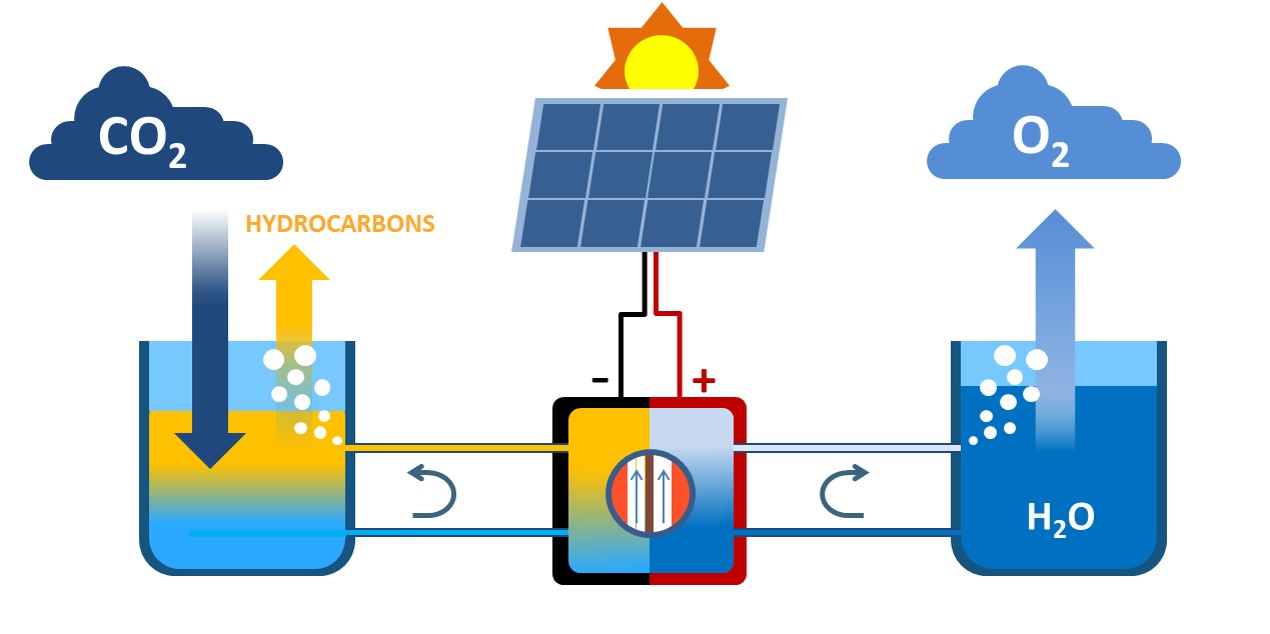
4. Hybrid Artificial Photosynthesis
Hybrid systems combine:
- Solar panels
- Electrolyzers
- CO₂ capture
- Fuel synthesis
Many experts believe hybrid systems may reach commercialization first because they use existing renewable energy technologies.
Scientific Breakthroughs
Artificial photosynthesis has seen major progress over the past decade.
Improved Catalysts
Researchers have developed catalysts using:
- Nickel
- Iron
- Cobalt
- Copper
- Molybdenum
These reduce dependence on expensive precious metals like platinum.
Better Light Absorbers
Modern materials include:
- Perovskites
- Silicon tandem cells
- Quantum dots
These absorb more sunlight and improve overall efficiency.
Higher Solar-to-Fuel Efficiency

Early systems achieved less than 1% efficiency.
Modern laboratory systems have reached over 15% solar-to-fuel efficiency, with ongoing research targeting even higher performance.
Longer Operating Lifetimes
New protective coatings help catalysts resist corrosion, allowing systems to operate for longer periods with less performance loss.
Clean Fuels Produced
Green Hydrogen
The simplest product.
Applications:
- Fuel-cell vehicles
- Industrial heat
- Steel manufacturing
- Fertilizer production
Methanol
Used for:
- Shipping fuel
- Chemical manufacturing
- Fuel blending
Synthetic Gasoline
Carbon-neutral fuels compatible with today’s internal combustion engines.
Sustainable Aviation Fuel
One of the most promising markets because aviation is difficult to electrify.
Green Ammonia
Created using hydrogen produced by artificial photosynthesis.
Applications include:
- Fertilizers
- Marine shipping
- Long-term energy storage
Advantages of Artificial Photosynthesis
Carbon-Neutral Fuel Production
The process uses CO₂ as a feedstock, helping recycle carbon instead of extracting new fossil fuels.
Energy Storage
Chemical fuels can store solar energy for long periods without the limitations of batteries.
Uses Existing Infrastructure
Many synthetic fuels can be transported through current pipelines, storage tanks, and fueling stations.
Supports Hard-to-Electrify Sectors
Industries such as aviation, shipping, heavy manufacturing, and long-haul transport could benefit significantly.
Reduced Fossil Fuel Dependence
Countries with abundant sunlight could produce their own renewable fuels, improving energy security.
Current Challenges
High Cost
Artificial photosynthesis systems remain expensive due to advanced materials and manufacturing.
Low Large-Scale Efficiency
Laboratory efficiencies are promising, but maintaining high performance in commercial systems is difficult.
Catalyst Durability
Many catalysts degrade after prolonged exposure to sunlight and water.
Scaling Up
Building reactors capable of producing fuels on an industrial scale is still a major engineering challenge.
CO₂ Supply
Reliable and affordable carbon dioxide capture remains an important requirement.
Commercial Potential
Artificial photosynthesis has significant opportunities across multiple industries.
| Industry | Opportunity |
|---|---|
| Aviation | Sustainable aviation fuel |
| Shipping | Green methanol and ammonia |
| Chemical manufacturing | Renewable feedstocks |
| Steel | Green hydrogen |
| Power generation | Long-duration fuel storage |
| Transportation | Synthetic liquid fuels |
Companies and Research Organizations
Several organizations are actively advancing artificial photosynthesis technologies, including:
- The Joint Center for Artificial Photosynthesis
- California Institute of Technology
- University of Cambridge
- National Renewable Energy Laboratory
- Max Planck Society
Many startups are also exploring commercial systems for solar hydrogen and carbon-neutral fuel production.
Future Outlook
Researchers expect artificial photosynthesis to become increasingly efficient and affordable over the coming decades. Future developments may include:
- Commercial solar fuel plants
- Large-scale green hydrogen production
- Low-cost CO₂ conversion systems
- Carbon-neutral aviation fuels
- Solar-powered chemical manufacturing
- Integration with direct air carbon capture
If technical and economic barriers continue to fall, artificial photosynthesis could become a cornerstone of a global clean energy economy.
Frequently Asked Questions (FAQs)
Is artificial photosynthesis the same as solar panels?
No. Solar panels produce electricity, while artificial photosynthesis converts sunlight into chemical fuels that can be stored and transported.
What fuel is most commonly produced?
Green hydrogen is currently the primary target, though researchers are also developing methanol, ammonia, and synthetic hydrocarbons.
Is the technology commercially available?
Most systems are still in the research or pilot stage, with limited commercial deployment.
Why is artificial photosynthesis important?
It offers a way to store renewable energy in fuel form while recycling carbon dioxide, making it especially valuable for sectors that are difficult to electrify.
Can it help reduce climate change?
Potentially yes. By using sunlight, water, and captured CO₂ to produce low-carbon fuels, artificial photosynthesis could reduce greenhouse gas emissions and support global decarbonization efforts.