
Introduction
The solid state battery has become one of the most closely watched technologies in the race to build better electric vehicles and energy-storage systems.
The basic idea sounds simple: replace the liquid electrolyte found in conventional lithium-ion batteries with a solid material that can transport lithium ions. That seemingly small change could unlock batteries with higher energy density, improved safety, longer life and potentially much faster charging.
But there is an important catch.
Solid-state batteries have been discussed for years, yet they still haven’t replaced conventional lithium-ion batteries in mainstream cars. The reason is not that scientists have failed to make them work. The bigger challenge is making them reliable, affordable and manufacturable at enormous scale.
In 2026, the technology is moving from laboratory demonstrations toward early commercial applications. Electric motorcycles are among the first potential real-world uses, while companies including Toyota and QuantumScape are pushing toward automotive commercialization. The International Energy Agency says all-solid-state batteries are still largely at the prototype stage, with manufacturing remaining more complex and expensive than conventional lithium-ion production. (IEA)
So, is the solid-state battery finally ready?
Partly — but not yet for everyone.
What Is a Solid-State Battery?
A solid-state battery is a rechargeable battery that uses a solid electrolyte instead of the liquid electrolyte used in conventional lithium-ion cells.
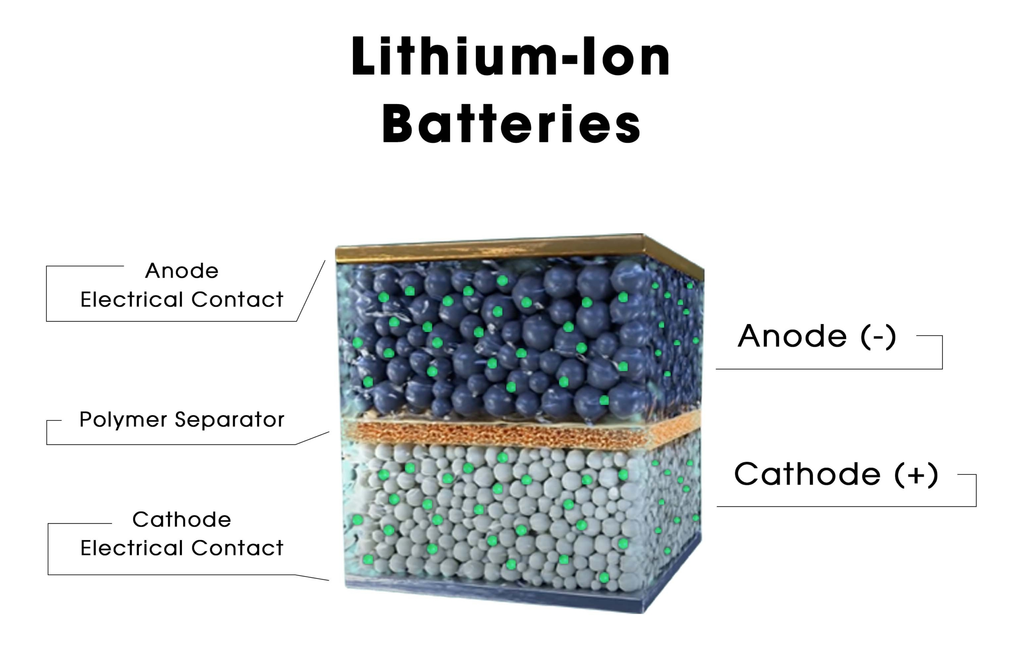
A simplified lithium-ion battery contains:
- Cathode
- Anode
- Liquid electrolyte
- Separator
- Current collectors
During charging and discharging, lithium ions move through the electrolyte between the cathode and anode.
In a solid-state battery, the electrolyte is replaced by a solid ion-conducting material.
Possible solid electrolyte families include:
- Sulfide-based materials
- Oxide-based ceramics
- Polymer electrolytes
- Composite electrolytes
The exact chemistry varies considerably between companies. That’s important because “solid-state battery” isn’t one single technology.
Some designs still contain small amounts of liquid electrolyte, while so-called all-solid-state batteries aim to eliminate liquid electrolyte entirely. The IEA distinguishes between these different categories and notes that semi-solid approaches are already commercial in some applications, while all-solid-state designs remain much earlier in development. (IEA)
How Does a Solid-State Battery Work?
The basic principle is similar to a conventional lithium-ion battery.
During charging:
Lithium ions → move through the electrolyte → toward the anode
During discharge:
Lithium ions → move back toward the cathode → generating electrical energy
The major difference is the material through which those ions travel.
A solid electrolyte can potentially enable the use of a lithium-metal anode. Lithium metal can store substantially more lithium per unit mass than the graphite anodes commonly used in today’s batteries.
That creates one of the biggest attractions of solid-state technology:
More energy in less space
A battery with higher energy density could potentially give an EV:
- More driving range
- A smaller battery pack
- Lower vehicle weight
- More cabin or cargo space
- Faster charging potential
- Better performance
However, these advantages should be treated as potential rather than guaranteed improvements. Real-world battery performance depends on the complete cell, pack, cooling system, manufacturing process and vehicle architecture.
Solid State vs Lithium Ion: What’s the Difference?
| Feature | Conventional Lithium-Ion | Solid-State Battery |
|---|---|---|
| Electrolyte | Liquid | Solid |
| Energy density | High | Potentially much higher |
| Safety | Good with sophisticated controls | Potentially improved |
| Fast charging | Increasingly fast | Potentially very fast |
| Manufacturing | Highly mature | Still developing |
| Production cost | Relatively low | Currently high |
| Supply chain | Established | Developing |
| Commercial availability | Massive scale | Limited/early stage |
| Lithium-metal anode | Generally not used | Potentially possible |
| EV adoption | Mainstream | Early stage |
The important point is that today’s lithium-ion batteries are not standing still.
Lithium-ion technology continues to improve through better cathodes, silicon-containing anodes, cell-to-pack designs, manufacturing improvements and better thermal management.
That means solid-state batteries aren’t competing against the lithium-ion technology of ten years ago. They’re competing against a battery industry that is becoming increasingly sophisticated.
Why Are Solid-State Batteries So Promising?
1. Higher Energy Density
The biggest reason automakers are interested in solid-state batteries is energy density.
Using a solid electrolyte can enable battery architectures based on lithium-metal anodes. Eliminating some of the inactive materials found in conventional cells could also improve the proportion of a battery devoted to storing energy.
For an EV, that could mean:
Same battery size → more range
or
Same range → smaller and lighter battery
The second possibility could be just as important as achieving enormous driving ranges.
A lighter battery means the vehicle doesn’t have to carry as much mass, which can improve efficiency.
2. Potentially Better Safety
Conventional lithium-ion batteries use flammable organic liquid electrolytes.
Modern lithium-ion battery packs include extensive safety systems, thermal management, sensors and battery-management software. They are generally very safe when properly designed.
Nevertheless, removing flammable liquid electrolyte could potentially reduce certain fire risks.
That does not mean solid-state batteries are completely fireproof.
They can still experience:
- Short circuits
- Mechanical damage
- Material degradation
- Thermal problems
- Manufacturing defects
The safety advantage therefore depends on the chemistry and complete battery design.
3. Faster Charging
Fast charging is another major reason for investment.
If solid-state cells can maintain low resistance while supporting high charging currents, they could potentially reduce charging times dramatically.
Toyota, for example, has described a target for its all-solid-state battery of charging from 10% to 80% in 10 minutes or less. (トヨタ自動車株式会社 公式企業サイト)
But charging speed isn’t determined by the cell alone.
The complete system also needs:
- High-power charging infrastructure
- Appropriate thermal management
- Battery-management controls
- Durable electrodes
- Electrical connections capable of handling high current
A theoretical 10-minute battery isn’t useful if the charging station cannot provide the required power.
The Biggest Problem: Manufacturing
This is where the solid-state battery story becomes much more complicated.
Making a small laboratory cell is very different from manufacturing millions of automotive cells every year.
A battery manufacturer has to achieve:
- Extremely consistent materials
- Precise layer thickness
- High production yields
- Low defect rates
- Long cycle life
- Reliable interfaces
- Low manufacturing costs
- High production speed
And all of this has to work repeatedly.
The Interface Problem
One of the most difficult problems is the interface between solid materials.
In a liquid-electrolyte battery, the liquid can naturally contact electrode surfaces.
With solid materials, maintaining good physical contact is much harder.
As the battery charges and discharges, materials expand, contract and experience mechanical stress.
Tiny gaps or cracks can increase resistance and reduce performance.
Research published in 2026 highlights several interconnected problems at solid-solid interfaces, including poor contact, chemical incompatibility, lithium penetration and mechanical degradation. (ScienceDirect)
This is one reason solid-state battery engineering is much more than simply replacing a liquid with a solid.
Pressure Is Another Challenge
Some solid-state battery designs require mechanical pressure to maintain good contact between their layers.
That’s manageable in a laboratory.
But imagine putting millions of cells into vehicles that must operate for years while experiencing:
- Heat
- Cold
- Vibration
- Acceleration
- Road impacts
- Thousands of charging cycles
The battery has to maintain its performance throughout that entire period.
The IEA specifically notes that integrating all-solid-state batteries into EV packs can involve stricter mechanical requirements, including higher operating pressure. (IEA)
Why Can’t We Just Build Them Like Lithium-Ion Batteries?
This is another misconception.
Solid-state manufacturers would obviously like to reuse existing lithium-ion manufacturing equipment wherever possible.
Some approaches are deliberately designed around existing battery-production processes.
QuantumScape, for example, says its manufacturing approach uses processes similar to conventional lithium-ion production in several areas, while introducing a proprietary solid separator and other changes. Its architecture also eliminates conventional anode manufacturing. (SEC)
But even when parts of the production line can be reused, manufacturers still need to solve problems involving:
- Ceramic or sulfide processing
- Layer uniformity
- Material handling
- Interface quality
- Production yield
- Defect detection
- Cell assembly
- Pressure management
- Quality control
Scaling all of those processes is expensive.
Solid-State Batteries in 2026: Where Are We Now?
2026 is an important year because solid-state batteries are moving beyond purely theoretical demonstrations.
But it would be inaccurate to say that solid-state batteries have suddenly become mainstream.
The IEA’s 2026 assessment is more cautious: all-solid-state batteries are being produced at small scale for testing, but their manufacturing remains more complicated and expensive than lithium-ion, while real-world advantages still need to be demonstrated at scale. (IEA)
There are nevertheless several significant developments.
The First Solid-State Electric Motorcycles
One of the most interesting developments is happening in electric motorcycles.
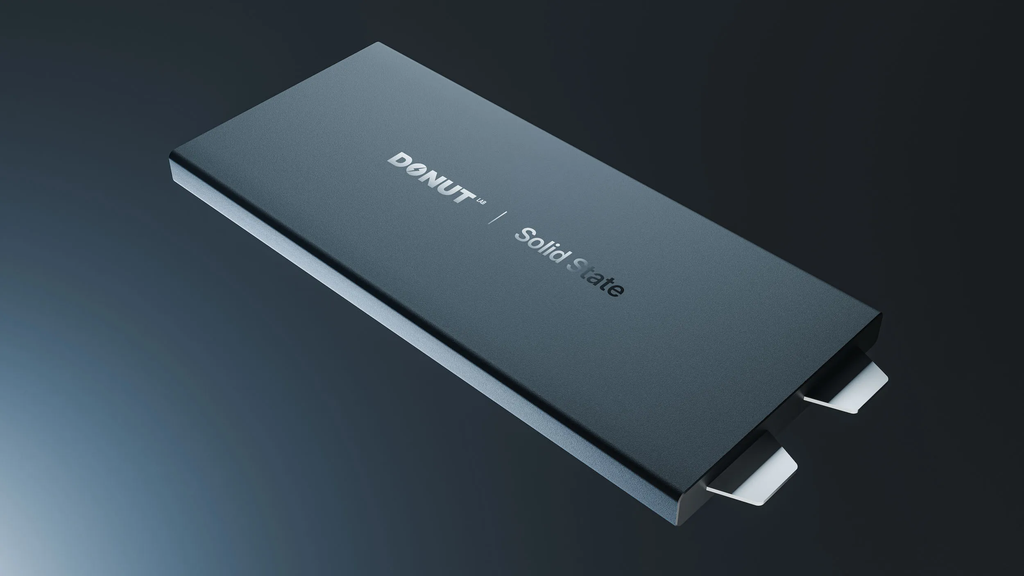
At CES 2026, Verge Motorcycles and Donut Lab presented a production-oriented electric motorcycle using a claimed solid-state battery.
IEEE Spectrum reported that the Verge TS Pro was expected to begin shipping with Donut Lab’s solid-state battery in the first quarter of 2026. (IEEE Spectrum)
Donut Lab itself describes its battery as an all-solid-state battery designed for OEM vehicle production and says it powers 2026 Verge motorcycles. (Donut Lab)
This could make motorcycles an interesting early market.
Why?
Because producing batteries for a relatively small number of motorcycles is much easier than immediately supplying batteries for hundreds of thousands or millions of cars.
Motorcycles can therefore serve as an early commercial proving ground.
However, claims about performance and commercial readiness still need to be evaluated through independent long-term testing.
Toyota’s Solid-State Battery Timeline
Toyota is one of the most closely watched companies in the solid-state battery race.
The company has been developing all-solid-state batteries for years and has repeatedly targeted 2027–2028 for commercialization.
Toyota is working with Idemitsu on sulfide solid electrolytes and mass-production technology. The two companies announced their collaboration with the goal of commercializing all-solid-state batteries for BEVs in 2027–28, followed by full-scale production. (トヨタ自動車株式会社 公式企業サイト)
Toyota has also been working on manufacturing processes, including high-speed, high-precision stacking of battery materials. (トヨタ自動車株式会社 公式企業サイト)
In 2025, Toyota announced another collaboration with Sumitomo Metal Mining focused on mass production of cathode materials for all-solid-state batteries. Toyota continued to target a 2027–28 market launch. (トヨタ自動車株式会社 公式企業サイト)
That doesn’t mean millions of affordable solid-state Toyota EVs will suddenly appear in 2028.
Early production is much more likely to be limited.
What About QuantumScape?
QuantumScape is pursuing a different solid-state lithium-metal battery approach and is another company frequently mentioned in discussions about the technology.
In February 2026, the company inaugurated its Eagle Line, a highly automated pilot production line designed to produce cells for customer sampling, testing and technology demonstrations. (QuantumScape)
QuantumScape’s roadmap lists 2026 as the year for a first customer launch, while its current strategy focuses on demonstrating scalable production and working with automotive partners. (QuantumScape)
The company also demonstrated its technology in a Ducati V21L electric motorcycle in 2025 with Volkswagen and PowerCo, showing that its battery technology had progressed beyond laboratory-only testing. (SEC)
In 2026, QuantumScape also announced a joint research agreement with Honda focused on advancing the battery platform and associated manufacturing processes. (QuantumScape)
The important distinction is:
Pilot production ≠ mass production.
An automated pilot line is an important milestone, but automotive-scale manufacturing requires another level of consistency, cost control and reliability.
Why Solid-State Batteries Are Taking So Long
There isn’t one single problem.
There are several.
1. Materials
The electrolyte needs high ionic conductivity while remaining stable against the electrodes.
2. Interfaces
Solid materials need to remain in close contact throughout thousands of charging cycles.
3. Durability
A battery that performs brilliantly for 100 cycles isn’t sufficient for an electric car expected to operate for many years.
4. Manufacturing
Factories need to produce cells quickly and consistently with high yields.
5. Cost
Early solid-state cells are expensive compared with mature lithium-ion cells.
6. Quality control
Tiny defects can have large consequences when manufacturers are producing huge numbers of cells.
7. Automotive qualification
Automakers need confidence that batteries will work safely across different temperatures, driving conditions and charging patterns for many years.
This is why laboratory breakthroughs don’t automatically become products.
Will Solid-State Batteries Replace Lithium-Ion?
Probably not immediately — and perhaps not completely.
Instead, the battery market is likely to become more diverse.
Lithium-ion technologies such as:
- LFP
- NMC
- High-nickel batteries
- Silicon-enhanced anodes
will continue improving.
Solid-state batteries could initially appear in:
- Premium EVs
- Performance vehicles
- Electric motorcycles
- Consumer electronics
- Robotics
- Aviation applications
- Specialized energy-storage systems
The IEA expects solid-state batteries to remain concentrated in premium applications for some time, with broader mass-market impact more likely into the early 2030s rather than immediately. (IEA)
What About Grid Storage?
This is where the story becomes particularly interesting.
At first glance, solid-state batteries seem perfect for grid storage because they could offer high energy density and improved safety.
But grid batteries have different priorities from EV batteries.
For stationary storage, developers often care more about:
- Cost per kWh
- Cycle life
- Reliability
- Safety
- Maintenance
- Availability of materials
- Duration of storage
Energy density is less important because a grid battery doesn’t need to fit inside a vehicle.
That creates a major challenge for solid-state batteries.
If a solid-state system costs significantly more than established lithium-ion or emerging long-duration technologies, its higher energy density may not justify the additional cost.
As a result, solid-state batteries may reach automotive and specialized markets before becoming a major grid-storage technology.
The Solid-State Battery Breakthrough We Actually Need
The biggest breakthrough isn’t necessarily a laboratory record.
It is manufacturing.
The industry needs to demonstrate that solid-state cells can be produced:
cheaply + consistently + safely + at high volume + for thousands of cycles
That’s a much harder achievement than producing a single impressive prototype.
A genuine commercial breakthrough would therefore involve improvements in:
- Manufacturing yield
- Production speed
- Material costs
- Interface durability
- Cycle life
- Charging performance
- Quality control
- Recycling
This is why 2026 should be viewed as a transition period, not the moment when solid-state batteries completely replace lithium-ion.
Solid-State Battery Pros and Cons
Advantages
- Higher potential energy density
- Potentially longer driving range
- Possibility of lithium-metal anodes
- Reduced reliance on flammable liquid electrolyte
- Potentially faster charging
- Potentially longer battery life
- More compact battery designs
- Strong potential for premium EVs
Disadvantages
- High production costs
- Difficult manufacturing
- Solid-solid interface problems
- Durability challenges
- Pressure requirements in some designs
- Limited large-scale production
- Immature supply chains
- Limited real-world fleet data
- Difficult integration into existing battery factories
When Will Solid-State Batteries Become Mainstream?
A realistic timeline looks something like this:
| Period | Likely Development |
|---|---|
| 2026 | Pilot production, demonstrations and early commercial applications |
| 2027–2028 | First major automotive launches targeted by companies such as Toyota |
| 2028–2030 | Larger-scale production and more premium EV applications |
| Early 2030s | Potentially broader automotive adoption |
| 2030s+ | Possibility of significant mainstream penetration if costs fall |
These dates aren’t guarantees.
Toyota’s stated target is 2027–28, while the IEA expects solid-state technology to remain limited largely to premium applications until the first half of the 2030s. (トヨタ自動車株式会社 公式企業サイト)
The actual pace will depend heavily on manufacturing success.
Are Solid-State Batteries Better Than Lithium-Ion?
Technically, they could be. Economically, not yet.
Solid-state batteries offer a compelling combination of potential advantages.
But lithium-ion has something solid-state batteries don’t yet have:
decades of manufacturing experience and enormous production scale.
The lithium-ion industry has spent years optimizing:
- Materials
- Factories
- Supply chains
- Cell designs
- Battery-management systems
- Recycling
- Quality control
Solid-state companies have to build much of that ecosystem while simultaneously solving difficult materials and manufacturing problems.
That’s why the transition is taking longer than early predictions suggested.
Frequently Asked Questions
What is a solid-state battery?
A solid-state battery is a rechargeable battery that uses a solid electrolyte instead of the liquid electrolyte found in conventional lithium-ion batteries.
Are solid-state batteries safer?
They can potentially be safer because they can eliminate or reduce flammable liquid electrolyte. However, solid-state batteries are not automatically fireproof or risk-free.
Are solid-state batteries better than lithium-ion?
They have the potential to offer higher energy density, faster charging and improved safety. However, conventional lithium-ion batteries remain cheaper, more mature and much easier to manufacture at scale.
When will solid-state batteries be available in cars?
Some automakers are targeting the 2027–2028 period for early all-solid-state EV commercialization. Toyota, for example, has stated a 2027–28 commercialization target. (トヨタ自動車株式会社 公式企業サイト)
Is Toyota making a solid-state battery?
Yes. Toyota is developing all-solid-state batteries for BEVs and is working with partners including Idemitsu and Sumitomo Metal Mining to develop materials and mass-production technology. (トヨタ自動車株式会社 公式企業サイト)
What is QuantumScape doing?
QuantumScape is developing solid-state lithium-metal batteries. In 2026 it began ramping its Eagle Line pilot production system to support cell production, testing and customer sampling. (QuantumScape)
Are solid-state batteries available in motorcycles?
2026 has seen claims and early production applications in electric motorcycles. Verge Motorcycles and Donut Lab announced a solid-state-powered motorcycle program, with deliveries reported as beginning in Q1 2026. (IEEE Spectrum)
Will solid-state batteries make EVs cheaper?
Not initially. Early solid-state batteries are expected to be expensive because manufacturing processes and supply chains are immature. Costs could fall substantially if manufacturers achieve high-volume production.
Will solid-state batteries replace lithium-ion?
They may eventually take a significant share of the market, particularly in applications where energy density and performance justify their cost. But lithium-ion batteries are likely to remain important for many years.
Are solid-state batteries good for solar energy storage?
They could be used for stationary storage, but their high expected cost means they must compete against established lithium-ion systems and other long-duration storage technologies. Their high energy density is less valuable for stationary systems than it is for vehicles.
Final Verdict: The Technology Is Real — the Scale Is the Hard Part
The solid state battery is no longer just a futuristic laboratory concept.
In 2026, companies are building pilot production lines, demonstrating cells in vehicles and preparing early commercial products. Electric motorcycles may become some of the first visible applications, while Toyota is targeting 2027–28 for automotive commercialization and QuantumScape is working toward customer launches and scalable production. (QuantumScape)
But it’s important not to confuse a breakthrough prototype with a finished mass-market product.
The real test will be whether manufacturers can produce millions of cells that remain safe, durable and affordable over years of real-world use.
That is why solid-state batteries are taking so long.
The science is advancing. The manufacturing revolution is the part that still has to prove itself.
And if that manufacturing challenge is solved, solid-state technology could become one of the most important battery developments of the next decade.
SEO Tags
solid state battery, solid state batteries 2026, solid state vs lithium ion, solid state battery breakthrough, all solid state battery, solid state EV battery, solid state battery technology, next generation batteries, EV battery technology, Toyota solid state battery, QuantumScape battery, solid state battery future, electric vehicle batteries, battery technology 2026
Suggested Internal-Link Topics
- Lithium-Ion vs Sodium-Ion Batteries: Which Battery Technology Will Win?
- Iron-Air Batteries: How Rust Could Power the Grid for 100 Hours
- Long-Duration Energy Storage: The Technology Behind Renewable Power
- Sodium-Ion Batteries: The Lithium-Free Battery Going Mainstream
- How EV Batteries Work: A Complete Beginner’s Guide