
solar windows, building integrated photovoltaics, BIPV technology
Solar Windows and BIPV Technology: How Buildings Can Generate Their Own Power
Discover how solar windows and building-integrated photovoltaics (BIPV) turn roofs, facades, glass walls and tiles into power-generating surfaces. Explore efficiency, costs, real products and the 2026 market outlook.
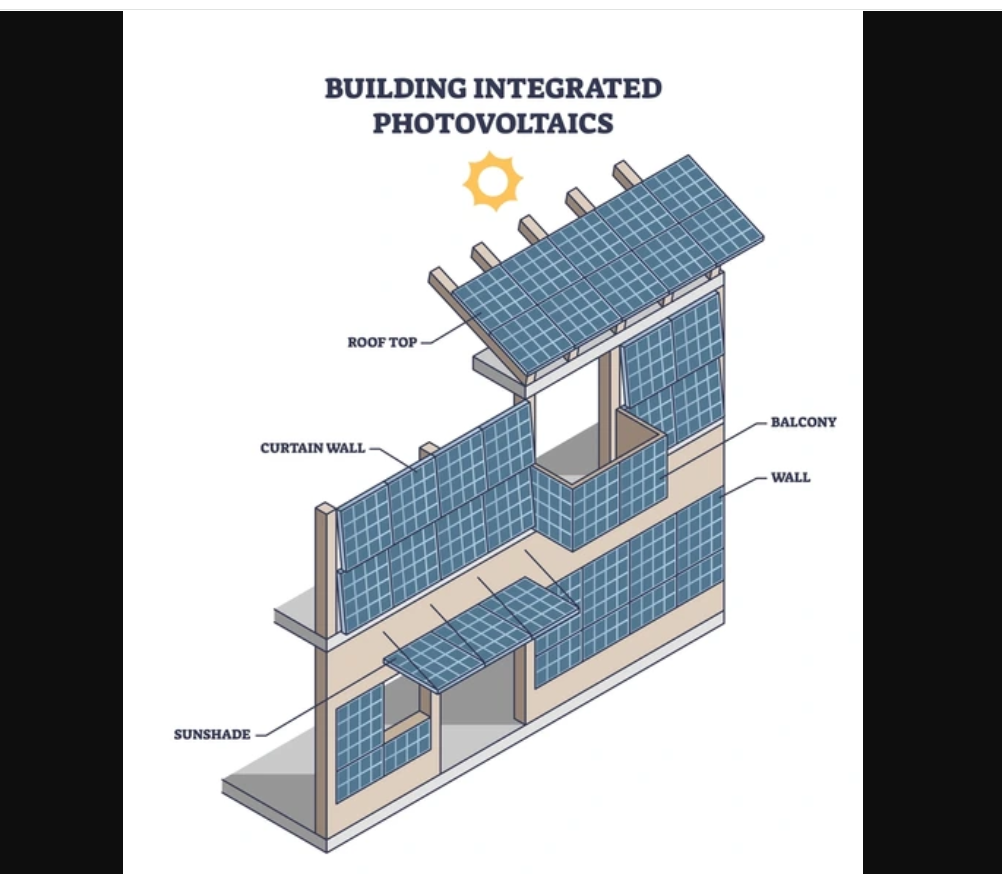
Imagine looking at a modern skyscraper and realizing that its windows, walls and roof are quietly generating electricity.
That is the promise of solar windows and building-integrated photovoltaics (BIPV). Instead of installing conventional solar panels on top of an existing building, BIPV technology incorporates photovoltaic cells directly into construction materials such as glass, façades, roof tiles, skylights, awnings and curtain walls.
The idea is becoming increasingly important as cities become denser and buildings consume enormous amounts of electricity. A skyscraper may have thousands of square metres of exterior surface but relatively little usable roof space. BIPV turns those otherwise passive surfaces into electricity-generating assets.
By 2026, BIPV is no longer purely a laboratory concept. Commercial photovoltaic glass, solar roofing and flexible printed solar products are available, while transparent and semi-transparent perovskite technologies continue to develop rapidly. However, conventional rooftop solar panels still generally offer a better combination of efficiency and cost.
So, are solar windows the future of urban solar power?
The answer is potentially yes—but mainly where conventional solar panels cannot use enough of the available building surface.
What Is Building-Integrated Photovoltaics?
Building-integrated photovoltaics (BIPV) refers to solar technology that is designed as part of a building’s architecture rather than added as a separate piece of equipment.
Traditional rooftop solar typically looks like this:
Building → Roof → Solar panels installed on top
BIPV changes the relationship:
Building material + Solar technology = One integrated component
A BIPV product might function simultaneously as:
- A window
- A solar generator
- A façade
- A roof covering
- A skylight
- A sunshade
- A curtain wall
- A canopy
- A decorative architectural element
This makes BIPV particularly interesting for new construction, major renovations and buildings where appearance is important.
The technology is already being used commercially. For example, Onyx Solar produces customized photovoltaic glass for façades, curtain walls, skylights and other architectural applications. The company says it has completed hundreds of projects across multiple countries and offers both amorphous-silicon and crystalline-silicon PV glass. (landing.onyxsolar.com)
How Do Solar Windows Work?
Solar windows are essentially photovoltaic glazing systems.
A conventional window allows sunlight to pass through. A solar window attempts to do something more useful: allow some visible light through while converting other portions of sunlight into electricity.
There are several approaches.
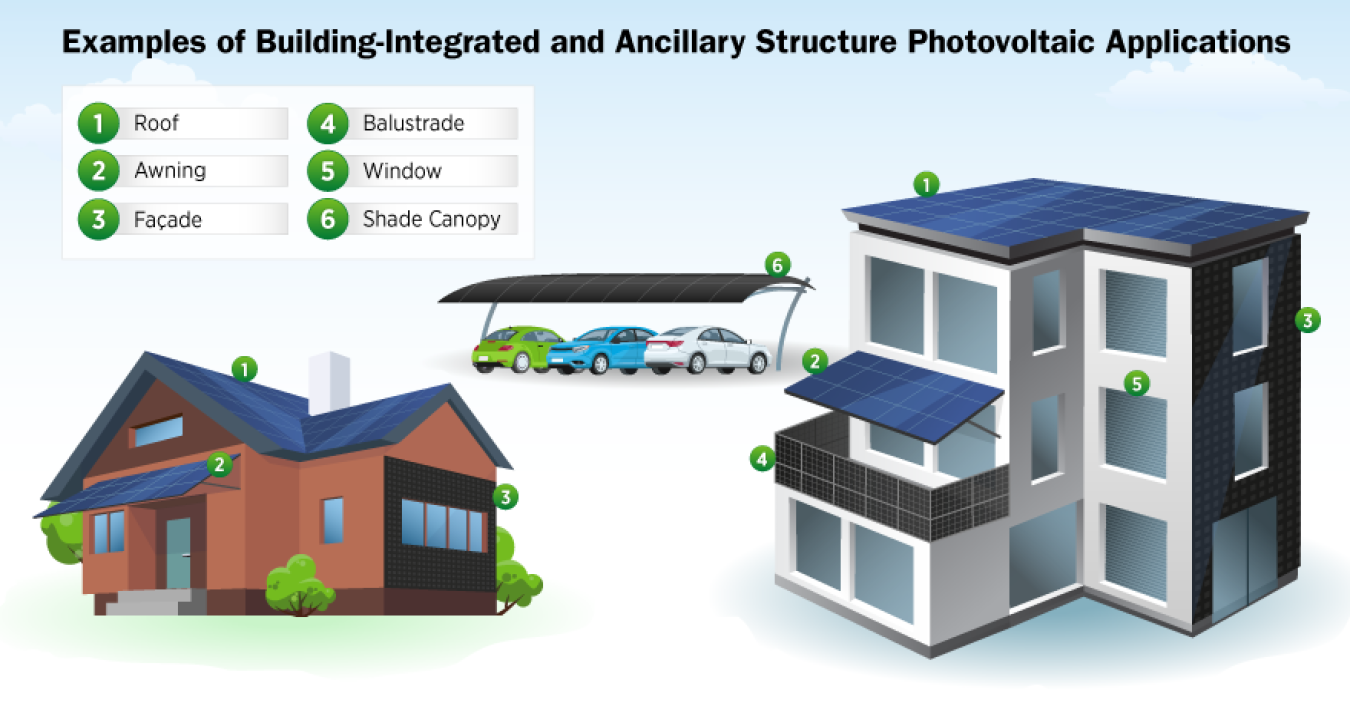
1. Semi-Transparent Solar Cells
One approach is to create gaps between photovoltaic cells or use extremely thin photovoltaic layers.
Some sunlight reaches the solar cells and is converted into electricity. Other wavelengths or portions of visible light pass through the material.
The result is a window that can provide:
- Natural daylight
- Some visibility
- Solar electricity
- Potential solar heat management
However, there is an unavoidable trade-off.
More transparency usually means less light available for electricity generation.
Recent research reviews emphasize this transparency-versus-efficiency relationship as one of the central engineering challenges of photovoltaic windows. (ScienceDirect)
2. Wavelength-Selective Solar Windows
Another approach is to design solar cells that absorb selected wavelengths of sunlight while allowing much of the visible spectrum to pass through.
For example, a transparent photovoltaic system could theoretically absorb ultraviolet and/or infrared light while allowing visible light to reach people inside the building.
This approach is attractive because humans mainly need visible light for viewing, while solar cells can potentially harvest portions of the spectrum that aren’t essential for vision.
Researchers refer to these systems as wavelength-selective transparent solar cells. (Nature)
3. Perovskite Solar Windows
Perovskites are among the most interesting emerging materials for BIPV.
Unlike conventional silicon wafers, perovskite photovoltaic layers can potentially be made extremely thin and deposited on different substrates.
They can also be engineered for semi-transparency and different colours, making them attractive for architectural applications.
Research published in 2026 highlights perovskite and organic solar cells as particularly promising for balancing visible-light transmission and power conversion efficiency. (ScienceDirect)
What About Solar Glass?

Solar glass is one of the most commercially mature forms of BIPV.
Instead of putting a solar panel on a glass wall, photovoltaic material is incorporated into the glass itself.
The glass can then become part of:
- Curtain walls
- Skylights
- Canopies
- Balconies
- Building façades
- Atriums
- Rail stations
- Office buildings
Onyx Solar, for example, offers customized photovoltaic glass with different transparency levels, colours, shapes and sizes. Its products include both amorphous-silicon glass designed for architectural integration and crystalline-silicon glass aimed at higher electrical output. (landing.onyxsolar.com)
A technical example from Onyx illustrates the trade-off clearly: one photovoltaic glazing product uses amorphous silicon with approximately 20% visible transparency and a rated output of 147 W over roughly 46.6 square feet. (onyxsolar.com)
That is substantially different from simply installing a high-efficiency opaque rooftop module.
BIPV Is More Than Solar Windows
Although solar windows attract the most attention, BIPV technology covers a much larger category of building materials.
Solar Roof Tiles
Solar roof tiles replace conventional roofing materials while generating electricity.
The best-known example is Tesla Solar Roof.
Tesla describes Solar Roof as a combination of energy-producing glass solar tiles and non-generating roofing tiles. Its current specifications list 72 W solar glass tiles and a 25-year tile and power warranty. (Tesla)
Unlike conventional solar panels, Solar Roof is intended to be part of the roof itself rather than mounted above an existing roof.
Solar Facades
A building’s vertical walls can represent a huge amount of surface area.
Photovoltaic façades can use:
- Solar glass
- Coloured PV modules
- Semi-transparent PV
- Thin-film materials
- Photovoltaic cladding
- Ventilated façade systems
This can be particularly useful in cities where rooftop space is limited.
Solar Skylights
Skylights can be replaced with photovoltaic glazing.
The building still receives daylight, while the glazing produces electricity.
Solar Canopies and Awnings
BIPV can also be incorporated into:
- Walkways
- Parking structures
- Bus shelters
- Building entrances
- Outdoor seating areas
- Solar shading systems
These installations can provide both shade and electricity, increasing the value of the same structural element.
Real-World BIPV Products in 2026
Several commercial and emerging technologies demonstrate where the market is heading.
Tesla Solar Roof
Tesla’s Solar Roof is one of the most recognizable examples of roof-integrated photovoltaics.
The system combines solar glass tiles with non-solar roofing tiles so that the entire roof has a consistent appearance. Tesla says the solar tiles produce DC electricity, which is then converted to AC through an inverter. (Tesla)
Its biggest advantage is architectural integration.
Instead of asking, “Where can I put solar panels?” the design effectively asks, “Which parts of my roof should generate electricity?”
However, Solar Roof is a premium roofing solution rather than simply a low-cost replacement for conventional rooftop solar.
Onyx Solar Photovoltaic Glass
Onyx Solar is one of the most established commercial names in photovoltaic glass.
Its products can be customized according to:
- Size
- Shape
- Transparency
- Colour
- Cell technology
The company says its photovoltaic glass has been used in offices, hotels, airports, railway stations, museums, skyscrapers and other buildings. (landing.onyxsolar.com)
Its product portfolio includes amorphous-silicon glass for applications where aesthetics and light transmission are important and crystalline-silicon glass where higher power output is prioritized. (landing.onyxsolar.com)
Saule Technologies Printed Perovskite Foils
Saule Technologies represents another direction: flexible, lightweight, printed perovskite photovoltaics.
The company describes its technology as fully printed solar cells on thin, flexible foils. It also highlights low-light performance, lightweight construction and adaptability to different applications. (sauletech.com)
This is important for BIPV because buildings do not always offer perfectly flat, south-facing surfaces.
Flexible solar materials could eventually be incorporated into:
- Blinds
- Awnings
- Lightweight façades
- Curved surfaces
- Smart-building components
- Existing-building renovations
The major question is not whether perovskite solar cells can work. It is whether they can deliver long-term outdoor durability, scalable manufacturing and predictable economics at building scale.
Those remain important commercialization challenges in 2026. (ScienceDirect)
BIPV vs Conventional Solar Panels
The biggest misconception about BIPV is that it is automatically better than conventional solar.
It isn’t.
Standard rooftop solar panels have an enormous advantage: they have been optimized primarily for generating electricity.
BIPV has to satisfy several requirements simultaneously.
A solar window might need to be:
- Transparent
- Attractive
- Weatherproof
- Structurally strong
- Thermally insulating
- Safe
- Durable
- Electrically productive
A conventional PV module mainly needs to be good at converting sunlight into electricity while surviving outdoor conditions.
That difference affects cost and performance.
| Feature | Conventional Rooftop PV | BIPV / Solar Windows |
|---|---|---|
| Primary purpose | Electricity generation | Building material + electricity |
| Efficiency | Generally higher | Often lower, depending on design |
| Transparency | Usually none | Possible |
| Architectural integration | Low to moderate | Very high |
| Installation | Usually simpler | Can be complex |
| Cost | Usually lower | Often higher |
| Design flexibility | Limited | High |
| Best application | Roofs with good solar exposure | New buildings, façades, windows, constrained sites |
| Replacement of construction material | No | Yes |
| Urban façade potential | Limited | High |
Efficiency: The Biggest Trade-Off
Efficiency is one of the most important issues when comparing BIPV with conventional solar panels.
A modern opaque crystalline-silicon rooftop panel can devote most of its surface to absorbing sunlight.
A transparent or semi-transparent window cannot.
Some sunlight must pass through so that people can see and natural daylight can enter the building.
Research reviews published in 2026 continue to identify this transparency-efficiency trade-off as a central challenge. One recent review notes that semi-transparent thin-film technologies generally have difficulty exceeding about 15% efficiency, while emerging perovskite and organic technologies offer promising paths toward improved combinations of transparency and efficiency. (ScienceDirect)
Another 2026 review reports that semi-transparent systems with roughly 25–35% average visible transmittance can achieve efficiencies above 14–16% in some research configurations, while highly transparent systems above 50–70% visible transmittance generally operate at substantially lower efficiency levels. (ScienceDirect)
These figures should not be interpreted as a single universal commercial rating. Performance depends heavily on the technology, transparency, cell area, glazing construction and operating conditions.
The key point is simple:
You usually cannot maximize transparency and electricity production at the same time.
Why Would Anyone Pay More for BIPV?
If conventional panels are cheaper and more efficient, why use BIPV?
Because BIPV can replace another building component.
Suppose a new office tower needs a glass façade anyway.
Instead of buying:
Glass façade + separate solar installation
a developer can potentially install:
Photovoltaic glass façade
The solar system becomes part of the building envelope.
This creates an important concept called dual functionality.
The BIPV material can provide:
- Weather protection
- Daylighting
- Solar shading
- Thermal performance
- Architectural appearance
- Electricity generation
The correct financial comparison therefore isn’t always:
BIPV cost vs solar panel cost
It may instead be:
BIPV building material + electricity generation vs conventional building material + separate solar system
That can make BIPV considerably more attractive in certain projects.
Where BIPV Makes the Most Sense
BIPV isn’t equally useful everywhere.
1. Commercial Skyscrapers
Tall office buildings are among the strongest candidates.
A skyscraper may have:
- Huge façade areas
- Thousands of windows
- Limited roof space
- High daytime electricity consumption
Solar windows and photovoltaic façades can use surfaces that conventional rooftop panels cannot reach.
A 2026 review specifically identifies tall buildings with high window-to-wall ratios as a particularly relevant application because façade area can become much larger than available rooftop area. (ScienceDirect)
2. Dense Urban Areas
Cities have a basic solar problem:
There are lots of buildings but not enough roof space per person.
Imagine a high-rise apartment tower with hundreds of residents.
The roof might only have enough area for a modest solar installation, while the building has thousands of square metres of façade.
BIPV can potentially unlock that additional surface.
3. New Construction
BIPV generally makes the most sense when it is considered during architectural design.
Engineers can design:
- Electrical wiring pathways
- Structural supports
- Glazing systems
- Solar orientation
- Inverters
- Ventilation
- Maintenance access
from the beginning.
Trying to retrofit BIPV into an existing building can be much more complicated.
4. Buildings Where Appearance Matters
Luxury hotels, corporate headquarters, museums and landmark buildings may be willing to pay more for integrated solar because conventional solar panels could conflict with the architectural design.
BIPV can be designed around the building rather than forcing the building to accommodate standard panels.
5. Buildings With High Cooling Loads
Solar glazing can potentially provide another benefit beyond electricity.
Certain photovoltaic glazing systems can reduce solar heat entering the building.
That can reduce cooling requirements in hot climates.
The actual benefit depends on the glazing design, climate, orientation and building HVAC system, so BIPV should be evaluated as a whole-building energy system rather than simply as a solar panel.
Where Conventional Solar Is Still Better
For a typical homeowner with an uncomplicated roof, conventional rooftop solar will often remain the more practical choice.
Why?
Because standard solar panels are:
- Highly optimized
- Widely manufactured
- Relatively inexpensive
- Easy to compare
- Easier to replace
- Generally more efficient per square metre
If you have a large, unobstructed roof with excellent sunlight exposure, replacing inexpensive roofing with premium solar materials may not deliver the best financial return.
BIPV becomes more compelling when the building surface itself has economic value as a solar-generation location.
The Cost Question
BIPV pricing is difficult to summarize with one universal number.
A solar window isn’t simply a solar panel with glass around it.
It may involve:
- Specialized glazing
- Structural engineering
- Custom dimensions
- Electrical integration
- Building-envelope engineering
- Safety certification
- Architectural customization
- Specialized installation
This can make BIPV more expensive than conventional rooftop PV on a pure dollars-per-watt basis.
However, comparing only dollars per watt can be misleading.
If a photovoltaic façade replaces conventional façade material, part of the BIPV cost is effectively paying for the building envelope that would have been required anyway.
Therefore, developers should evaluate:
Total building cost + energy savings + avoided material cost + electricity generation + maintenance
rather than just module price.
The 2026 BIPV Market
The BIPV market is moving from niche architectural experiments toward a broader commercial industry, although conventional solar remains much larger.
One 2026 market analysis estimates the global BIPV market at approximately $28.3 billion in 2026, up from $23.4 billion in 2025, and projects substantial growth through 2034. The same analysis identifies Europe as the largest regional market in 2025. (Fortune Business Insights)
Market estimates vary considerably depending on how BIPV is defined and which products are included, so these numbers should be treated as market forecasts rather than precise measurements.
What is clearer is the direction of technology development.
In 2026:
- Photovoltaic glass is commercially available.
- Solar roof products are commercially available.
- Semi-transparent PV is progressing.
- Perovskite technologies are moving toward larger-scale applications.
- Flexible printed PV is being developed for unusual surfaces.
- Building codes and energy-efficiency requirements are increasing interest in integrated generation.
- Architects are increasingly considering façades as energy-producing surfaces.
At the same time, several barriers remain.
Research published in 2026 identifies stability, scalable manufacturing, cost, environmental considerations and large-area fabrication as major challenges for the commercialization of semi-transparent photovoltaic windows. (ScienceDirect)
The Perovskite Opportunity
Perovskites could be especially important for future BIPV.
Silicon solar cells are extremely good at generating electricity, but they are relatively rigid and opaque.
Perovskites can potentially be:
- Thin
- Lightweight
- Flexible
- Semi-transparent
- Colour-tunable
- Printed over larger surfaces
Saule Technologies, for example, describes its perovskite technology as printed onto thin flexible foils and highlights its ability to operate under limited illumination. (sauletech.com)
If manufacturing and durability challenges can be solved, the implications could be significant.
Imagine solar material integrated into:
Windows + blinds + façades + awnings + skylights + lightweight roofs
rather than treating solar power as a separate panel-based technology.
What Are the Biggest Challenges?
1. Lower Power Density
Transparent materials generally generate less electricity than opaque high-efficiency solar modules.
2. Higher Costs
Custom architectural products can cost considerably more than mass-produced rooftop panels.
3. Durability
Buildings are expected to last for decades.
Solar cells therefore need to survive:
- Heat
- Cold
- Moisture
- UV radiation
- Wind
- Mechanical stress
- Thermal cycling
This is particularly challenging for some emerging thin-film and perovskite technologies.
4. Maintenance
Replacing a failed rooftop module is relatively straightforward.
Replacing a photovoltaic window installed several floors above the ground is a different engineering problem.
5. Electrical Integration
A building full of photovoltaic windows may require complex electrical design, monitoring and inverter architecture.
6. Aesthetics
Ironically, one of BIPV’s biggest advantages can also become a challenge.
Architects may want a particular:
- Colour
- Transparency
- Reflection level
- Cell pattern
- Appearance
Every aesthetic requirement can influence solar performance and cost.
Solar Windows Could Change How We Think About Buildings
For more than a century, buildings have generally been designed as energy consumers.
Electricity comes from:
Power plant → grid → building
Solar changed that model:
Sun → rooftop panel → building
BIPV pushes the concept further:
Sun → building envelope → electricity
The roof isn’t simply a roof.
The window isn’t simply a window.
The façade isn’t simply a façade.
They can become energy infrastructure.
That could be particularly important as cities become more electrified through electric vehicles, heat pumps, data centres and increasingly energy-intensive buildings.
BIPV vs Rooftop Solar: Which Should You Choose?
For most existing homes, conventional rooftop solar is likely to remain the practical choice.
For a new skyscraper, office complex or high-rise building with limited roof area, the answer can be different.
Choose conventional rooftop solar when:
- You have plenty of usable roof space.
- Lowest cost per watt is the priority.
- Maximum electricity generation is the goal.
- The appearance of conventional panels is acceptable.
- You don’t need solar to replace building materials.
Consider BIPV when:
- Roof space is limited.
- The building has a large façade.
- You are constructing a new building.
- Architectural appearance is important.
- Solar shading is valuable.
- The solar material can replace conventional construction material.
- The building has significant daytime electricity demand.
The Future of Building-Integrated Photovoltaics
The most interesting future may not be a world where every window becomes completely transparent and produces huge amounts of electricity.
Instead, the future is likely to be hybrid.
A building could use:
- High-efficiency opaque PV on the roof
- Semi-transparent PV on façades
- Photovoltaic glass in selected windows
- Solar shading systems
- PV canopies
- Flexible perovskite materials on difficult surfaces
Each technology would be used where it performs best.
This approach makes much more sense than trying to make every surface identical.
The 2026 research landscape supports this direction: transparent and semi-transparent photovoltaics are advancing across silicon, thin-film, organic and perovskite technologies, but the balance between efficiency, transparency, durability and cost remains central to commercialization. (ScienceDirect)
Frequently Asked Questions About Solar Windows and BIPV
Are solar windows completely transparent?
Not usually. Most commercially practical photovoltaic glazing is transparent or semi-transparent rather than perfectly clear. Greater transparency generally reduces the amount of sunlight available for electricity generation. (ScienceDirect)
Are solar windows more efficient than normal solar panels?
Generally, no. Conventional opaque solar panels can dedicate more of their surface to absorbing sunlight. Solar windows must balance electricity production with visibility and daylight transmission.
Are solar windows available in 2026?
Yes. Commercial photovoltaic glazing products are available, including customized systems from companies such as Onyx Solar. However, the market includes a mixture of mature silicon and thin-film products and newer emerging technologies. (landing.onyxsolar.com)
Is Tesla Solar Roof a type of BIPV?
Yes. Tesla’s own technical documentation describes Solar Roof as a building-integrated photovoltaic system in which photovoltaic tiles function as roof coverings. (Tesla Energy Library)
What is the difference between BIPV and rooftop solar?
Rooftop solar is normally installed on top of an existing roof. BIPV replaces or becomes part of the building material itself, such as roofing, glass, façade panels or skylights.
Are BIPV systems expensive?
They can be more expensive than conventional solar on a simple cost-per-watt basis because they often involve custom materials and construction integration. However, BIPV can make more financial sense when the photovoltaic component replaces another building material.
Are perovskite solar windows commercially ready?
Perovskite technology is progressing rapidly, but widespread building-scale deployment still faces challenges involving durability, scalable production, cost and environmental considerations. (ScienceDirect)
Where does BIPV make the most sense?
BIPV is particularly attractive for commercial buildings, skyscrapers, urban developments and new construction projects where façade area is large, roof space is limited and architectural integration is important.
Can BIPV replace all the electricity a building uses?
Usually not by itself. The amount of electricity generated depends on available surface area, orientation, shading, transparency, efficiency and local sunlight. BIPV is best viewed as one part of a building’s overall energy strategy.
Final Verdict
Solar windows and building-integrated photovoltaics are transforming the idea of what a solar panel can be.
Instead of attaching solar technology to a building, BIPV embeds solar generation directly into the building’s architecture.
The technology is already commercially real. Tesla’s Solar Roof demonstrates integrated solar roofing, Onyx Solar demonstrates architectural photovoltaic glass, and companies such as Saule Technologies are developing lightweight printed perovskite photovoltaics. (Tesla)
But conventional rooftop solar still wins on simplicity,