
thermal energy storage, molten salt storage, heat battery
Thermal Energy Storage: How Heat Batteries Work in 2026
Introduction
What if you didn’t have to store electricity as electricity?
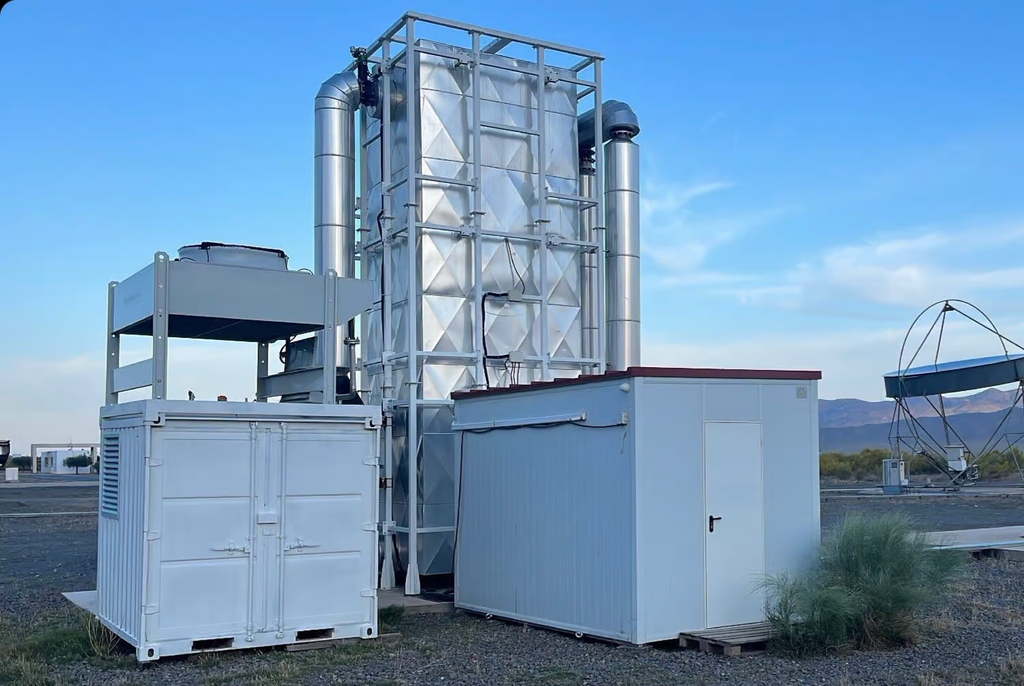
That simple idea is at the heart of thermal energy storage (TES). Instead of charging a conventional battery with electricity and storing it electrochemically, thermal storage converts energy into heat or cold, stores it in a material, and uses that thermal energy later.
The concept is surprisingly familiar. A thermos keeps hot water hot. An ice pack keeps something cold. A large insulated tank can store hot water for hours. At grid scale, the same basic principle can be applied using materials such as molten salt, water, rocks, concrete, or even sand.
Thermal energy storage is becoming increasingly important as solar and wind power expand. Electricity generated when renewable energy is abundant doesn’t always coincide with when consumers need it. TES provides another way to shift energy from one part of the day—or, in some cases, one season—to another.
And unlike lithium-ion batteries, thermal storage doesn’t always need expensive electrochemical materials.
What Is Thermal Energy Storage?
Thermal energy storage is a technology that stores energy in the form of heat or cold and releases it when needed.
A basic TES system has three stages:
- Charging: Energy is used to heat or cool a storage material.
- Storage: Insulation keeps the thermal energy from escaping.
- Discharging: The stored heat or cold is delivered for a useful application.
For example, an electric heater can use cheap electricity during the afternoon to heat a large tank of water. The hot water can then be used for showers and heating later in the evening.
A commercial building could instead make ice overnight when electricity demand is low. During the afternoon, the ice melts and provides cooling without requiring the air-conditioning system to operate at maximum capacity.
This makes TES fundamentally different from a traditional battery.
Electricity battery vs thermal storage
| Feature | Electrochemical Battery | Thermal Energy Storage |
|---|---|---|
| Storage medium | Electrochemical materials | Water, salt, ice, sand, rocks, etc. |
| Main output | Electricity | Heat or cold |
| Typical use | Electricity shifting | Heating, cooling, industrial heat |
| Response | Very fast | Depends on system |
| Materials | Lithium, iron, sodium, etc. | Often inexpensive bulk materials |
| Round-trip electricity efficiency | Generally high | Depends heavily on application |
| Long-duration potential | Increasing | Often excellent |
| Best application | Electricity → electricity | Electricity → heat/cold |
The important point is that TES doesn’t necessarily need to convert heat back into electricity.
That distinction matters enormously for efficiency.
How Thermal Energy Storage Works
There are several types of thermal storage, but they generally fall into three categories.
1. Sensible heat storage
The storage material simply gets hotter or colder.
Water is a good example.
If you heat a tank of water, you store energy by raising its temperature. When you need the energy, the hot water is circulated through a heating system.
Other sensible-heat materials include:
- Molten salt
- Sand
- Rocks
- Concrete
- Ceramics
- Thermal oils
2. Latent heat storage
Latent heat storage uses a material that changes phase.
For example:
Solid → liquid
or
Liquid → solid
Ice storage is one of the simplest examples.
Water absorbs substantial amounts of energy when it melts. That stored energy can later be released as the ice turns back into water.
Specialized phase-change materials (PCMs) can be engineered to melt and freeze at useful temperatures for buildings and industrial applications.
3. Thermochemical storage
Thermochemical systems store energy through reversible chemical reactions.
These systems can potentially achieve high energy densities and long storage durations, although they are generally more complex than water tanks or molten-salt systems.
Molten Salt Storage: The Giant Thermal Battery
One of the best-known forms of thermal energy storage is molten salt storage.
It is particularly important in concentrated solar power (CSP) plants.


Instead of photovoltaic panels directly converting sunlight into electricity, CSP plants use mirrors to concentrate sunlight and generate high temperatures.
That heat can be transferred to molten salt.
The salt is stored in large insulated tanks and can remain hot for hours.
When electricity is required, the stored thermal energy is used to produce steam, which drives a turbine and generates electricity.
Why molten salt is useful
The biggest advantage is energy shifting.
A CSP plant can collect solar energy during the day and continue producing electricity after sunset.
In other words:
Sunlight → Heat → Molten salt → Steam → Electricity
The storage system acts like a giant thermal battery.
Modern molten-salt systems commonly use nitrate salt mixtures, although different thermal-storage technologies and formulations are being researched.
How Efficient Is Molten Salt Storage?
The answer depends on what you define as “efficiency.”
If stored heat is directly used as heat, very little energy needs to be converted.
But if you store heat and later convert it back into electricity, you have additional conversion losses.
The chain becomes:
Electricity → Heat → Storage → Heat → Electricity
Every conversion introduces losses.
This means thermal storage isn’t automatically a replacement for lithium-ion batteries when the final product you need is electricity.
However, the economics can be attractive when:
- The heat is already available.
- The end user needs heat.
- The storage material is inexpensive.
- Storage duration is long.
- The alternative requires large quantities of batteries.
Ice Storage: A Battery for Air Conditioning
One of the most practical forms of thermal energy storage doesn’t store heat at all.
It stores cold.
Large commercial buildings use enormous amounts of electricity for air conditioning, particularly during hot afternoons when electricity demand is already high.
Ice-storage systems shift some of that electricity consumption to other times.


The basic idea is straightforward.
At night
The cooling system operates when electricity demand may be lower and produces ice.
During the day
The stored ice melts and absorbs heat from the building’s cooling system.
The result is a reduction in peak electricity consumption.
Instead of asking:
“How do we store electricity for the air conditioner?”
the system asks:
“Why store electricity at all when we can store the cooling the building actually needs?”
That’s an important principle behind thermal storage.
Hot Water Thermal Storage
Hot-water storage is perhaps the simplest heat battery of all.
A well-insulated tank can store thermal energy for later use.
It can be used for:
- Domestic hot water
- Space heating
- District heating
- Solar thermal systems
- Heat pumps
- Industrial processes


Consider a home with a heat pump.
Instead of running the heat pump continuously whenever hot water is required, the system can heat a storage tank when electricity is inexpensive or renewable electricity is abundant.
The household then draws from the stored hot water later.
This can help reduce electricity demand during expensive peak periods.
The Rise of the “Sand Battery”
One of the most interesting emerging forms of thermal storage is the sand battery.
The name sounds unusual, but the underlying principle is simple.
A sand battery uses inexpensive granular material as a thermal storage medium. Electricity heats the material to high temperatures, and the stored heat is retained inside a heavily insulated storage vessel.
Some Finnish projects have demonstrated high-temperature thermal storage using sand-like materials at temperatures around 500–600°C.


The stored heat can subsequently be used for applications such as:
- District heating
- Industrial heat
- Buildings
- Drying processes
- Steam generation
The key attraction isn’t necessarily converting the heat back into electricity.
Instead, the heat can go directly to where it’s needed.
That can avoid an entire conversion step.
Why Sand Is Interesting
Sand and other solid materials have several potential advantages as thermal-storage media.
Low material cost
There is no requirement for large quantities of lithium, cobalt or other battery materials.
High operating temperatures
Some thermal systems can operate at hundreds of degrees Celsius.
Long storage duration
Thermal energy can potentially be stored for days, weeks, or longer depending on insulation and system design.
Simple concept
The basic architecture can be much simpler than a sophisticated electrochemical battery.
Useful for industry
Many industrial processes require heat rather than electricity.
That’s where thermal storage becomes particularly interesting.
Thermal Storage vs Lithium-Ion Batteries
So, should thermal storage replace batteries?
Not necessarily.
The two technologies solve different problems.
Imagine you have 100 units of electricity.
Lithium-ion approach
You charge a battery and later discharge it to obtain electricity.
Electricity → Battery → Electricity
This is useful if your final requirement is electricity.
Thermal approach
You use the electricity to produce heat.
Electricity → Heat → Thermal storage → Heat
If your final requirement is hot water or industrial heat, this can be a very sensible approach.
Trying to convert the heat back into electricity can make the comparison much less favorable.
Where Thermal Energy Storage Makes More Sense
Thermal storage is particularly attractive when the final energy requirement is thermal.
1. Building heating
Buildings already need heat.
Instead of storing electricity in batteries and then running an electric heater later, thermal storage can store heat directly.
2. Water heating
Hot-water tanks are relatively simple and inexpensive compared with large electrochemical battery systems.
3. Air conditioning
Ice and chilled-water storage can shift cooling loads away from peak electricity demand.
4. Industrial heat
Industrial facilities consume huge quantities of heat for processes such as:
- Food processing
- Chemicals
- Paper production
- Metals
- Cement
- Drying
- Steam generation
Thermal storage can potentially connect cheap renewable electricity with these heat requirements.
5. Concentrated solar power
Molten salt can allow solar thermal plants to continue producing electricity after sunlight disappears.
When Batteries Are Still Better
Thermal storage isn’t ideal for every application.
Electrochemical batteries remain useful when you need:
- Portable energy
- Electric vehicles
- Fast grid response
- Electricity for electronics
- Backup electricity
- High-quality electricity output
- Electricity-to-electricity storage
For example, storing electricity as heat and then converting it back to electricity involves additional conversion losses.
A lithium-ion battery can perform the electricity-to-electricity cycle much more directly.
Thermal Energy Storage Economics
The economics of TES depend heavily on the application.
This is one area where simply comparing “cost per kWh” can be misleading.
A thermal-storage system may have a low cost per unit of stored thermal energy but cannot necessarily provide electricity.
Conversely, an expensive battery may provide a valuable service because it delivers electricity exactly when and where it is required.
Important economic factors include:
- Storage temperature
- Storage duration
- Material cost
- Insulation
- Charging equipment
- Heat exchangers
- Electricity prices
- Peak demand charges
- Energy losses
- Required output
- Number of cycles
- Local climate
- Existing heating/cooling infrastructure
A commercial building with high demand charges, for example, could benefit from chilled-water or ice storage even if the technology doesn’t generate any electricity.
The Efficiency Question
One of the biggest misconceptions about thermal storage is that there is one universal efficiency number.
There isn’t.
Consider two scenarios.
Scenario A: Electricity → Heat
Electricity is used to generate heat, stored, and later used for heating.
This can be highly practical because the final product is heat.
Scenario B: Electricity → Heat → Electricity
Electricity is converted into heat, stored, and then converted back into electricity.
The second process introduces additional losses.
Therefore, thermal storage can be very efficient for delivering thermal energy while being less attractive for electricity-to-electricity storage.
This distinction is crucial when comparing TES with batteries.
Can Thermal Storage Provide Seasonal Energy?
Potentially, yes.
This is one of its most interesting characteristics.
Some energy systems need to deal with differences between summer and winter.
For example:
Summer solar energy → stored heat → winter heating
The challenge is minimizing heat losses over long periods.
Large underground thermal-energy-storage systems, water reservoirs, borehole systems and high-temperature materials are among the approaches being investigated or deployed for long-duration thermal storage.
Sand batteries are particularly interesting because they demonstrate how relatively simple solid materials can be used for high-temperature storage.
Benefits of Thermal Energy Storage
Lower-cost storage materials
Water, salt, sand, rocks and other bulk materials can be inexpensive compared with electrochemical materials.
Long-duration capability
Thermal systems can be designed for hours, days or potentially seasonal applications.
Reduced electricity peaks
TES can shift heating and cooling demand away from expensive peak periods.
Integration with renewables
Excess solar and wind electricity can be converted into useful heat.
Reduced battery demand
Not every energy-storage requirement needs a lithium-ion battery.
Useful industrial heat
Thermal storage can help decarbonize applications where the final energy demand is heat.
Limitations of Thermal Energy Storage
TES also has important limitations.
Heat losses
No storage system is perfectly insulated.
Over time, stored thermal energy escapes.
Location-specific applications
Thermal storage is most valuable where there is an actual demand for heat or cold.
Electricity conversion losses
Turning stored heat back into electricity can reduce overall efficiency.
Temperature challenges
High-temperature systems require appropriate materials, insulation and equipment.
Infrastructure requirements
Large-scale thermal storage may require tanks, pipes, heat exchangers or specialized equipment.
The Bigger Picture: Batteries and Thermal Storage Can Work Together
The future energy system probably won’t depend on a single storage technology.
Instead, different technologies can handle different jobs.
Lithium-ion batteries can provide fast electricity storage.
Pumped hydro can provide massive grid-scale storage.
Thermal energy storage can handle heat and cooling.
Molten salt can support concentrated solar power.
Hot-water tanks can shift heating demand.
Ice storage can shift cooling demand.
Sand and other high-temperature systems could provide long-duration industrial heat.
This is important because the energy transition isn’t simply about storing electricity.
It’s about storing energy in the form that will eventually be needed.
Frequently Asked Questions
What is thermal energy storage?
Thermal energy storage is a technology that stores energy as heat or cold and releases it later. Common examples include hot-water tanks, molten salt, ice storage and high-temperature solid-material storage.
How does a thermal battery work?
A thermal battery uses electricity or another energy source to heat or cool a storage material. The stored thermal energy is then released when needed.
What is molten salt storage?
Molten salt storage stores thermal energy in hot liquid salt, particularly in concentrated solar power plants. The stored heat can later generate steam and electricity.
What is a sand battery?
A sand battery is a thermal-energy-storage system that uses sand or similar granular materials to store heat. Some Finnish systems operate at temperatures of roughly 500–600°C and can provide heat for buildings or district-heating networks.
Are thermal batteries more efficient than lithium-ion batteries?
It depends on the application. For storing electricity and getting electricity back, lithium-ion batteries generally have an advantage because they avoid the heat-to-electricity conversion step. For storing and delivering heat, thermal storage can be highly practical and economical.
How long can thermal energy be stored?
Storage duration ranges from several hours to potentially days, weeks or even seasons, depending on the technology, insulation, temperature and application.
Can thermal storage replace lithium-ion batteries?
Not generally. Thermal storage and electrochemical batteries are better suited to different applications. Thermal storage is particularly useful when the final energy demand is heating or cooling.
Is thermal energy storage renewable?
Thermal storage itself isn’t a source of energy. It is a storage technology. It can, however, store heat produced from renewable electricity, solar thermal energy or other low-carbon sources.
Final Thoughts
Thermal energy storage is one of the simplest ideas in the energy-storage industry: heat something up, keep it hot, and use the heat later.
From enormous molten-salt tanks at concentrated solar plants to ice-storage systems in commercial buildings and hot-water tanks in homes, the technology is already being used in different forms.
The emerging sand battery concept adds another intriguing possibility: inexpensive solid materials could store large quantities of high-temperature heat for hours or potentially much longer.
The biggest lesson is that energy doesn’t always need to be stored as electricity.
If the eventual requirement is heat, cold or industrial thermal energy, storing energy directly in that form can avoid unnecessary conversions and potentially reduce costs.
As renewable electricity becomes more abundant, thermal energy storage could become an increasingly important part of the broader energy-storage mix.
Sometimes, the simplest battery isn’t a battery at all. It’s a well-insulated box of hot—or cold—material.