
Introduction
The global solar industry is evolving rapidly, and Perovskite Solar Panels are emerging as one of the most promising technologies for the future of renewable energy. With record-breaking solar cell efficiency, lower manufacturing costs, lightweight designs, and flexible applications, perovskite technology has the potential to revolutionize the way electricity is generated.
While traditional silicon solar panels dominate today’s market, researchers believe perovskite solar cells could significantly reduce costs while increasing energy output. Many experts predict that the first large-scale commercial perovskite modules will begin entering the market during the late 2020s.
In this guide, we’ll explore how perovskite solar panels work, their advantages, challenges, commercialization timeline, and why they’re considered the next major breakthrough in clean energy.Perovskite Solar Panels
What Are Perovskite Solar Panels?
Perovskite solar panels use a special class of crystalline materials called perovskites, named after the mineral calcium titanate, which shares the same crystal structure.
Unlike conventional silicon solar cells that require expensive purification and high-temperature manufacturing, perovskite materials can be produced using simpler, lower-cost methods.
These materials absorb sunlight extremely efficiently and convert it into electricity with remarkable performance.
How Perovskite Solar Cells Work
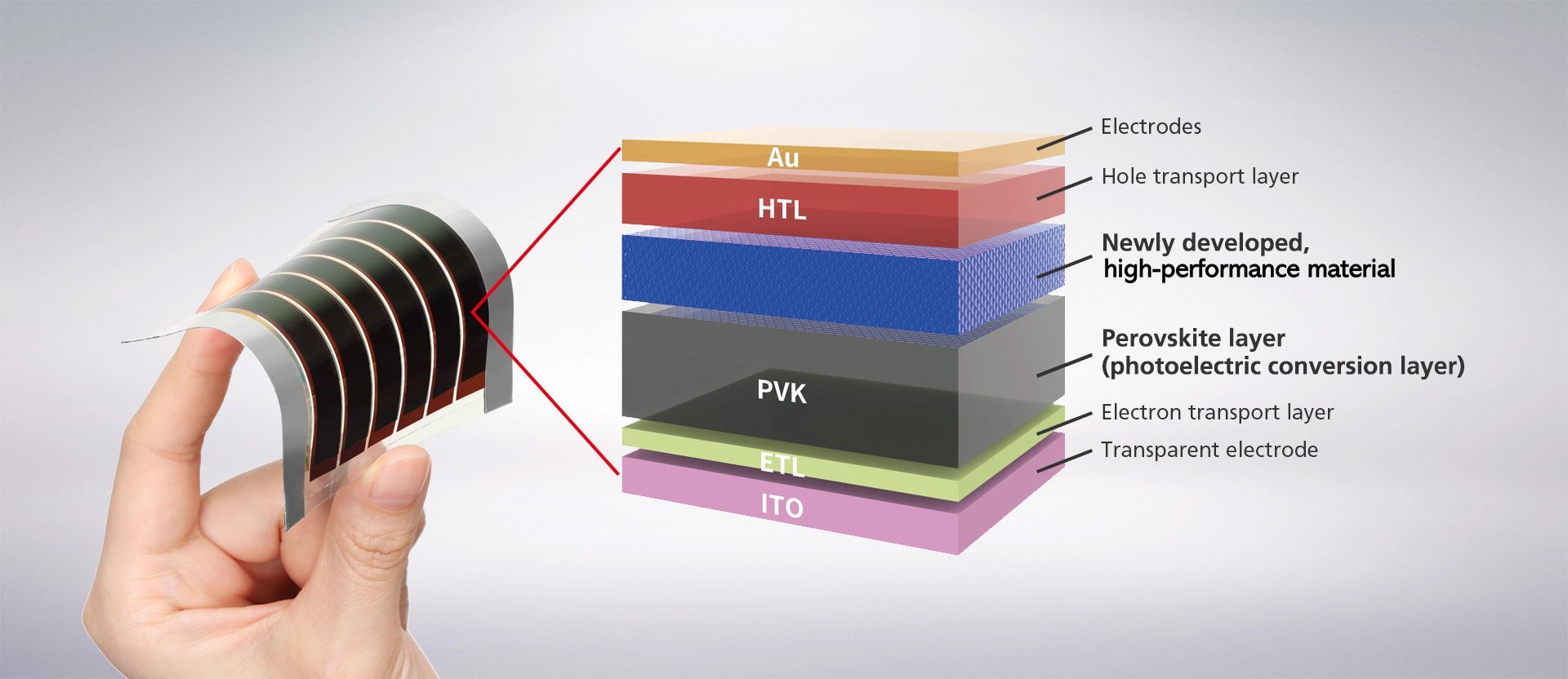
Like traditional photovoltaic (PV) cells, perovskite solar cells convert sunlight into electricity through the photovoltaic effect.Perovskite Solar Panels
The basic process includes:
- Sunlight strikes the perovskite layer.
- The material absorbs photons.
- Electrons become energized.
- Electrical charges separate.
- Current flows through external circuits.
- Electricity powers homes, businesses, or battery systems.
The difference lies in the semiconductor material. Perovskites absorb a wider range of sunlight more effectively than silicon.Perovskite Solar Panels
Why Perovskite Technology Is Revolutionary
Several characteristics make perovskite solar technology highly attractive.
1. Extremely High Efficiency
One of the biggest reasons for excitement is efficiency.
Laboratory perovskite solar cells have improved from less than 4% efficiency in 2009 to over 26% today, making them one of the fastest-improving solar technologies ever developed.
When combined with silicon in tandem solar cells, efficiencies exceeding 33% have already been demonstrated.
Higher efficiency means:
- More electricity from the same roof
- Smaller solar installations
- Better performance in limited space
- Reduced cost per kilowatt-hour
- Perovskite Solar Panels
2. Low Manufacturing Costs
Traditional silicon manufacturing requires:
- Extremely high temperatures
- Energy-intensive purification
- Thick silicon wafers
- Complex production facilities
Perovskite manufacturing offers major cost advantages:
- Low-temperature processing
- Printable solar layers
- Roll-to-roll production
- Less raw material usage
- Lower energy consumption
These factors could dramatically reduce future solar panel prices.
3. Lightweight Design
Unlike rigid silicon panels, perovskite cells can be manufactured on:
- Flexible plastic
- Thin glass
- Metal foils
This makes them ideal for:
- Portable solar chargers
- Lightweight rooftop installations
- Electric vehicles
- Drones
- Aerospace applications
4. Flexible Solar Panels
Perovskite materials can bend without losing performance.
This enables:
- Curved rooftops
- Wearable electronics
- Smart clothing
- Mobile devices
- Flexible building materials
5. Better Low-Light Performance
Perovskite cells perform better than many silicon panels under:
- Cloudy weather
- Indoor lighting
- Morning sunlight
- Evening sunlight
- Diffused light
This can improve annual energy generation.
Tandem Solar Cells: The Future of Solar Efficiency
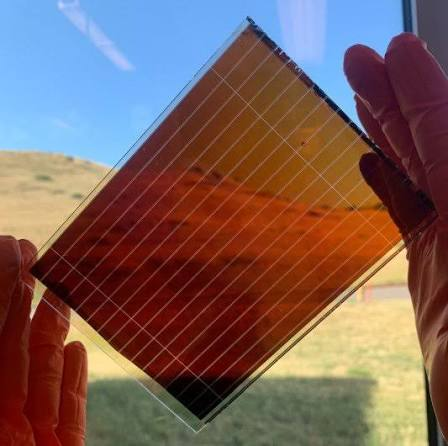
Rather than replacing silicon immediately, many manufacturers are developing perovskite-silicon tandem solar cells.
In these systems:
- Silicon captures lower-energy light.
- Perovskite captures higher-energy light.
Together they harvest more of the solar spectrum than either material alone.
Benefits include:
- Higher efficiency
- Longer energy production
- Better rooftop performance
- Reduced installation costs
Many industry experts believe tandem cells will be the first commercial success for perovskites.
Manufacturing Advantages
Perovskite production offers several benefits over traditional solar manufacturing.
Lower Production Costs
Manufacturing uses:
- Solution-based printing
- Inkjet deposition
- Spray coating
- Spin coating
These methods are simpler than silicon wafer production.
Faster Production
Production lines may manufacture panels much faster than conventional silicon factories.
Lower Carbon Footprint
Since manufacturing consumes less energy, the overall environmental impact is reduced.
Applications of Perovskite Solar Panels
Perovskite technology could expand solar power into many new markets.
Residential Rooftops
Higher efficiency means homeowners can generate more electricity from smaller roofs.
Commercial Buildings
Office buildings can benefit from lightweight rooftop systems with higher power density.
Building-Integrated Photovoltaics (BIPV)
One of the most exciting applications is Building-Integrated Photovoltaics (BIPV).
Perovskite materials can be integrated into:
- Windows
- Glass facades
- Skylights
- Building walls
- Roofing materials
Buildings could generate electricity without traditional solar panels.
Electric Vehicles
Automakers are exploring flexible perovskite panels for:
- EV roofs
- Solar charging
- Auxiliary power
- Extended driving range
Portable Electronics
Their lightweight nature makes them suitable for:
- Camping equipment
- Portable chargers
- Emergency power kits
- Military applications
Space Technology
Because of their high power-to-weight ratio, perovskite solar cells are also being studied for satellites and space missions.
Challenges Facing Perovskite Solar Panels
Despite impressive progress, several obstacles remain.
1. Stability Problems
The largest challenge is long-term durability.
Perovskite materials can degrade when exposed to:
- Moisture
- Oxygen
- UV radiation
- Heat
Researchers are developing protective coatings and improved formulations to increase lifespan.
2. Limited Lifetime
Silicon panels typically last 25–30 years.
Perovskite panels must prove they can achieve similar long-term reliability before widespread adoption.
3. Lead Content
Many high-performance perovskite materials contain lead.
Although the quantity is small, manufacturers are working on:
- Better encapsulation
- Lead recycling
- Lead-free perovskite alternatives
4. Large-Scale Manufacturing
Producing small laboratory cells is relatively easy.
Scaling up to mass production while maintaining high efficiency and quality remains a significant engineering challenge.
Commercialization Timeline
The industry is progressing rapidly.
2025–2027
- Pilot production lines
- Demonstration projects
- Small commercial installations
- Improved durability testing
2027–2030
- Wider commercial availability
- Tandem solar panels enter premium markets
- Increased manufacturing capacity
After 2030
- Potential mass adoption
- Lower costs through economies of scale
- Greater use in buildings, vehicles, and portable electronics
While timelines may vary by manufacturer, perovskite technology is moving steadily toward commercial deployment.
Perovskite vs Silicon Solar Panels
| Feature | Perovskite Solar Panels | Silicon Solar Panels |
|---|---|---|
| Efficiency | Very High (rapidly improving) | High and mature |
| Manufacturing Cost | Lower potential | Higher |
| Weight | Lightweight | Heavier |
| Flexibility | Flexible | Rigid |
| Production Energy | Low | High |
| Commercial Maturity | Emerging | Fully commercial |
| Lifespan | Still improving | 25–30 years |
Environmental Benefits
Perovskite solar technology may contribute to:
- Lower manufacturing emissions
- Reduced material consumption
- Higher renewable energy generation
- Faster clean energy deployment
- Lower carbon footprint
- Increased global access to affordable solar power
If durability challenges are solved, these panels could significantly accelerate the transition to net-zero energy systems.
Future Outlook
Researchers continue to break efficiency records while improving stability and scalability. Major investments from universities, startups, and established solar manufacturers are accelerating commercialization.
Rather than replacing silicon overnight, perovskite-silicon tandem solar panels are expected to lead the first wave of adoption, combining the reliability of silicon with the high efficiency of perovskites.
As manufacturing scales and costs fall, perovskite solar panels could become a key technology for rooftops, buildings, electric vehicles, portable devices, and future energy systems.