
Introduction
For years, lithium-ion batteries have dominated everything from smartphones and laptops to electric cars and grid-scale energy storage. But the battery industry is looking for alternatives that can reduce dependence on critical minerals and make energy storage more affordable.
One of the most promising candidates is the sodium ion battery.

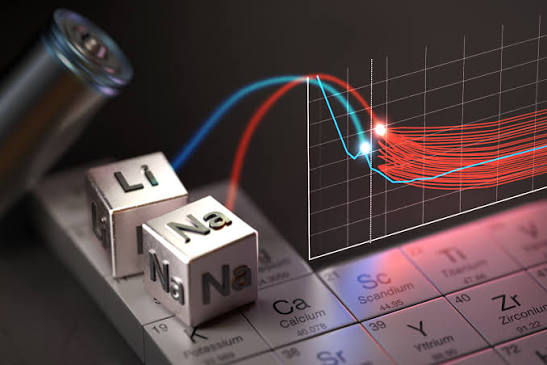
Instead of relying on lithium, sodium-ion batteries use sodium ions to move charge between electrodes. Sodium is extremely abundant and widely distributed around the world, making it an attractive alternative for applications where maximum energy density isn’t the only priority.
The technology isn’t simply a replacement for lithium-ion batteries. Sodium-ion batteries have their own strengths and weaknesses. They generally offer lower energy density than today’s leading lithium-ion chemistries, but they can provide advantages in cost, raw-material availability, low-temperature performance and supply-chain resilience.
And the technology is moving beyond laboratories. Battery manufacturers, including China’s CATL, have been working to bring sodium-ion cells into commercial and industrial-scale production.
So, could sodium become the next major battery material?
The answer may depend less on replacing lithium everywhere and more on finding the applications where sodium makes the most economic sense.
What Is a Sodium-Ion Battery?
A sodium-ion battery is a rechargeable battery that stores and releases electricity by moving sodium ions between two electrodes.
The basic principle is similar to a lithium-ion battery.
A typical sodium-ion cell contains:
- Cathode: stores sodium ions during part of the battery cycle
- Anode: receives sodium ions during charging
- Electrolyte: allows ions to move between the electrodes
- Separator: keeps the electrodes apart while allowing ions to pass through
- Current collectors: carry electrons to and from the external circuit
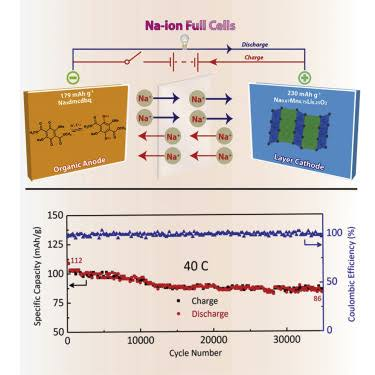
During charging, an external power source drives sodium ions toward the anode. During discharge, the ions move back toward the cathode while electrons travel through the external circuit, producing usable electricity.
The important difference is the ion doing the work.
Lithium-ion battery → lithium ions
Sodium-ion battery → sodium ions
That seemingly small change has major consequences for materials, cost and performance.
How Does Sodium Battery Technology Work?
Think of a rechargeable battery as a system that moves ions in one direction while charging and in the opposite direction while producing electricity.
In a sodium-ion battery:
1. Charging
Electricity from the grid, solar panels or a charging station pushes sodium ions away from the cathode.
The sodium ions travel through the electrolyte toward the anode.
At the same time, electrons travel through the external electrical circuit.
2. Energy storage
The sodium ions are stored within the anode material.
The battery is now charged and ready to provide electricity.
3. Discharging
When a device or electric vehicle needs power, sodium ions move back toward the cathode.
Electrons travel through the external circuit, powering the connected equipment.
4. Recharging
Once the battery is depleted, the process can be reversed.
This repeated movement of ions allows the battery to be charged and discharged many times.
Why Replace Lithium With Sodium?
The biggest attraction isn’t that sodium is chemically superior to lithium.
It is abundance.
Sodium is one of the most common elements on Earth and is found in enormous quantities, including in ordinary salt.
Lithium, meanwhile, is much less abundant and its extraction and processing have become increasingly important issues as demand for batteries grows.
This creates a potential strategic advantage for sodium-ion technology.
Potential benefits include:
- Abundant raw material
- Reduced dependence on lithium
- Potentially lower material costs
- Greater geographic diversity of supply
- Reduced exposure to lithium price fluctuations
- Potential reduction in dependence on cobalt-containing materials
- Strong potential for stationary energy storage
This doesn’t mean sodium-ion batteries automatically eliminate all supply-chain concerns. They still require other materials, manufacturing capacity and specialized battery components.
But they could diversify the battery ecosystem.
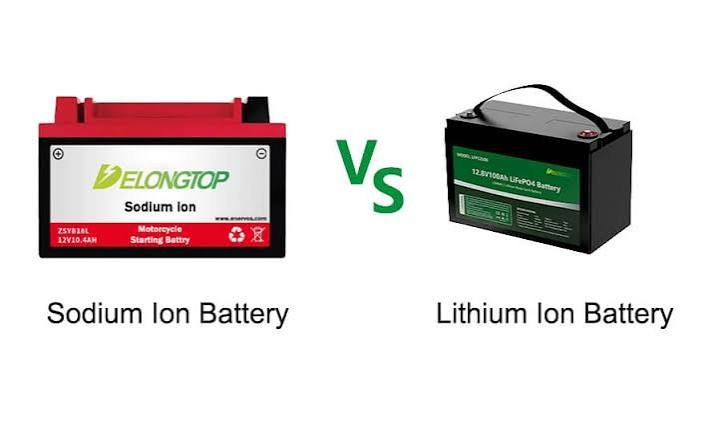
Sodium-Ion vs Lithium-Ion Batteries
The most important question is how sodium-ion compares with lithium-ion.
| Feature | Sodium-Ion | Lithium-Ion |
|---|---|---|
| Main charge carrier | Sodium ions | Lithium ions |
| Energy density | Generally lower | Generally higher |
| Raw-material availability | Very high | More limited |
| Lithium required | No | Yes |
| Cobalt | Can be avoided depending on chemistry | Can be avoided in some chemistries |
| Cost potential | Potentially lower | Highly competitive today |
| Cold-weather performance | Can be strong | Varies by chemistry |
| Technology maturity | Emerging/commercializing | Highly mature |
| Best applications | Grid storage, affordable EVs | EVs, electronics, high-energy applications |
| Supply-chain diversification | Major advantage | More concentrated critical-mineral exposure |
The key point is that sodium-ion isn’t necessarily better than lithium-ion across every category.
Instead, the two technologies could coexist.
Energy Density: Sodium’s Biggest Disadvantage
Energy density measures how much energy a battery can store relative to its weight or volume.
This is extremely important for applications such as electric cars.
A vehicle with a high-energy-density battery can potentially travel farther without adding excessive battery weight.
Sodium-ion batteries generally have lower energy density than the best lithium-ion batteries.
That means a sodium-ion pack may need to be larger or heavier to store the same amount of energy.
For a premium long-range EV, this can be a significant disadvantage.
But consider a stationary battery sitting beside a solar farm.
Its physical size may matter much less.
This is why sodium-ion technology could make particular sense for grid energy storage.
Why Sodium-Ion Could Be Attractive for Grid Storage
Grid batteries don’t need to carry passengers.
They don’t need to fit underneath a vehicle.
And they don’t necessarily need to maximize energy stored per kilogram.
Instead, grid operators care about things such as:
- Cost per stored kilowatt-hour
- Cycle life
- Safety
- Availability of materials
- Performance in different climates
- Maintenance
- Charging and discharging efficiency
- Long-term reliability
This changes the equation.
A slightly heavier battery can still be economically attractive if its materials are cheaper and more readily available.
Solar + sodium-ion storage
Imagine a solar farm producing large amounts of electricity during the afternoon.
Without storage, excess electricity can be difficult to use immediately.
A battery can store that electricity and release it later in the evening when demand rises.
Sodium-ion batteries could become part of this expanding stationary-storage market.
CATL and the Move Toward Commercial Sodium-Ion Batteries
One of the strongest signals that sodium battery technology is moving toward the mainstream is investment by major battery manufacturers.
Chinese battery giant CATL has been one of the industry’s most prominent companies developing sodium-ion technology.
CATL introduced its sodium-ion battery technology publicly in 2021 and has subsequently worked on commercialization and industrial-scale manufacturing.
The company’s efforts have helped shift sodium-ion batteries from an experimental technology toward a potential mass-market battery chemistry.
By the 2025–2026 period, the industry was increasingly focused on scaling production, improving energy density and integrating sodium-ion cells into real-world vehicles and energy-storage systems.
The significance goes beyond one company.
Large-scale manufacturing can help reduce costs through:
More production → manufacturing learning → better processes → lower costs → wider adoption
As production volumes increase, suppliers also gain incentives to develop better materials and manufacturing equipment.
Where Will Sodium-Ion Batteries Be Used First?
Sodium-ion batteries are unlikely to replace lithium-ion batteries everywhere overnight.
Instead, adoption is likely to begin where their advantages matter most.
1. Grid Energy Storage
This could be one of the biggest opportunities.
Grid storage requires enormous quantities of batteries, and energy density is less important than it is in mobile applications.
Sodium’s abundance could become particularly valuable as electricity systems add more solar and wind power.
2. Entry-Level Electric Vehicles
Affordable EVs represent another promising market.
A city car doesn’t necessarily need a 600-kilometer driving range.
For many drivers, a lower-cost vehicle with a moderate battery pack may be more useful.
Sodium-ion batteries could potentially reduce dependence on expensive lithium-based battery materials while providing sufficient range for everyday urban transportation.
3. Two- and Three-Wheelers
Electric scooters, motorcycles and three-wheelers could also become important markets, particularly in regions where affordability is a major consideration.
These vehicles typically have smaller battery packs than passenger cars, making cost an important factor.
4. Backup Power
Sodium-ion batteries could eventually be used for:
- Data-center backup systems
- Telecommunications infrastructure
- Commercial buildings
- Residential backup
- Industrial power systems
However, competition from lithium iron phosphate (LFP) batteries remains strong.
Sodium-Ion Batteries and Supply-Chain Resilience
One of the most interesting aspects of sodium-ion technology isn’t simply battery performance.
It is geopolitics and resource security.
The global energy transition requires huge quantities of batteries.
If electric vehicles, renewable energy storage and other electrified technologies continue expanding rapidly, demand for battery materials will also rise.
Relying on a relatively small number of critical-mineral supply chains creates potential risks.
Sodium provides another option.
Because sodium is widely available, countries and manufacturers could potentially build battery supply chains with less dependence on lithium extraction.
That doesn’t make sodium batteries completely independent of global supply chains.
They still require:
- Cathode materials
- Anode materials
- Electrolytes
- Current collectors
- Manufacturing equipment
- Battery-management systems
But diversification itself has value.
Could Sodium-Ion Batteries Be Cheaper?
Potentially, yes—but “sodium is abundant” doesn’t automatically mean sodium-ion batteries are already cheaper in every situation.
Battery cost depends on much more than the price of one raw material.
Manufacturers must consider:
- Cell manufacturing
- Material processing
- Energy density
- Production scale
- Equipment
- Supply chains
- Yield
- Packaging
- Thermal management
- Transportation
Lithium-ion batteries also benefit from enormous manufacturing scale and years of optimization.
Therefore, sodium-ion’s cost advantage has to be demonstrated at industrial scale.
The more sodium-ion manufacturing grows, the more opportunities manufacturers have to reduce production costs.
What About Cobalt?
Another potential advantage is that sodium-ion battery chemistries can be designed without cobalt.
Cobalt has attracted attention because of its cost, supply-chain concentration and environmental and social concerns associated with some mining operations.
However, it’s important to avoid oversimplifying the comparison.
Modern lithium-ion batteries can also use chemistries such as LFP (lithium iron phosphate) that don’t require cobalt.
So the real comparison isn’t:
Sodium = no cobalt
versus
Lithium = cobalt
The battery industry has already been reducing dependence on cobalt in several lithium-ion chemistries.
Sodium’s broader advantage is the potential to reduce dependence on lithium itself, while also allowing cobalt-free battery designs.
Cold-Weather Performance Could Be Another Advantage
Battery performance can deteriorate in very cold temperatures.
This matters for EVs operating in places with harsh winters.
Some sodium-ion designs have demonstrated promising low-temperature performance, which could make them attractive for cold climates.
This doesn’t mean every sodium-ion battery automatically performs better in winter.
Battery chemistry and design still matter.
But strong low-temperature characteristics could become an important selling point.
Sodium-Ion Battery Safety
Safety is another important consideration.
Like lithium-ion batteries, sodium-ion batteries are electrochemical systems capable of storing substantial amounts of energy.
They are therefore not inherently risk-free.
However, specific sodium-ion chemistries and cell designs can offer useful thermal and safety characteristics.
Battery safety ultimately depends on:
- Chemistry
- Cell construction
- Thermal management
- Battery-management systems
- Charging controls
- Manufacturing quality
- Pack design
So consumers should evaluate the complete battery system rather than assuming that one chemistry is automatically safer.
The Biggest Challenges Facing Sodium-Ion Batteries
Despite the excitement, sodium-ion technology still faces important obstacles.
Lower Energy Density
This remains the biggest limitation.
For long-range EVs, weight and volume matter enormously.
Lithium-ion technology has a substantial head start here.
Manufacturing Scale
Lithium-ion production has been refined for decades.
Sodium-ion manufacturing is comparatively young.
Scaling production while maintaining quality and reliability will take time.
Consumer Awareness
Most consumers understand lithium-ion batteries.
Sodium-ion is still unfamiliar to many people.
Manufacturers will need to prove durability, reliability and real-world performance.
Competition From LFP
Sodium-ion isn’t entering an empty market.
LFP batteries are already widely used and have become highly competitive for EVs and energy storage.
Sodium-ion therefore needs to offer a compelling combination of cost, performance and availability.
Sodium-Ion vs Lithium-Ion: Which Is Better?
There isn’t one universal winner.
Lithium-ion is likely to remain stronger for:
- Long-range EVs
- Smartphones
- Laptops
- High-performance electric vehicles
- Applications where weight and size are critical
Sodium-ion could be particularly attractive for:
- Grid storage
- Renewable-energy storage
- Entry-level EVs
- Urban vehicles
- Backup power
- Applications where low material cost is more important than maximum energy density
The future battery market may therefore become increasingly diversified.
Instead of one chemistry powering everything, different batteries could serve different purposes.
What Sodium-Ion Batteries Mean for Renewable Energy
The growth of solar and wind power creates a major need for energy storage.
Solar generation is strongest during daylight hours, while electricity demand can remain high after sunset.
Wind generation can also fluctuate depending on weather conditions.
Batteries help bridge these gaps.
If sodium-ion batteries can achieve competitive costs at scale, they could add another tool to the energy-storage market.
That could be particularly valuable in countries that want to expand renewable energy without becoming overly dependent on imported battery materials.
The Future of Sodium Battery Technology
The next few years will be critical.
Manufacturers are likely to focus on three major goals:
1. Higher energy density
Researchers are working to increase how much energy sodium-ion cells can store.
2. Lower manufacturing costs
Large-scale production should help manufacturers improve efficiency and reduce costs.
3. Longer life and better reliability
Commercial customers need batteries capable of performing reliably for many years and thousands of cycles where the application demands it.
If sodium-ion batteries can improve on all three fronts, adoption could accelerate considerably.
Frequently Asked Questions
What is a sodium-ion battery?
A sodium-ion battery is a rechargeable battery that uses sodium ions to store and release electrical energy instead of lithium ions.
Is sodium-ion better than lithium-ion?
Not universally. Sodium-ion offers advantages in material abundance, potential cost and supply-chain diversification, while lithium-ion generally offers higher energy density and greater commercial maturity.
Are sodium-ion batteries cheaper?
They have the potential to be cheaper because sodium is abundant and widely available, but actual battery costs depend on manufacturing scale, materials and cell design.
Can sodium-ion batteries power electric cars?
Yes. Sodium-ion batteries are being developed and deployed for electric vehicles, particularly applications where low cost and moderate range are more important than maximum energy density.
Are sodium-ion batteries safer?
Safety depends on the specific chemistry, cell design and battery-management system. Sodium-ion batteries are not automatically risk-free, but some designs have promising safety characteristics.
Do sodium-ion batteries contain lithium?
No. The defining feature of a sodium-ion battery is that sodium ions carry the charge rather than lithium ions.
Why is CATL developing sodium-ion batteries?
CATL sees sodium-ion technology as a way to diversify battery chemistries and provide alternatives for applications where cost, supply-chain resilience and low-temperature performance are important.
Will sodium-ion replace lithium-ion?
Probably not completely. The more likely future is a mixed battery market in which lithium-ion remains dominant in high-energy applications while sodium-ion expands in grid storage, affordable EVs and other cost-sensitive applications.
Final Verdict
The rise of the sodium ion battery doesn’t mean the end of lithium-ion technology.
Instead, it could mark the beginning of a more diverse battery industry.
Lithium-ion batteries have an enormous advantage in energy density, manufacturing scale and commercial experience. Sodium-ion batteries, meanwhile, bring a different set of advantages: abundant raw materials, potential cost benefits, supply-chain diversification and promising performance in certain applications.
As companies such as CATL push sodium battery technology toward industrial-scale production, the technology is becoming increasingly difficult to dismiss as merely a laboratory experiment.
The most likely future isn’t sodium-ion vs lithium-ion.
It’s sodium-ion and lithium-ion, each doing the jobs they’re best suited for.
And for a world that needs dramatically more batteries to support electric transportation and renewable energy, having another major battery chemistry could be one of the industry’s biggest advantages.