
How Electric Cars Could Become Power Plants
Electric vehicles (EVs) are transforming transportation by reducing emissions and replacing fossil fuels with electricity. But what if your electric car could do more than simply drive you to work? Imagine your EV acting as a mobile power plant—storing electricity when renewable energy is abundant and sending it back to homes or the electrical grid when demand is high.
How Electric Cars Could Become Power Plants | V2G Guide2026
This concept is becoming a reality through Vehicle-to-Grid (V2G) technology. By combining bidirectional charging with smart energy management, millions of electric vehicles could become a massive distributed energy storage network that supports renewable energy, stabilizes power grids, and even helps owners earn money.
What Is Vehicle-to-Grid (V2G)?
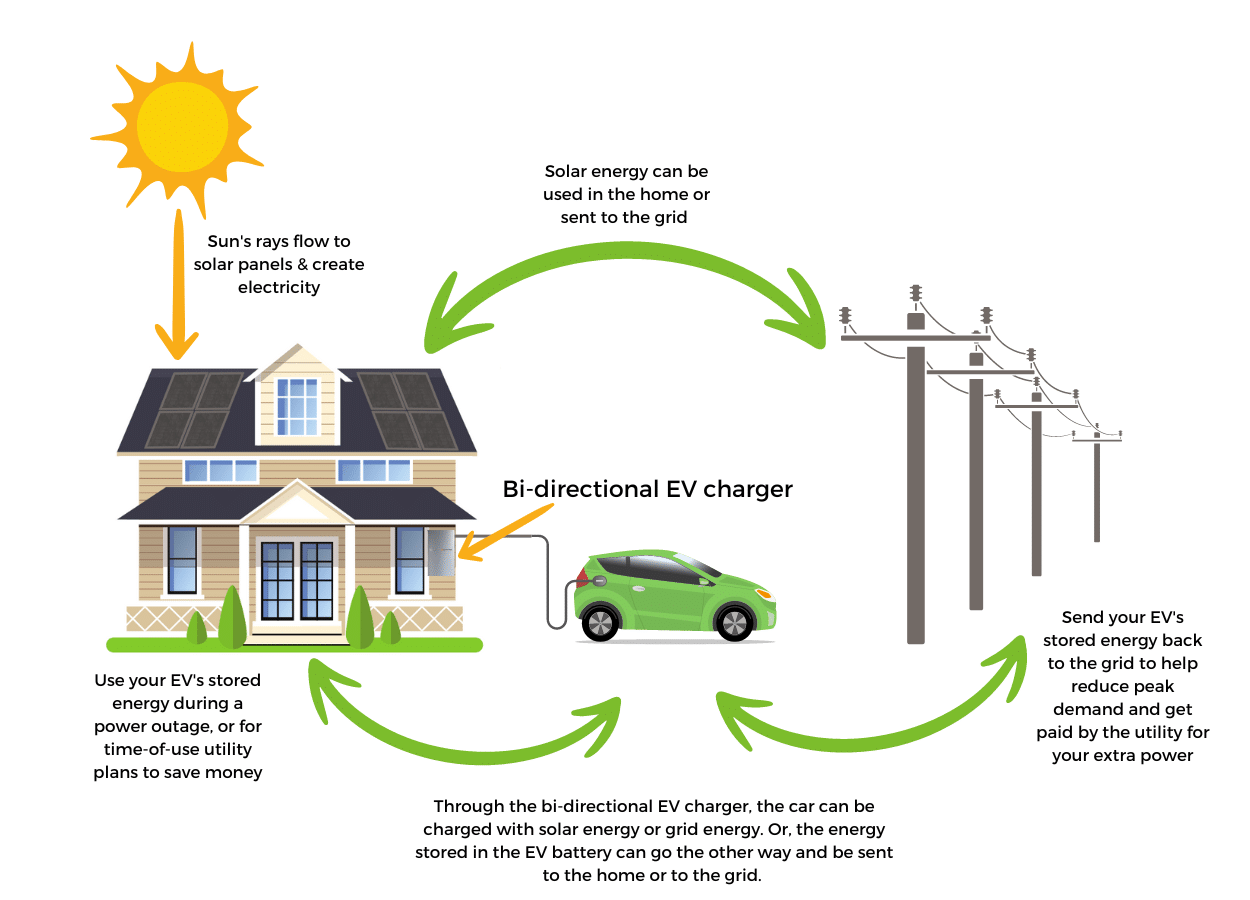
Vehicle-to-Grid (V2G) is a technology that allows electric vehicles to both charge from the electricity grid and discharge electricity back into it.
Unlike traditional EV charging, where electricity flows in only one direction, V2G uses bidirectional charging, enabling electricity to move both ways.
This means an EV battery can:
- Store excess renewable energy
- Supply electricity back to the grid during peak demand
- Power homes or businesses during outages
- Help maintain grid stability
Instead of sitting unused for most of the day, parked EVs become valuable energy assets.
How Bidirectional Charging Works
Traditional EV chargers only transfer electricity from the grid to the vehicle.
A bidirectional charger works differently by:
- Charging the battery when electricity prices are low.
- Monitoring grid demand in real time.
- Sending stored electricity back when demand increases.
- Recharging again when renewable energy production rises.
This creates a flexible energy system where vehicles act as temporary battery storage.
Why Modern Power Grids Need V2G
Renewable energy sources like solar and wind produce electricity only when the sun shines or the wind blows.
For example:
- Solar farms generate excess electricity during sunny afternoons.
- Wind farms often produce more power overnight.
- Electricity demand usually peaks in the evening.
Without sufficient storage, excess renewable energy may be wasted.
Electric vehicle batteries provide an enormous storage opportunity because millions of cars remain parked around 90–95% of the time.
Grid Balancing with Electric Vehicles
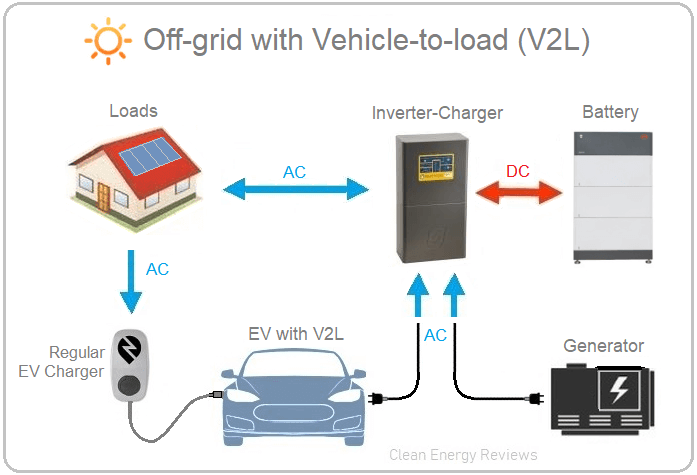
Power grids must continuously balance electricity generation and consumption.
If demand suddenly exceeds supply:
- Grid frequency drops.
- Blackout risks increase.
- Expensive backup power plants must start.
With V2G:
- Thousands of connected EVs instantly release small amounts of electricity.
- The combined output stabilizes the grid.
- Utilities avoid firing up fossil fuel power plants.
- Renewable energy is used more efficiently.
This process is known as grid balancing.
Benefits of Vehicle-to-Grid Technology
1. Supports Renewable Energy
V2G stores surplus solar and wind energy instead of wasting it.
This improves renewable energy utilization and reduces dependence on fossil fuels.
2. Reduces Electricity Costs
EV owners can:
- Charge during off-peak hours
- Sell electricity during expensive peak periods
- Lower household electricity bills
Some utilities already offer financial incentives for participating in V2G programs.
3. Improves Grid Reliability
A distributed network of millions of EV batteries provides backup capacity during:
- Heat waves
- Cold weather
- Grid emergencies
- Unexpected power plant failures
4. Reduces Carbon Emissions
Instead of using diesel generators or gas-fired power plants during demand spikes, utilities can draw clean electricity stored in EV batteries.
5. Provides Emergency Backup Power
Some bidirectional EVs can power:
- Homes
- Offices
- Medical equipment
- Emergency shelters
During power outages, an EV battery can provide electricity for hours or even days, depending on energy use.
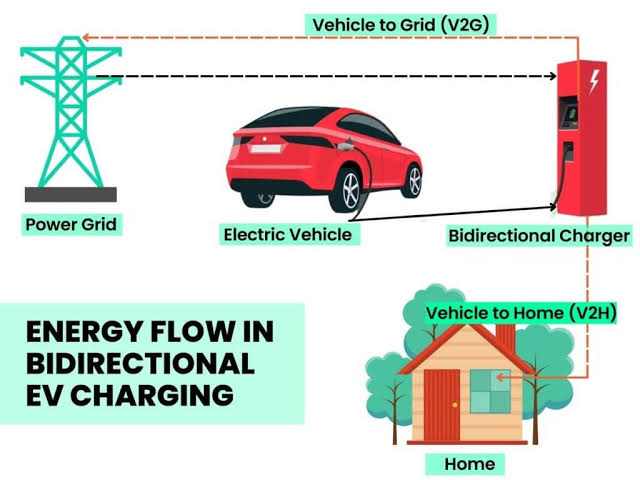
Vehicle-to-Home (V2H) vs Vehicle-to-Grid (V2G)
| Feature | Vehicle-to-Home (V2H) | Vehicle-to-Grid (V2G) |
|---|---|---|
| Supplies home electricity | ✅ | ✅ |
| Sends power to utility grid | ❌ | ✅ |
| Reduces home electricity bills | ✅ | ✅ |
| Supports grid stability | ❌ | ✅ |
| Generates utility payments | Limited | Yes |
Challenges Facing V2G
Despite its promise, several challenges remain.
Battery Degradation
Frequent charging and discharging can increase battery wear. However, smart battery management systems help minimize this effect.
Charging Infrastructure
Most public EV chargers currently support only one-way charging.
Expanding bidirectional charging infrastructure will require significant investment.
Grid Regulations
Electricity markets must update regulations to allow EV owners to sell stored electricity.
Policies vary widely between countries.
Communication Standards
Utilities, charging stations, and vehicles must communicate securely and instantly.
Standardized software platforms are essential for large-scale deployment.
Which EVs Support Bidirectional Charging?
An increasing number of electric vehicles offer bidirectional charging capabilities, although compatibility varies by market and charging hardware.
Examples include:
- The Nissan Leaf
- The Hyundai Ioniq 5
- The Kia EV6
- The Ford F-150 Lightning
As charging standards continue to evolve, more manufacturers are expected to support V2G features.
Real-World Examples
Several countries are already testing V2G systems:
- Japan uses EVs as emergency backup power after natural disasters.
- The Netherlands has launched pilot projects connecting EVs to local grids.
- The United Kingdom is running residential V2G programs to reduce peak electricity demand.
- Australia is exploring large-scale integration of EV batteries into renewable energy systems.
These projects demonstrate that EVs can become an important part of future energy infrastructure.
The Future of Electric Cars as Power Plants
By 2035, the world could have hundreds of millions of electric vehicles on the road.
If only a fraction participate in V2G programs, their combined battery capacity could exceed many of today’s dedicated grid-scale battery installations.
Future smart energy systems may automatically:
- Charge EVs using excess solar power
- Discharge batteries during evening demand peaks
- Stabilize electricity frequency
- Reduce renewable energy curtailment
- Provide backup power during emergencies
Artificial intelligence, smart grids, and advanced battery technologies will make these energy exchanges increasingly efficient and automated.
Conclusion
Vehicle-to-Grid technology is redefining the role of electric vehicles. Instead of serving solely as transportation, EVs can become flexible energy resources that store renewable electricity, support grid stability, lower electricity costs, and improve energy resilience.
As bidirectional charging infrastructure expands and regulations mature, electric cars may evolve into one of the world’s largest distributed power networks—accelerating the transition to a cleaner, smarter, and more reliable energy future.
What is Vehicle-to-Grid (V2G) technology? How does bidirectional charging work? Can electric cars power a house? Which electric vehicles support V2G? Is Vehicle-to-Grid safe for EV batteries? What is the difference between V2G and V2H? Can EV owners earn money through Vehicle-t