
SEO Title: What Is Floating Solar? A Complete Guide to Floatin
https://ychef.files.bbci.co.uk/1280×720/p0dgctzb.jpgg Solar Farms (Floatovoltaics)
Focus Keyword: floating solar panels
Secondary Keywords: floatovoltaics, floating solar farm benefits, what is floating solar, floating solar power plants, floating photovoltaic systems, solar panels on water, floating PV, reservoir solar farms
Permalink: floating-solar-panels-floatovoltaics-guide
Meta Description (160 Characters):
Learn what floating solar panels are, how floatovoltaics work, their benefits, higher efficiency, reduced water evaporation, global projects, and future potential.
Floating Solar Farms (Floatovoltaics): How Solar Panels on Water Are Solving Two Problems at Once
As countries race toward cleaner energy, one challenge keeps appearing: where should all the solar panels go?
Large solar farms require enormous amounts of land, which can compete with agriculture, forests, and urban development. Engineers have found an innovative solution—floating solar panels, also known as floatovoltaics.
Instead of covering valuable land, these solar power plants float on lakes, reservoirs, irrigation ponds, and even abandoned mining pits. The idea sounds simple, but the advantages are remarkable.
Floating solar systems not only generate clean electricity but also improve panel efficiency, reduce water evaporation, and conserve land at the same time. These multiple benefits have made floatovoltaics one of the fastest-growing segments of the renewable energy industry.
In this guide, you’ll learn what floating solar is, how it works, its advantages, limitations, and why countries around the world are rapidly investing in this technology.
What Is Floating Solar?
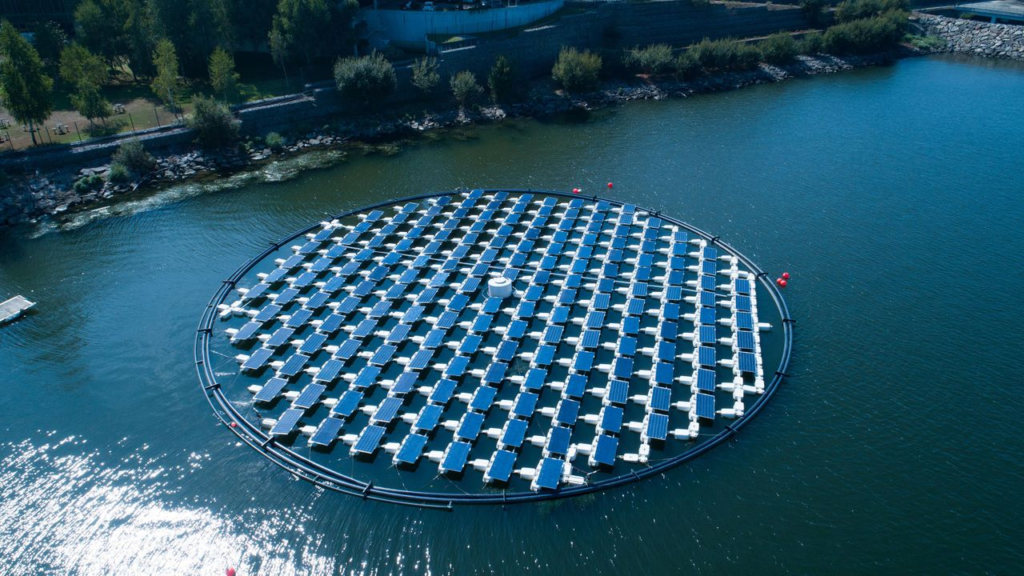
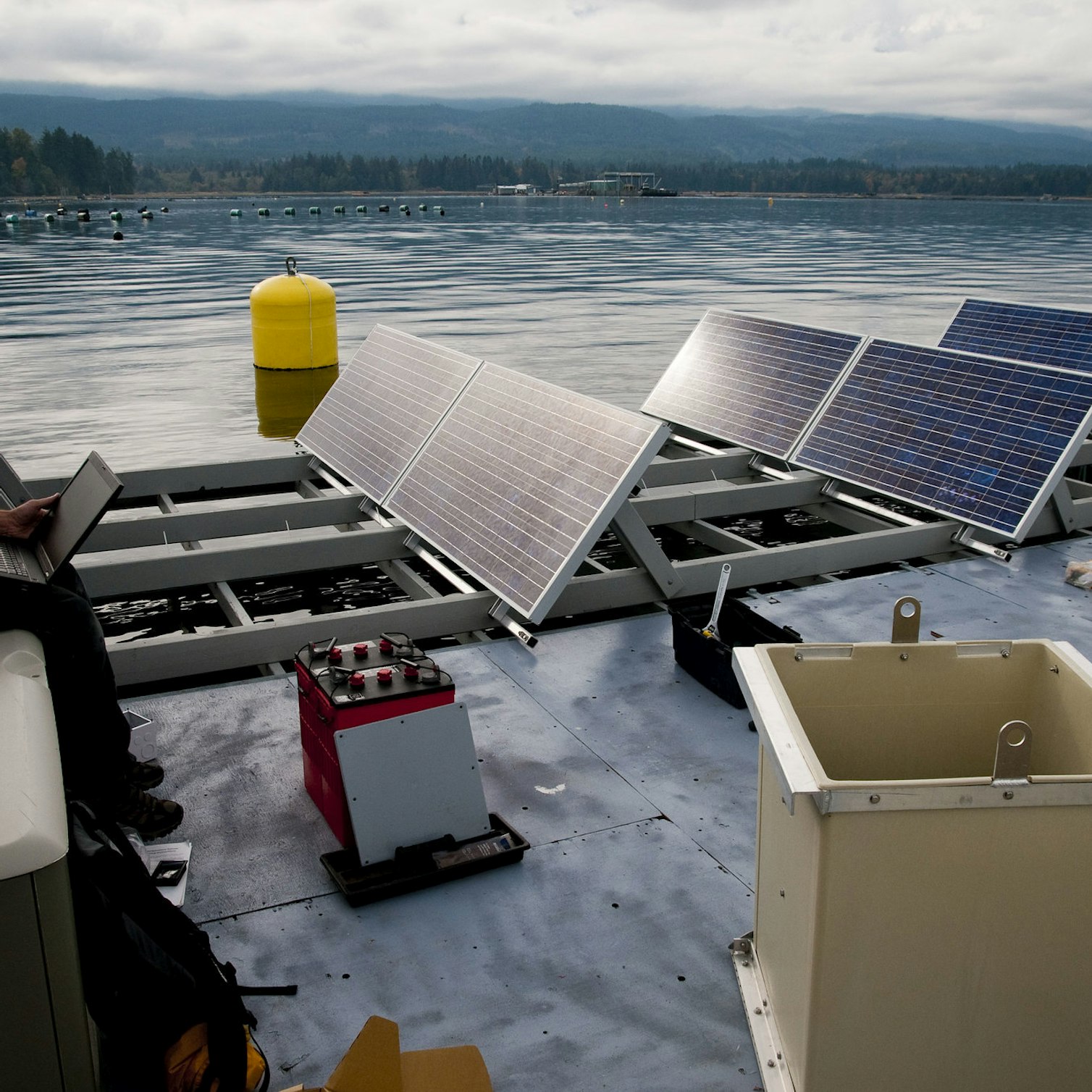
Floating solar refers to photovoltaic (PV) systems installed on floating structures positioned on water bodies rather than on land.
The technology is commonly called:
- Floating Solar Panels
- Floating PV
- Floatovoltaics
- Floating Solar Farms
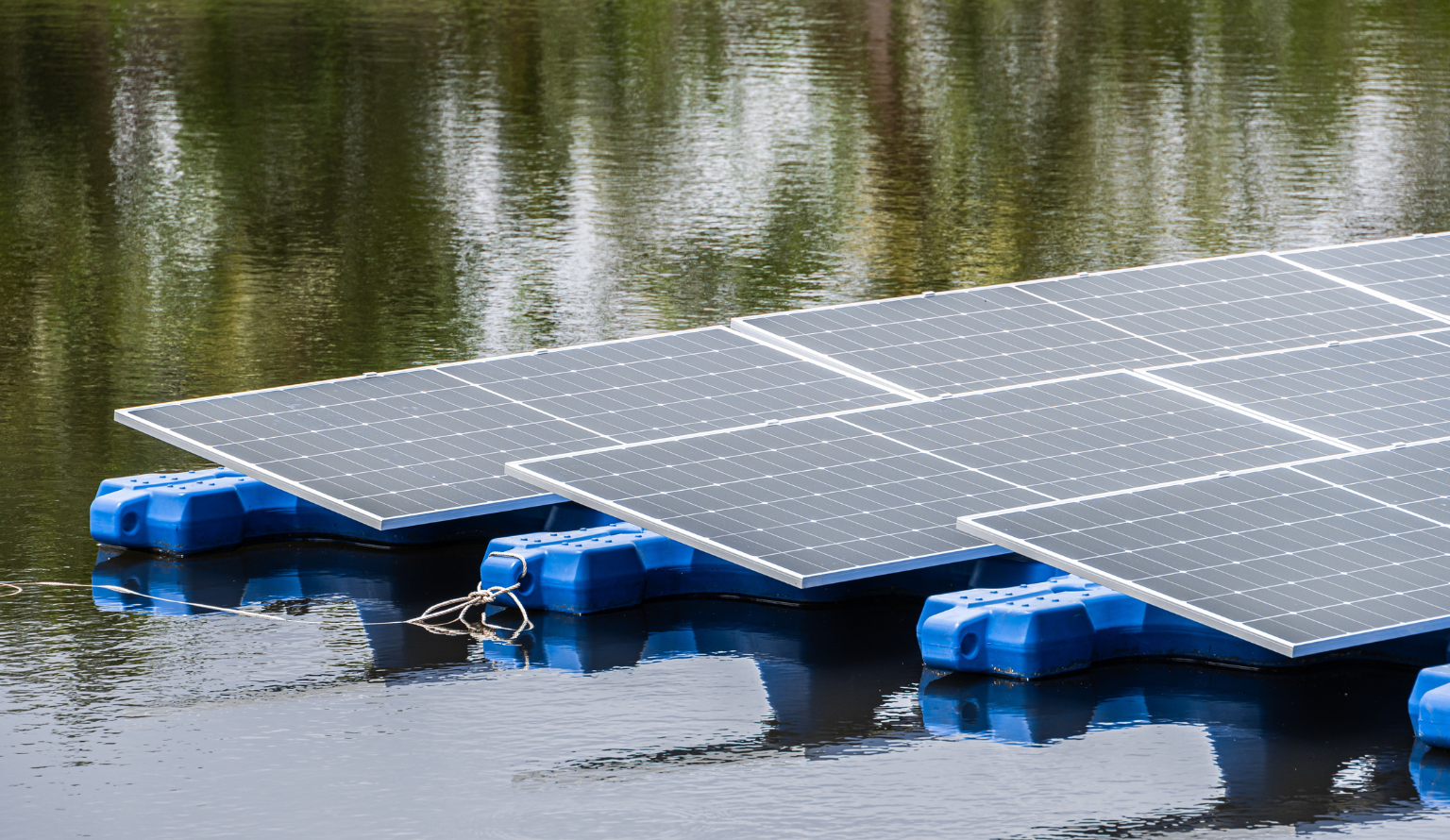
Instead of mounting panels on rooftops or ground-mounted frames, the solar modules sit on durable floating platforms anchored securely to the bottom or shoreline of lakes and reservoirs.
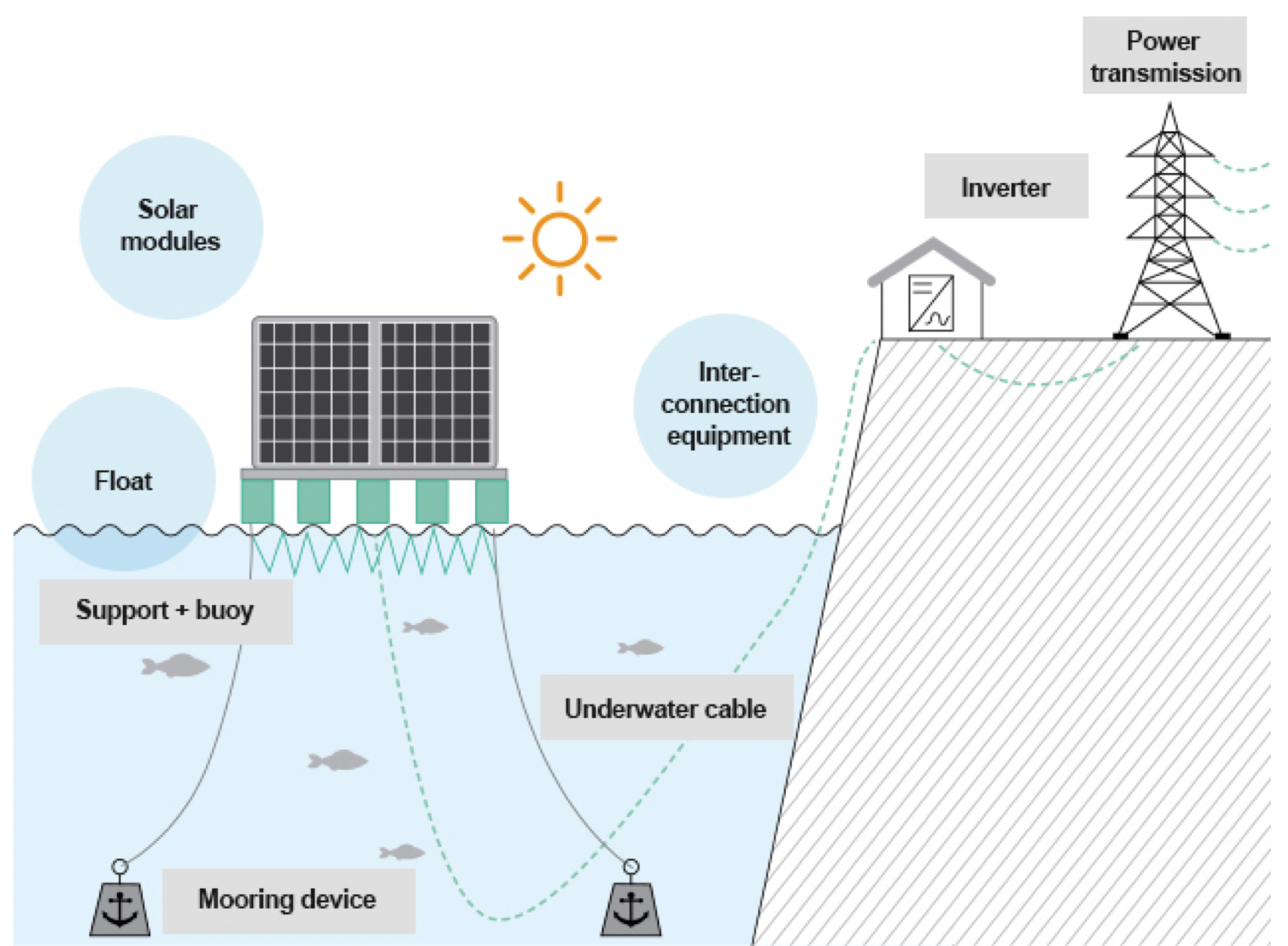
The electricity generated is transmitted through waterproof cables to nearby substations and then into the electrical grid.
How Do Floating Solar Panels Work?
Although they float on water, the electricity generation process is identical to conventional solar panels.
The system includes:
- High-efficiency solar panels
- UV-resistant floating pontoons
- Anchoring systems
- Waterproof electrical cables
- Inverters
- Grid connection equipment
Step 1
Sunlight strikes the photovoltaic cells.
Step 2
The panels convert sunlight into direct current (DC).
Step 3
Inverters convert DC electricity into alternating current (AC).
Step 4
Electricity is supplied to homes, industries, or the national grid.
The major difference lies beneath the panels—the cooling water surface.
Why Floating Solar Panels Produce More Electricity
One of the biggest floating solar farm benefits comes from natural cooling.
Solar panels become less efficient as temperatures rise.
Ground-mounted panels often heat up significantly during sunny afternoons, reducing electricity production.
Floating installations remain cooler because nearby water continuously absorbs heat.
This cooling effect can improve energy output by approximately 10–15%, depending on climate, panel design, wind, and water conditions.
Advantages include:
- Lower operating temperatures
- Improved photovoltaic efficiency
- Reduced thermal stress
- Longer equipment life
- Higher annual energy generation
In hot regions, these gains can make floating solar especially attractive.
Floating Solar Helps Save Water
Another remarkable advantage is water conservation.
Large reservoirs lose huge quantities of water every year through evaporation.
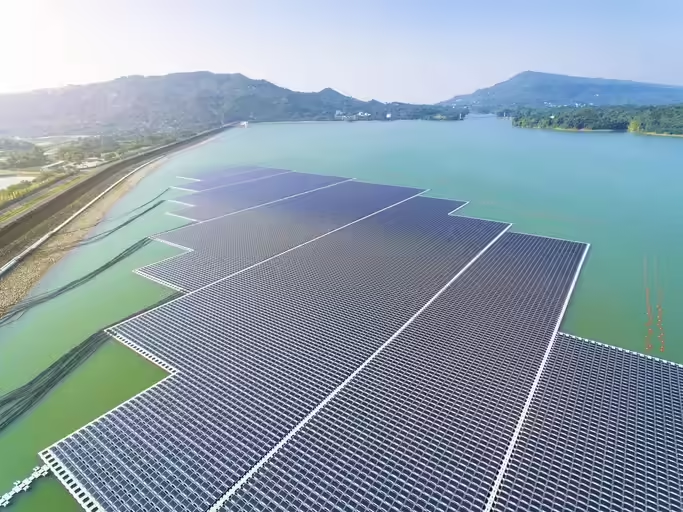
Floating solar panels partially shade the water surface, reducing direct sunlight and slowing evaporation.
Studies and project observations have shown that covering portions of reservoirs can reduce water evaporation by up to 60% under suitable conditions.
This is especially valuable in:
- Drought-prone regions
- Drinking water reservoirs
- Irrigation lakes
- Hydropower reservoirs
- Agricultural water storage
The result is a dual benefit: renewable electricity and better water conservation.
Major Benefits of Floating Solar Farms
1. Saves Valuable Land
Traditional solar farms require large land areas.
Floating solar uses:
- Reservoirs
- Lakes
- Industrial ponds
- Mining pits
- Wastewater treatment ponds
This avoids competing with farmland or urban development.
2. Higher Solar Panel Efficiency
Cooler operating temperatures increase electricity production and reduce performance losses.
3. Reduces Water Evaporation
Reservoir operators can conserve significant amounts of water, particularly in warm climates.
4. Helps Control Algae Growth
By reducing sunlight reaching the water, floating panels can help limit excessive algae growth, improving water quality in some cases.
5. Supports Hydropower
Many countries install floating solar on hydropower reservoirs.
Hydropower provides storage and balancing, while solar generates electricity during sunny hours.
This combination improves overall grid stability.
6. Lower Dust Accumulation
Water environments generally have less airborne dust than dry land, helping panels stay cleaner and reducing maintenance frequency.
Where Are Floating Solar Farms Installed?
Ideal locations include:
- Drinking water reservoirs
- Hydroelectric dams
- Irrigation reservoirs
- Artificial lakes
- Quarry lakes
- Industrial wastewater ponds
- Mining lakes
These sites already have existing infrastructure and often have nearby grid connections.
Real-World Floating Solar Projects
India
India has become a major adopter of floating solar due to limited land availability and growing electricity demand.
Notable projects include floating solar plants on reservoirs in states such as Kerala, Telangana, Madhya Pradesh, and Andhra Pradesh. Several hydropower operators are also integrating floating PV with existing dams to maximize renewable energy production.
China
China operates some of the world’s largest floating solar farms.
Many are built on flooded former coal mining areas that have been transformed into clean energy sites.
These projects generate hundreds of megawatts while giving new purpose to previously unusable land.
The Netherlands
With limited land and extensive water infrastructure, the Netherlands has embraced floating solar on lakes, sand extraction pits, and reservoirs.
The country is also researching offshore floating solar systems designed to withstand waves and changing weather conditions.
Southeast Asia
Countries including Singapore, Indonesia, Thailand, Vietnam, and Malaysia are rapidly expanding floating solar.
Singapore’s large floating solar installation on reservoirs supplies renewable electricity while protecting valuable drinking water resources.
Across Southeast Asia, floating solar helps address land scarcity and growing electricity demand.
Floating Solar vs Ground-Mounted Solar
| Feature | Floating Solar Panels | Ground Solar |
|---|---|---|
| Land Required | Very Low | High |
| Cooling Effect | Natural | Limited |
| Energy Output | Higher in many climates | Standard |
| Water Conservation | Yes | No |
| Installation Cost | Higher | Lower |
| Maintenance | Specialized | Easier |
Challenges of Floating Solar
Despite its advantages, floating solar has some limitations.
Higher Initial Cost
Floating structures, anchors, and waterproof electrical equipment increase installation costs.
Specialized Maintenance
Workers often require boats and marine safety equipment.
Weather Risks
Strong winds, storms, and changing water levels require robust engineering.
Environmental Assessment
Projects must avoid harming aquatic ecosystems, fisheries, and local biodiversity.
Global Growth of Floatovoltaics
Floating solar is expanding rapidly as governments seek cleaner energy without consuming additional land.
Global installed capacity has grown from small demonstration projects to multiple gigawatts, with Asia leading deployment. Analysts expect continued strong growth through the coming decade as costs decline, engineering improves, and countries make greater use of reservoirs, hydropower dams, and industrial water bodies.
The combination of improved efficiency, land conservation, and water savings makes floatovoltaics an increasingly attractive option for utilities and policymakers worldwide.
Is Floating Solar the Future?
Floating solar will not replace rooftop or ground-mounted solar systems.
Instead, it complements them by unlocking previously unused water surfaces for clean energy generation.
For countries facing:
- Population growth
- Land shortages
- Water scarcity
- Rising electricity demand
Floating solar offers an effective solution that addresses multiple challenges simultaneously.
As technology improves and investment increases, floatovoltaics are expected to become an increasingly important part of the global renewable energy mix.
Frequently Asked Questions (FAQ)
What is floating solar?
Floating solar is a photovoltaic system installed on floating platforms placed on lakes, reservoirs, ponds, or other water bodies instead of land.
Why are floating solar panels more efficient?
Water naturally cools the panels, reducing operating temperatures and increasing electricity production by around 10–15% under favorable conditions.
Do floating solar panels reduce water evaporation?
Yes. By shading part of the water surface, floating solar installations can reduce evaporation by up to 60% in suitable environments.
Are floating solar farms safe?
Yes. Modern floating solar farms use corrosion-resistant materials, waterproof electrical systems, secure anchoring, and continuous monitoring to ensure safe operation.
Which countries are leading in floating solar?
China is currently the largest market, while India, Singapore, the Netherlands, Thailand, Indonesia, Vietnam, and Malaysia are expanding installations rapidly.
Can floating solar work with hydropower?
Yes. Floating solar is commonly installed on hydropower reservoirs, allowing solar generation during the day while hydropower balances electricity supply when needed.
Conclusion
Floating solar panels demonstrate how one innovation can solve multiple challenges at once. By generating renewable electricity on lakes and reservoirs, floatovoltaics reduce pressure on valuable land, improve solar panel performance through natural cooling, and help conserve water by reducing evaporation.
As more countries invest in clean energy infrastructure, floating solar farms are likely to become an increasingly common sight on reservoirs and other managed water bodies. For regions seeking sustainable power without sacrificing farmland or urban space, floating solar represents one of the most practical and promising renewable energy solutions available today.
SEO Tags
floating solar panels, floatovoltaics, floating solar farm benefits, what is floating solar, floating photovoltaic systems, solar panels on water, floating PV, renewable energy, clean energy technology, reservoir solar farms, hydropower reservoir solar, solar energy innovation, floating solar India, floating solar China, water conservation, photovoltaic technology, sustainable energy, green electricity, solar farm technology, renewable power generationz