
Bifacial Solar Panels Explained: Double-Sided Solar and Why They Produce More Power
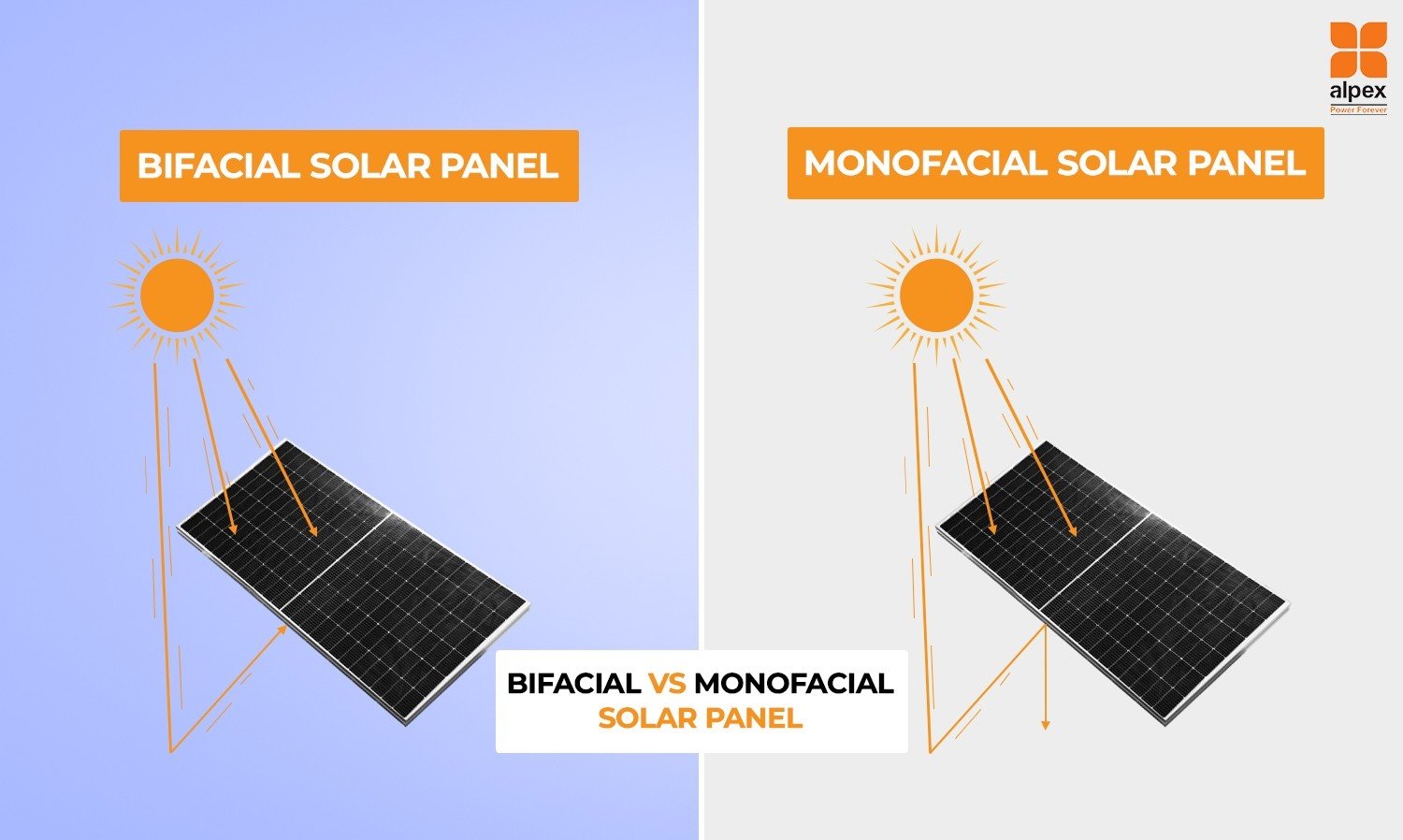
The solar industry has evolved rapidly over the past decade, and bifacial solar panels have become one of the biggest technological improvements in modern photovoltaic systems. Unlike conventional solar modules that collect sunlight only from the front, double sided solar panels generate electricity from both the front and rear surfaces.
Thanks to improvements in manufacturing and falling production costs, bifacial technology has become the preferred choice for utility-scale solar farms worldwide. In 2026, more than 90% of newly manufactured crystalline silicon solar cells are based on advanced technologies such as TOPCon or HJT that are commonly used in bifacial modules, making bifacial panels the dominant design in the global solar industry.
But how exactly do bifacial solar panels work? Do they actually produce more electricity? And are they worth installing on your home’s roof?
This comprehensive guide answers all these questions while explaining everything you need to know before buying bifacial solar panels.
What Are Bifacial Solar Panels?
Bifacial solar panels are photovoltaic modules that generate electricity from both sides of the panel.
Unlike traditional monofacial panels that only absorb sunlight hitting the front glass, bifacial panels also capture reflected sunlight reaching the rear side.
This reflected sunlight is known as albedo light.
The result is higher electricity generation without increasing the panel’s physical size.
Instead of wasting reflected sunlight, bifacial technology converts it into additional usable energy.
How Bifacial Solar Panels Work
The working principle is surprisingly simple.
The front side absorbs direct sunlight just like a normal solar panel.
Meanwhile, sunlight that reflects off nearby surfaces—such as:
- White rooftops
- Snow
- Concrete
- Gravel
- Sand
- Light-colored soil
travels upward and reaches the rear side of the panel.
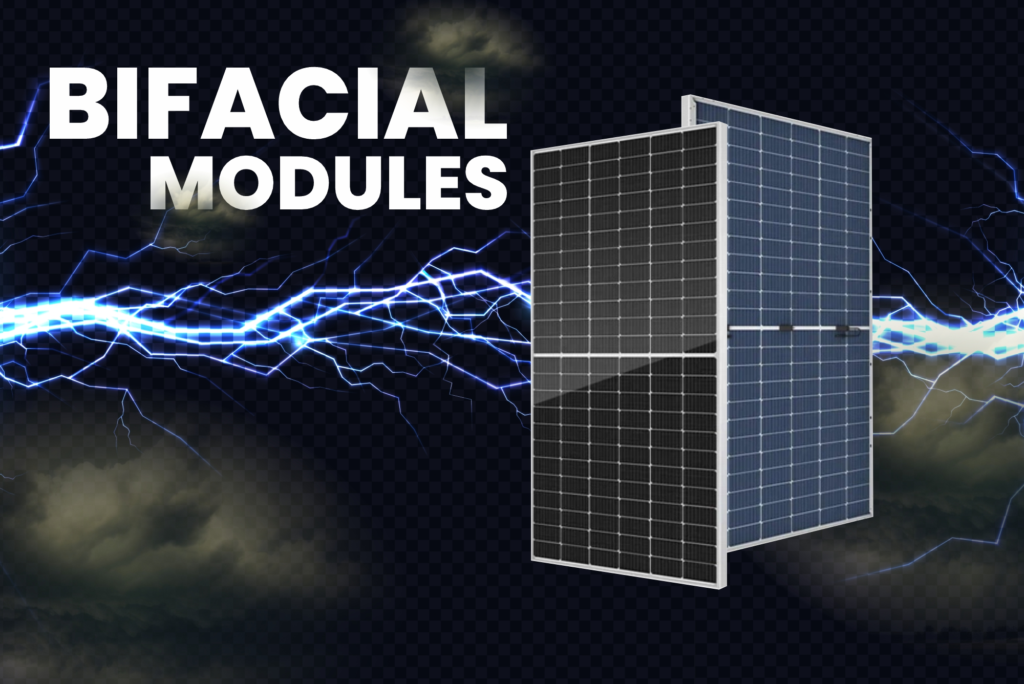
Both sides contain photovoltaic cells, allowing electricity generation from both directions.
This additional rear-side production increases total system output.
Simple Illustration
Sunlight
      ↓
 ┌─────────────┐
 │ Front Glass │
 │ Solar Cells │
 └─────────────┘
      ↓
Electricity

Ground Reflection ↑
     Rear Cells
More Electricity
What Is Albedo?
Albedo measures how much sunlight a surface reflects.
Higher albedo means more reflected light reaches the rear of bifacial panels.
| Surface | Approximate Albedo |
|---|---|
| Fresh Snow | 80–90% |
| White Roof | 60–80% |
| White Gravel | 40–60% |
| Concrete | 25–40% |
| Grass | 15–25% |
| Dark Asphalt | 5–10% |
The higher the albedo, the greater the energy gain from bifacial solar panels.

Why Do Bifacial Solar Panels Produce More Power?
The main reason is simple:
Traditional panels waste reflected sunlight.
Bifacial modules capture it.
This creates additional energy without increasing roof space.
Depending on installation conditions, bifacial panels generally produce:
- 5% more energy on standard rooftops
- 10–15% more on elevated systems
- 15–25% more over highly reflective surfaces
- Even higher gains in snowy regions
The exact improvement depends on mounting height, tilt angle, spacing, and ground reflectivity.
Why Bifacial Panels Dominate the Global Market in 2026
Modern solar manufacturing has shifted dramatically toward high-efficiency technologies such as:
- TOPCon
- Heterojunction (HJT)
- Advanced N-type cells
These technologies naturally support bifacial module designs.
As manufacturing costs have fallen, the price difference between monofacial and bifacial panels has narrowed significantly.
Because bifacial modules deliver more energy with only a small increase in cost, they have become the preferred option for:
- Utility-scale solar farms
- Commercial installations
- Industrial rooftops
- Carports
- Ground-mounted solar systems
By 2026, over 90% of global crystalline silicon solar cell production uses advanced cell technologies commonly paired with bifacial modules, making bifacial designs the industry standard for new large-scale projects.
Advantages of Bifacial Solar Panels
Higher Energy Production
The biggest benefit is increased electricity generation.
More sunlight equals more power.
Better Return on Investment
Although initial costs are slightly higher, increased energy production often shortens the payback period.
Longer Lifespan
Most premium bifacial modules use dual-glass construction.
Benefits include:
- Better moisture resistance
- Lower degradation
- Improved durability
- Better weather protection
Many manufacturers offer 30-year performance warranties.
Higher Efficiency
Modern bifacial modules frequently achieve efficiencies exceeding 22–24%, depending on the cell technology.
Better Performance in Diffuse Light
Rear-side energy collection allows improved performance during cloudy conditions and early morning or late afternoon sunlight.
Best Places to Install Bifacial Solar Panels
Bifacial modules perform best where reflected light is abundant.
Ideal locations include:
- Open ground-mounted systems
- White gravel surfaces
- Concrete parking lots
- Solar carports
- Agricultural solar (agrivoltaics)
- Snow-covered regions
- Desert solar farms
These installations maximize rear-side energy production.
Are Bifacial Solar Panels Good for Residential Rooftops?
The answer depends on the roof design.
They are worth it if:
- Panels are elevated several inches above the roof
- Roof color is white or reflective
- Installation allows rear airflow
- Roof is flat
Benefits are smaller if:
- Panels sit flush against dark shingles
- Rear side receives little reflected light
- Roof space is limited
Typical residential gains range from 5–10%, while ground-mounted systems often achieve 15–25% gains.
Bifacial vs Monofacial Solar Panels
| Feature | Bifacial Solar Panels | Monofacial Solar Panels |
|---|---|---|
| Power Generation | Front + Rear | Front Only |
| Energy Output | 5–25% Higher | Standard |
| Efficiency | Higher | Lower |
| Installation | Best Elevated | Standard Roof |
| Cost | Slightly Higher | Lower |
| Payback | Often Faster | Standard |
| Best For | Ground Mounts, Carports, Commercial | Residential Rooftops |
| Durability | Excellent (Dual Glass) | Good |
Cost of Bifacial Solar Panels in 2026
Prices continue falling as production expands.
Typical module pricing:
| Panel Type | Average Price |
|---|---|
| Monofacial | $0.22–0.35 per watt |
| Bifacial | $0.26–0.40 per watt |
Although bifacial panels cost around 5–15% more, they often produce enough additional electricity to offset the higher purchase price over time.
Payback Period
For most systems:
Monofacial panels:
- 6–10 years
Bifacial panels:
- 5–9 years
Higher energy production helps recover installation costs sooner, especially for commercial projects.
Do Bifacial Solar Panels Need Special Mounting?
Yes.
To maximize rear-side production:
- Leave space beneath the panel
- Raise panels above the mounting surface
- Avoid blocking reflected light
- Use reflective ground materials where practical
Ground-mounted systems often outperform rooftop installations because they allow more light to reach the rear side.
Are Bifacial Panels Compatible with Solar Trackers?
Yes.
In fact, they are commonly paired with single-axis solar trackers.
Trackers keep the panels facing the sun throughout the day while the elevated structure also exposes the rear side to reflected light.
This combination significantly increases energy production compared to fixed monofacial systems.
Common Applications
Bifacial solar panels are widely used in:
- Utility-scale solar farms
- Industrial facilities
- Commercial buildings
- Agricultural solar projects
- Airport solar installations
- Parking canopies
- Floating solar farms
- Large residential properties with ground-mounted arrays
Pros and Cons
Pros
- Generates 5–25% more electricity
- Better efficiency
- Longer lifespan
- Lower degradation
- Stronger glass construction
- Improved return on investment
- Excellent for commercial projects
Cons
- Slightly higher upfront cost
- Requires optimized installation
- Smaller performance gains on dark rooftops
- Installation planning is more important
Are Bifacial Solar Panels Worth Buying?
For many homeowners and businesses, the answer is yes, especially if the installation allows the rear side to receive reflected sunlight.
Ground-mounted systems, solar carports, and commercial projects benefit the most because they can take full advantage of albedo.
For standard residential rooftops, the additional energy gain is usually smaller but can still make sense if the roof is light-colored, elevated, or designed for bifacial modules. If your roof is dark and the panels will sit close to the surface, high-efficiency monofacial panels may offer similar overall value at a lower initial cost.
Frequently Asked Questions (FAQs)
Do bifacial solar panels work on cloudy days?
Yes. They generate electricity from both direct sunlight and diffuse reflected light, which helps maintain production even under cloudy conditions.
How much more electricity do bifacial solar panels produce?
Typically 5–25% more, depending on installation height, ground reflectivity, and system design.
Can bifacial solar panels be installed on rooftops?
Yes. They work on rooftops, but performance improvements are usually greater when panels are elevated and the roof surface is reflective.
Are bifacial solar panels more expensive?
Yes, but only slightly. They generally cost 5–15% more than comparable monofacial panels, while often producing enough extra electricity to improve long-term value.
Do bifacial panels last longer?
Many bifacial modules use dual-glass construction, which provides excellent durability and often comes with 30-year performance warranties.
What is the best surface under bifacial solar panels?
White gravel, concrete, snow, and other light-colored surfaces provide high albedo and maximize rear-side energy generation.
Final Thoughts
Bifacial solar panels represent one of the most significant advancements in solar technology. By converting both direct and reflected sunlight into electricity, they deliver higher energy yields without increasing panel size. With modern N-type technologies such as TOPCon and HJT becoming mainstream in 2026, bifacial modules have become the preferred choice for many new solar installations.
While they offer the greatest benefits in ground-mounted, commercial, and high-reflectivity environments, homeowners with suitable roof designs can also gain additional energy and improved long-term returns. As prices continue to decline and performance improves, bifacial solar panels are likely to remain a leading option for efficient and future-ready solar power systems.
- bifacial solar panels
- double sided solar panels
- how bifacial panels work
- bifacial solar panel benefits
- bifacial vs monofacial solar panels
- bifacial solar panel efficiency
- bifacial solar panel cost 2026
- bifacial solar panel payback
- bifacial solar technology
- N-type bifacial solar panels
- TOPCon bifacial panels
- HJT bifacial solar panels
- best bifacial solar panels
- residential bifacial solar pane