
Introduction
As the world shifts toward cleaner and more resilient energy systems, renewable energy microgrids are emerging as one of the most promising solutions. Unlike traditional electricity networks that rely on large centralized power plants, microgrids generate and manage electricity locally using renewable sources such as solar, wind, biomass, and small hydro.
Microgrids improve energy reliability, reduce carbon emissions, and provide electricity to remote communities where extending the main grid is expensive or impractical. They also strengthen energy security during natural disasters and grid failures.
This guide explains how renewable energy microgrids work, their benefits, different types, community applications, global success stories, and why they are expected to play a major role in the future of clean energy.
What Is a Renewable Energy Microgrid?
A microgrid is a localized electricity network that can operate independently or alongside the main utility grid.
It combines:
- Renewable energy sources
- Battery energy storage
- Smart controllers
- Distribution lines
- Local electricity consumers
Unlike traditional grids, microgrids can disconnect from the main network during outages and continue supplying electricity.
How Does a Microgrid Work?
A renewable microgrid typically follows these steps:
1. Renewable Energy Generation
Electricity is produced using:
- Solar photovoltaic (PV) panels
- Wind turbines
- Small hydropower
- Biomass generators
- Biogas systems
2. Battery Storage
Energy generated during sunny or windy periods is stored in batteries for later use.
Popular battery technologies include:
- Lithium-ion
- Flow batteries
- Sodium-ion batteries
- Lead-acid batteries
3. Smart Energy Management
An intelligent control system balances:
- Electricity production
- Battery charging
- Consumer demand
- Grid interaction
Artificial intelligence is increasingly used to optimize energy distribution.
4. Power Distribution
Electricity flows directly to homes, schools, hospitals, factories, and businesses within the community.
Types of Microgrids
Grid-Connected Microgrids
Remain connected to the national electricity grid.
Benefits include:
- Sell excess renewable power
- Buy electricity when renewable generation is low
- Improved reliability
Off-Grid Microgrids
Operate completely independently.
Commonly used in:
- Remote villages
- Islands
- Mining operations
- Military bases
Community Microgrids
Serve an entire neighborhood or community using shared renewable resources.
These systems encourage local energy ownership.
Campus Microgrids
Used by:
- Universities
- Hospitals
- Industrial parks
- Technology campuses
They improve resilience during blackouts.
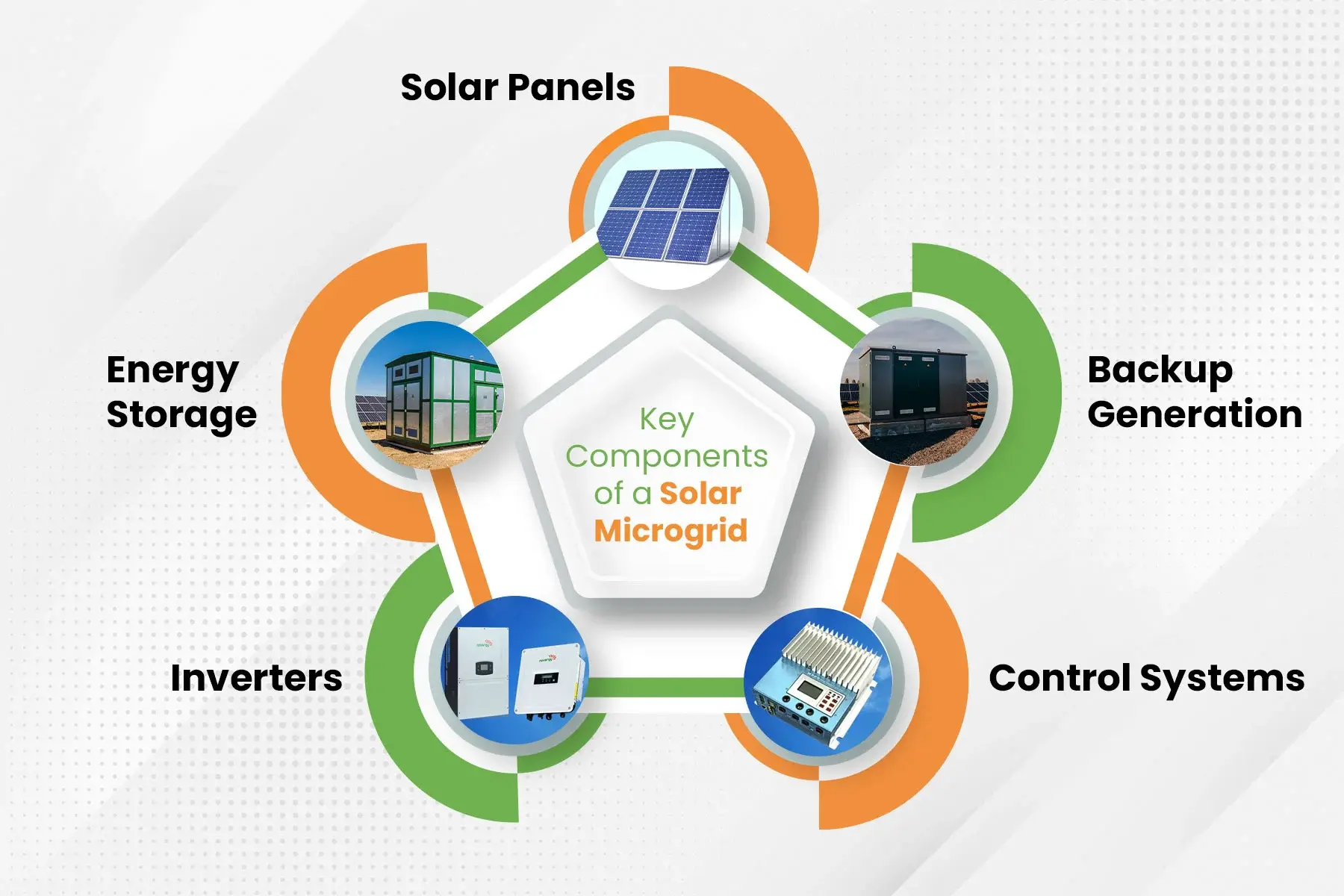
Components of a Renewable Microgrid

A complete microgrid generally includes:
- Solar panels
- Wind turbines
- Battery storage
- Inverters
- Energy management software
- Smart meters
- Backup generators (optional)
- Distribution network
Benefits of Renewable Energy Microgrids
1. Energy Independence
Communities become less dependent on centralized utilities.
2. Improved Reliability
Microgrids continue operating even when the main grid fails.
This is especially important during:
- Hurricanes
- Floods
- Wildfires
- Earthquakes
3. Lower Carbon Emissions
Renewable energy replaces fossil fuel generation. Renewable Energy Microgrids
4. Reduced Electricity Costs
After installation, renewable electricity has very low operating costs.
Battery storage also reduces expensive peak electricity purchases.
Renewable Energy Microgrids
5. Rural Electrification
Millions of people without reliable electricity can benefit from off-grid renewable systems.
6. Local Economic Development
Microgrids create jobs in:
- Installation
- Maintenance
- Manufacturing
- Engineering
- Software development
7. Better Energy Security
Communities gain protection against:
- Fuel shortages
- Cyber attacks
- Grid failures
Off-Grid Renewable Energy Systems
Off-grid systems are ideal for locations where extending transmission lines is too expensive.
Typical applications include:
- Mountain villages
- Islands
- Wildlife reserves
- Farms
- Remote research stations
Most combine:
Solar + Battery + Backup Generator
or
Solar + Wind + Battery
Community Energy Projects
Community-owned renewable microgrids allow residents to jointly invest in clean energy infrastructure.
Benefits include:
- Shared electricity costs
- Local ownership
- Community resilience
- Revenue from excess electricity
- Greater public participation
Many governments now support community energy cooperatives through grants and low-interest loans.
Microgrids for Critical Infrastructure

Hospitals
Continuous electricity for life-saving equipment.
Schools
Reliable electricity for digital education.
Emergency Shelters
Power during disasters.
Military Bases
Energy security during emergencies.
Industrial Facilities
Reduced downtime and improved productivity.
Challenges Facing Microgrids
High Initial Investment
Solar panels, batteries, and control systems require significant upfront capital.
Battery Costs
Although prices continue to decline, energy storage remains expensive.
Regulatory Barriers
Electricity regulations in many countries still favor centralized utilities.
Technical Complexity
Managing multiple renewable sources requires advanced software and skilled operators.
Weather Variability
Solar and wind output depends on weather conditions.
Battery storage helps maintain reliability.
Global Examples of Renewable Energy Microgrids : Renewable Energy Microgrids
Alaska, USA
Remote villages use wind, solar, batteries, and diesel backup to reduce fuel costs.
Brooklyn Microgrid, USA
Residents generate rooftop solar electricity and share energy locally.
India
Solar microgrids are bringing electricity to remote rural communities where grid expansion is difficult.
Bangladesh
Thousands of solar mini-grids provide electricity to island communities.
Australia
Remote mining operations increasingly rely on solar-plus-storage microgrids to reduce diesel consumption.
Africa
Countries including Kenya, Nigeria, and Tanzania are rapidly expanding solar mini-grids for rural electrification.
Role in the Energy Transition
Renewable microgrids help integrate distributed clean energy while improving grid flexibility.
They also support: Renewable Energy Microgrids
- Electric vehicle charging
- Smart cities
- Green hydrogen production
- Agricultural electrification
- Disaster recovery
As renewable energy adoption grows, microgrids will become an essential part of modern electricity systems.
Future Trends
Several developments are expected over the next decade:
- AI-powered energy optimization
- Vehicle-to-grid integration
- Cheaper long-duration batteries
- Blockchain-based energy trading
- Virtual power plants
- Increased community ownership
- Hybrid renewable systems
Microgrids will evolve into intelligent, self-managing energy networks capable of maximizing renewable generation.
Conclusion
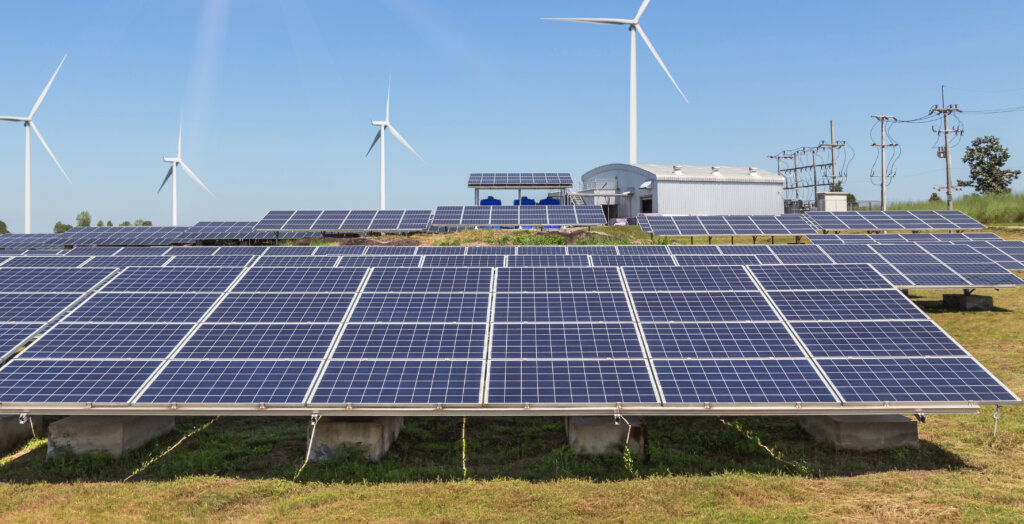
Renewable energy microgrids are transforming how electricity is generated, distributed, and consumed. By combining renewable power with battery storage and intelligent energy management, they provide cleaner, more reliable, and resilient electricity for homes, businesses, and entire communities.
Whether powering remote villages, hospitals, industrial facilities, or smart cities, microgrids represent a practical solution for reducing emissions, improving energy security, and accelerating the global transition to sustainable energy. As technology costs continue to decline and supportive policies expand, microgrids are expected to become a cornerstone of the future clean energy landscape.
Frequently Asked Questions (FAQs)
What is a renewable energy microgrid?
A renewable energy microgrid is a localized electricity system that uses renewable energy sources and battery storage to provide reliable power independently or alongside the main grid.
What is the difference between a microgrid and an off-grid system?
A microgrid can connect to or disconnect from the main electricity grid, while an off-grid system operates entirely independently.
What are the main benefits of microgrids?
They improve energy reliability, reduce emissions, lower electricity costs, support rural electrification, and increase energy security.
Which renewable sources are commonly used in microgrids?
Solar, wind, biomass, biogas, and small hydropower are the most common renewable energy sources used in microgrids.
Why are microgrids important for the future?
Microgrids enable decentralized clean energy, strengthen resilience against outages, and help communities transition toward a sustainable, low-carbon energy system.
wind micrbatteryrenewable electricit