
How Much Does a Rooftop Solar System Actually Cost in 2026?

Installing solar panels is no longer just about helping the environment—it’s one of the smartest long-term investments homeowners can make. However, one question continues to dominate online searches:
“How much does a rooftop solar system actually cost in 2026?”
The answer depends on several factors including:
- System size
- Solar panel type
- Inverter quality
- Installation charges
- Government incentives
- Local electricity prices
Fortunately, solar equipment has become more affordable while panel efficiency continues to improve. Combined with government incentives in countries like India and the United States, rooftop solar is reaching record affordability in 2026.
This guide explains the rooftop solar cost 2026, typical installation prices, available subsidies, and how to estimate your solar panel payback period using a simple calculation.
Why Rooftop Solar Is More Affordable Than Ever
Several trends have reduced the cost of solar installation in recent years:
- Higher efficiency TOPCon and HJT solar panels
- Longer-lasting inverters
- Better installation practices
- Increased competition among installers
- Government subsidies
- Improved financing options
Although premium systems cost more initially, they generally produce more electricity over their lifetime, reducing overall energy costs.
What Makes Up the Cost of a Rooftop Solar System?
A rooftop solar installation is made up of multiple components.
1. Solar Panels
Solar panels usually account for 45–60% of the total system cost.
Panel types include:
- Monocrystalline
- TOPCon
- HJT
- Bifacial panels
Higher efficiency panels cost more but require less roof space.
2. Solar Inverter
The inverter converts DC electricity from panels into AC electricity for your home.
Common inverter types:
- String inverter
- Microinverters
- Hybrid inverter
Typically represents 15–25% of the total cost.
3. Mounting Structure
This includes:
- Aluminum rails
- Roof clamps
- Fasteners
- Wind-resistant mounting
Good mounting systems increase durability for 25+ years.
4. Wiring & Electrical Equipment
Includes:
- DC cables
- AC cables
- Earthing
- Junction boxes
- Protection devices
- Monitoring systems
Usually around 5–10% of the project cost.
5. Installation Labor
Professional installation covers:
- Roof inspection
- Mounting
- Electrical connections
- Testing
- Grid connection
Labor costs vary depending on location.
Rooftop Solar Cost 2026 (India)
Below are approximate installed costs before subsidies.
| System Size | Typical Price Range |
|---|---|
| 1 kW | ₹60,000–₹90,000 |
| 2 kW | ₹1.1–₹1.6 lakh |
| 3 kW | ₹1.5–₹2.2 lakh |
| 5 kW | ₹2.6–₹3.8 lakh |
Prices vary depending on:
- Panel brand
- Inverter
- Roof type
- Installer
- State regulations
Rooftop Solar Cost 2026 (United States)
Average installed prices before incentives:
| System Size | Typical Price |
|---|---|
| 1 kW | $2,200–$3,500 |
| 2 kW | $4,500–$7,000 |
| 3 kW | $6,500–$10,000 |
| 5 kW | $11,000–$17,000 |
Pricing depends on:
- State
- Installer
- Labor rates
- Equipment
- Roof complexity
Government Incentives Reduce Upfront Cost
India: PM Surya Ghar Scheme
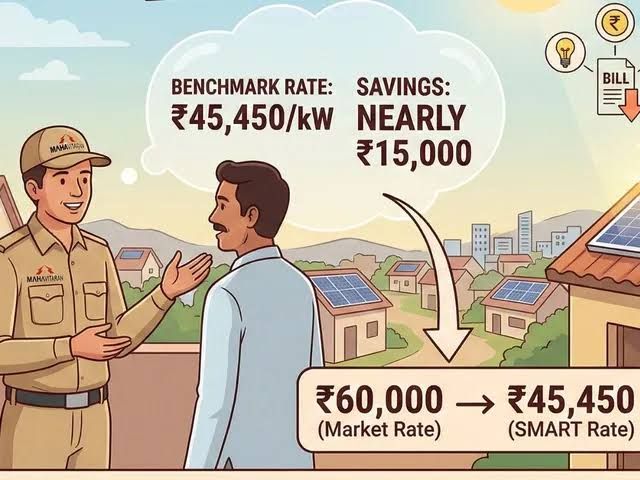
The PM Surya Ghar: Muft Bijli Yojana offers financial support for eligible residential rooftop solar installations.
Benefits generally include:
- Subsidies for eligible residential systems
- Reduced upfront investment
- Faster payback period
- Encourages grid-connected rooftop solar adoption
The exact subsidy depends on system size and current program rules.
United States: IRA Solar Tax Credit
The Inflation Reduction Act (IRA) provides a federal residential clean energy tax credit for qualifying rooftop solar systems.
Homeowners may receive a significant tax credit on eligible installation costs, reducing the effective purchase price, subject to current rules and eligibility requirements.
How Much Electricity Can Rooftop Solar Produce?
Approximate annual production depends on sunlight hours.
| System | Annual Generation |
|---|---|
| 1 kW | 1,300–1,700 kWh |
| 2 kW | 2,600–3,400 kWh |
| 3 kW | 3,900–5,100 kWh |
| 5 kW | 6,500–8,500 kWh |
Homes in sunnier regions generally generate more electricity.
Understanding the Solar Panel Payback Period
The solar panel payback period is the time it takes for your electricity bill savings to equal your net installation cost.
Simple formula:
Payback Period = Net Solar Cost ÷ Annual Electricity Savings
Example Payback Calculator (Text Form)
Example (India)
System Size: 3 kW
Installation Cost: ₹1,90,000
Government Subsidy: ₹78,000
Net Cost:
₹1,90,000 − ₹78,000 = ₹1,12,000
Average Monthly Bill Before Solar:
₹3,500
Monthly Savings:
₹3,000
Annual Savings:
₹36,000
Payback Period:
₹1,12,000 ÷ ₹36,000 = 3.1 years
Example (United States)
System:
5 kW
Installation Cost:
$15,000
Federal Tax Credit:
30%
Net Cost:
$10,500
Annual Electricity Savings:
$1,650
Payback Period:
$10,500 ÷ $1,650 ≈ 6.4 years
Factors That Affect Payback Time
1. Electricity Prices
Higher electricity prices mean faster savings.
2. Sunlight Hours
Locations with more sunshine generate more electricity.
3. Roof Orientation
South-facing roofs generally produce the highest output in the Northern Hemisphere.
4. System Efficiency
Premium panels often generate more energy over their lifespan.
5. Net Metering
Exporting excess electricity to the grid can significantly improve overall savings where net metering or similar compensation programs are available.
Typical Payback Period in 2026
| Country | Average Payback |
|---|---|
| India | 3–6 years |
| United States | 6–10 years |
| Australia | 3–6 years |
| Europe | 6–12 years |
Actual results vary with local electricity rates, incentives, system performance, and maintenance.
Lifetime Savings
Most quality solar panels carry performance warranties of around 25 years or more.
A typical homeowner may save:
- Tens of thousands of rupees over the system’s lifetime in India
- Tens of thousands of dollars in avoided electricity costs in the U.S., depending on utility rates and consumption
Hidden Costs to Consider
Budget for potential future expenses such as:
- Inverter replacement (often after 10–15 years)
- Panel cleaning
- Roof repairs (if needed)
- Electrical upgrades
- Monitoring subscriptions (if applicable)
These costs are generally small compared with long-term energy savings.
Is Solar Worth It in 2026?
For many homeowners, rooftop solar is worthwhile if:
- You own your home.
- Your roof receives good sunlight.
- Your electricity bills are high.
- You plan to stay in the home for several years.
- Government incentives are available.
If your roof is heavily shaded or you expect to move soon, the financial return may be lower.
Frequently Asked Questions (FAQ)
How much does a rooftop solar system cost in 2026?
Typical residential systems range from approximately ₹60,000–₹90,000 for a 1 kW system in India and about $2,200–$3,500 for a 1 kW system in the U.S., before applicable incentives. Larger systems cost more but often provide a lower cost per watt.
What is the average solar panel payback period?
Many residential systems recover their cost in about 3–6 years in India and 6–10 years in the United States, depending on incentives, electricity rates, and solar production.
Is solar worth it in 2026?
Yes, for many homeowners. Falling equipment prices, improved efficiency, and government incentives make rooftop solar an attractive long-term investment with lower electricity bills and potential lifetime savings.
How do I calculate my solar payback period?
Use this simple formula:
Payback Period = Net Installation Cost ÷ Annual Electricity Savings
Subtract subsidies or tax credits from the installation cost before calculating.
Does a bigger solar system pay back faster?
Not always. A properly sized system that closely matches your home’s electricity use generally delivers the best financial return.
How long do rooftop solar panels last?
Most modern solar panels are designed to operate for 25–30 years or longer, although their energy output gradually declines over time.
Final Thoughts
The rooftop solar cost 2026 is more accessible than ever thanks to lower equipment prices, improved technology, and supportive government incentives. While upfront costs vary by system size and location, many homeowners can recover their investment within a few years through reduced electricity bills. By understanding installation costs, available subsidies, and your expected energy savings, you can make an informed decision and estimate a realistic solar panel payback period for your home.
rooftop solar cost 2026, solar panel payback period, cost of solar installation, rooftop solar system cost, residential solar panels, rooftop solar India, rooftop solar USA, PM Surya Ghar, IRA solar tax credit, solar installation guide, home solar cost, solar energy savings, rooftop solar calculator, net metering, solar panel investment, rooftop solar financing, home energy efficiency, renewable energy, solar panel installation, rooftop solar benefits