
Meta Title: On-Grid vs Off-Grid vs Hybrid Solar Systems: Complete Comparison (2026)
Meta Description: Compare on-grid, off-grid, and hybrid solar systems. Learn how each works, costs, advantages, disadvantages, and discover which solar system is best for your home in 2026.
On-Grid vs Off-Grid vs Hybrid Solar Systems: Which One Is Right for You?
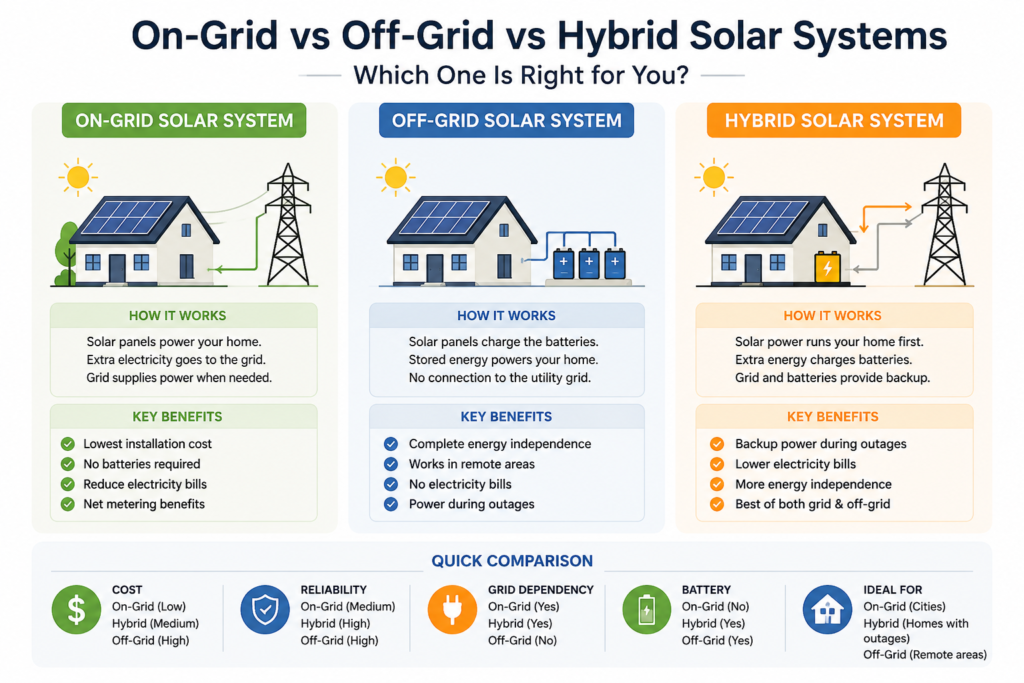
Choosing the right solar system is one of the biggest decisions you’ll make before installing solar panels. While all solar systems generate clean electricity from sunlight, they work in different ways depending on whether they are connected to the utility grid, use batteries, or both.
If you’re comparing on grid vs off grid solar, or wondering whether a hybrid solar system is worth the extra investment, this guide explains everything in simple language.
By the end, you’ll know which solar system to choose based on your home, electricity usage, budget, and backup power needs.
Understanding the Three Types of Solar Systems
Residential solar systems fall into three main categories:
- On-Grid Solar System
- Off-Grid Solar System
- Hybrid Solar System
Each has different equipment, costs, and benefits.
What Is an On-Grid Solar System?
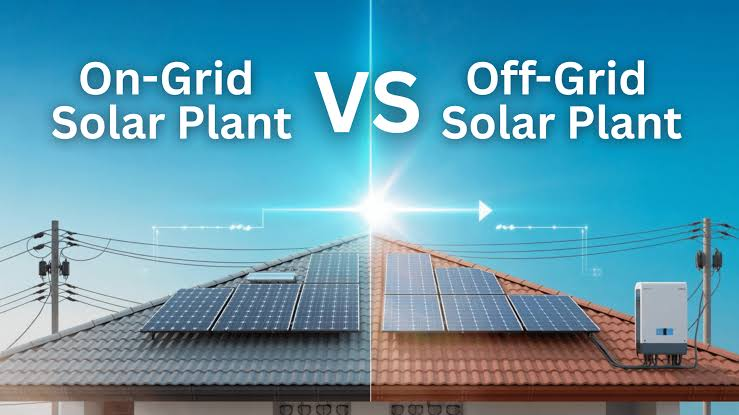
An on-grid solar system, also called a grid-connected solar system, is directly connected to your local electricity network.
During the day, solar panels generate electricity for your home. If your panels produce more electricity than you’re using, the excess power is sent back to the grid through net metering (where available).
At night or on cloudy days, your home draws electricity from the utility grid.
How It Works
- Solar panels capture sunlight.
- An inverter converts DC electricity into AC electricity.
- Your home uses the solar power first.
- Extra electricity goes to the utility grid.
- The grid supplies power whenever solar production isn’t enough.
Advantages of On-Grid Solar
- Lowest installation cost
- No expensive batteries required
- Lower maintenance
- High efficiency
- Can reduce electricity bills significantly
- Net metering can improve savings
Disadvantages
- Doesn’t work during power outages unless special backup equipment is installed
- Depends on the electricity grid
- Savings depend on local utility policies
Best For
- Urban homes
- Areas with reliable electricity
- Homeowners wanting the fastest return on investment
What Is an Off-Grid Solar System?
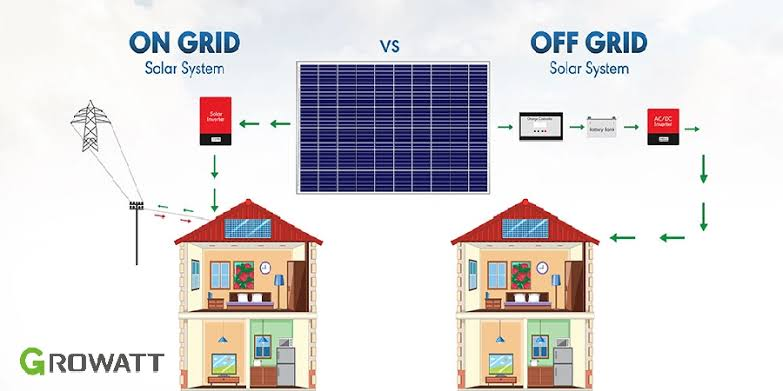
An off-grid solar system operates completely independently of the electricity grid.
It generates electricity from solar panels and stores unused energy in batteries for use at night or during bad weather.
Because there’s no grid connection, the system must produce and store enough electricity to power your home throughout the year.
How It Works
- Solar panels generate electricity.
- A charge controller manages battery charging.
- Batteries store extra electricity.
- An inverter powers household appliances.
- Backup generators are often included for emergencies.
Advantages
- Complete energy independence
- Works even if there’s no utility connection
- Ideal for remote locations
- No monthly electricity bills
Disadvantages
- Highest installation cost
- Requires large battery banks
- Batteries eventually need replacement
- Careful energy management is necessary
Best For
- Remote farms
- Cabins
- Rural homes
- Areas without grid access
What Is a Hybrid Solar System?
A hybrid solar system combines the best features of both on-grid and off-grid systems.
It remains connected to the electricity grid while also using batteries.
During the day, solar powers the home first. Extra electricity charges the batteries. If batteries are full, surplus energy can be exported to the grid (depending on local regulations).
During outages, the batteries provide backup electricity.
How It Works
- Solar panels generate electricity.
- Home uses solar power first.
- Excess energy charges batteries.
- Remaining surplus may be exported to the grid.
- Batteries provide backup during outages.
Advantages
- Backup power during blackouts
- Lower electricity bills
- Greater energy independence
- Better use of solar energy
- Flexible operation
Disadvantages
- Higher cost than on-grid systems
- Batteries increase maintenance costs
- Longer payback period
Best For
- Homes with frequent power cuts
- Areas with unreliable electricity
- Homeowners wanting backup power
On-Grid vs Off-Grid vs Hybrid Solar Systems Comparison
| Feature | On-Grid | Off-Grid | Hybrid |
|---|---|---|---|
| Grid Connection | Yes | No | Yes |
| Battery Required | No | Yes | Yes |
| Works During Blackouts | No (usually) | Yes | Yes |
| Installation Cost | Low | High | Medium to High |
| Maintenance | Low | Medium | Medium |
| Electricity Bills | Very Low | None | Very Low |
| Backup Power | No | Yes | Yes |
| Energy Independence | Low | Complete | High |
| Best For | Cities | Remote areas | Homes needing backup |
Cost Comparison (2026)
Actual costs vary depending on country, system size, equipment quality, and installer.
| System Type | Typical Relative Cost |
|---|---|
| On-Grid | Lowest |
| Hybrid | Moderate to High |
| Off-Grid | Highest |
Main Cost Components
- Solar panels
- Solar inverter
- Mounting structure
- Electrical wiring
- Installation labor
- Batteries (Hybrid and Off-Grid only)
- Battery inverter or hybrid inverter
- Monitoring system
Battery storage is usually the biggest reason hybrid and off-grid systems cost more than on-grid installations.
Which Solar System Saves the Most Money?
On-Grid
Usually offers the fastest payback because batteries aren’t required.
Ideal if:
- Electricity prices are high
- Net metering is available
- Grid reliability is good
Off-Grid
Financial savings are often secondary.
The main benefit is complete independence where grid access is unavailable or too expensive.
Hybrid
Provides a balance between savings and reliability.
Although the upfront investment is higher, many homeowners value the peace of mind that comes with backup power during outages.
Reliability Comparison
On-Grid
★★★★★ when the utility grid is stable.
During outages, most systems automatically shut down for safety.
Off-Grid
★★★★★
Your electricity depends entirely on your solar panels and battery storage.
Proper system sizing is essential.
Hybrid
★★★★★
Offers both grid support and battery backup, making it one of the most reliable options for many households.
Which Solar System Should You Choose?
Choose On-Grid If
- You have reliable electricity.
- You want the lowest installation cost.
- You want the quickest return on investment.
- Your area supports net metering.
Choose Off-Grid If
- Your property has no grid connection.
- You live in a remote location.
- You want complete energy independence.
- You’re prepared for higher upfront costs.
Choose Hybrid If
- Your area experiences regular power outages.
- You want backup power.
- You plan to add battery storage.
- You want greater energy security while remaining connected to the grid.
Things to Consider Before Installing Solar
Before selecting a system, think about:
- Your monthly electricity usage
- Local electricity prices
- Frequency of power outages
- Roof size and sunlight exposure
- Budget
- Battery backup requirements
- Local net metering or export policies
- Future plans, such as buying an electric vehicle or adding more appliances
Frequently Asked Questions (FAQ)
What is the difference between on grid vs off grid solar?
An on-grid system is connected to the utility network and typically doesn’t require batteries. An off-grid system operates independently and relies on battery storage to provide electricity when solar panels aren’t generating power.
Is a hybrid solar system worth it?
A hybrid solar system is often worth considering if your area experiences frequent power outages or you want backup power while still benefiting from a grid connection.
Which solar system is the cheapest?
On-grid solar systems generally have the lowest upfront cost because they don’t require battery storage.
Which system provides backup during blackouts?
Off-grid and hybrid systems can continue supplying electricity during outages, provided the batteries have sufficient charge. Standard on-grid systems usually shut down during a blackout.
Can I add batteries later to an on-grid system?
In many cases, yes. Some systems can be upgraded with compatible battery storage later, though it may require replacing or adding equipment such as a hybrid inverter.
Which solar system lasts the longest?
Solar panels typically last 25–30 years or more with proper maintenance. Inverters usually last 10–15 years, while battery lifespan depends on the battery type and usage.
Final Thoughts
There isn’t a single “best” solar system for everyone. The right choice depends on your location, budget, electricity reliability, and long-term goals.
- On-grid systems are ideal for homeowners seeking the lowest cost and maximum savings where the utility grid is reliable.
- Off-grid systems are designed for remote locations that need complete energy independence.
- Hybrid systems offer the best combination of savings, reliability, and backup power, making them a strong option for homes that experience power interruptions.
By understanding the differences between on grid vs off grid solar, you can confidently choose a system that matches your energy needs today while supporting future expansion as your household’s electricity demands grow.
SEO Tags
on grid vs off grid solar, hybrid solar system, solar system comparison, residential solar system, grid connected solar, off grid solar power, solar batteries, home solar installation, solar energy guide, rooftop solar, solar inverter, net metering, solar backup system, renewable energy, solar installation 2026