
Wind Turbine Lifespan: How Long Do Turbines Last and Can Blades Be Recycled?
Discover the typical wind turbine lifespan, maintenance requirements, and what happens when turbines retire. Learn about wind turbine blade recycling, end-of-life challenges, and emerging solutions.
wind turbine lifespan
wind turbine lifespan, wind turbine blade recycling, end of life wind turbine, wind turbine maintenance, turbine blade disposal, renewable energy recycling
Wind turbines are built to operate for decades, turning moving air into electricity with relatively few moving parts compared with many conventional power-generation technologies. But like any large machine, a turbine eventually reaches the end of its useful life.
The typical wind turbine lifespan is around 20–25 years, although some turbines can operate longer with major component replacements, upgrades, or life-extension programs. The U.S. Department of Energy now describes an expected service life of approximately 30 years for some modern projects, while individual components may require replacement much earlier. (The Department of Energy’s Energy.gov)
The bigger question is what happens next.
Most of a wind turbine is relatively easy to recycle. Steel towers, copper wiring, aluminum and many other components already have established recycling markets. The difficult part is the giant rotor blades.
Blades are lightweight, incredibly strong and designed to survive years of wind, rain, temperature changes and mechanical stress. Unfortunately, those same properties make them difficult to recycle.
As the first large generations of wind farms reach retirement age, wind turbine blade recycling is becoming one of the industry’s most important sustainability challenges.
How Long Does a Wind Turbine Last?
A conventional wind turbine is generally designed for approximately 20–25 years of operation.
That does not mean the turbine suddenly stops working on its 25th birthday. A well-maintained turbine may continue operating beyond its original design life if inspections show that its major components remain suitable for service.
Modern turbines can also undergo repowering, where older equipment is replaced with newer, more powerful technology.
For example, a wind farm may keep its existing electrical infrastructure and land while replacing older turbines with fewer, larger machines.
The actual lifespan depends on factors including:
- Wind conditions
- Turbine design
- Component quality
- Maintenance
- Operating hours
- Extreme weather exposure
- Corrosion
- Gearbox and bearing condition
- Blade fatigue
- Availability of replacement parts
- Economics of continuing operation
In other words, 20–25 years is a useful rule of thumb, not an expiration date.
What Maintenance Does a Wind Turbine Need?
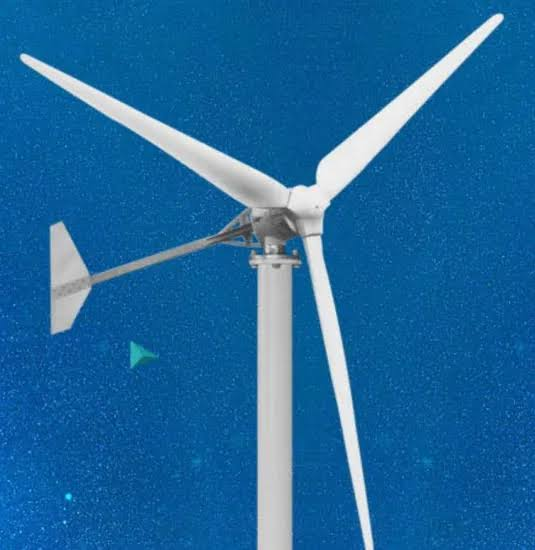
A wind turbine may look simple from the ground, but it contains thousands of components that must work together.
Regular maintenance is essential because small problems can become extremely expensive when the equipment is hundreds of feet above the ground or offshore.
1. Blade inspections
Technicians regularly inspect blades for:
- Cracks
- Erosion
- Lightning damage
- Delamination
- Surface damage
- Loose components
- Structural fatigue
Inspection can involve drones, cameras, ultrasonic equipment and physical inspections.
Blade leading edges are particularly vulnerable because they repeatedly encounter rain, dust, insects and other particles at high speeds.
2. Gearbox maintenance
Many traditional turbines use gearboxes to increase rotational speed before electricity is generated.
Gearboxes experience significant mechanical loads and can become one of the more expensive components to repair or replace.
Technicians monitor:
- Lubricant condition
- Vibration
- Temperature
- Bearings
- Gear wear
- Unusual noise
Some newer turbine designs use direct-drive generators that eliminate the conventional gearbox, potentially reducing certain maintenance requirements.
3. Generator and electrical systems
The generator converts mechanical rotation into electricity.
Maintenance teams inspect electrical connections, generators, transformers, cables, control systems and other equipment to ensure safe and reliable operation.
4. Tower and foundation inspections
The tower must withstand enormous forces generated by the rotor and wind.
Technicians look for:
- Corrosion
- Cracks
- Structural fatigue
- Loose bolts
- Foundation problems
Offshore turbines have additional challenges because saltwater and marine environments accelerate corrosion.
5. Software and monitoring
Modern wind turbines continuously monitor themselves.
Sensors can track vibration, temperature, wind speed, rotor speed and other operating conditions.
This allows operators to use predictive maintenance rather than waiting for a component to fail completely.
What Happens When a Wind Turbine Reaches the End of Its Life?
When a turbine is no longer economical or safe to operate, an operator generally has three broad options:
- Extend its operating life
- Repower the project
- Decommission the turbine
Decommissioning involves much more than simply switching the turbine off.
The blades and nacelle have to be removed, the tower dismantled and equipment transported away.
Large cranes are normally required, particularly for modern turbines with enormous blades.
After dismantling, materials can be separated into different waste and recycling streams.
And this is where the story becomes complicated.
Is a Wind Turbine Recyclable?
Mostly, yes.
This is an important point that is sometimes lost in discussions about wind turbine waste.
Approximately 85–90% of a wind turbine’s mass is already made from materials that can be commercially recycled, according to the U.S. Department of Energy. These include steel, iron, copper and aluminum found throughout the tower, nacelle and other components. (The Department of Energy’s Energy.gov)
The problem is concentrated in a relatively small portion of the machine: composite materials.
Wind turbine blades and some covers are typically made from fiber-reinforced composite materials.
So the turbine is not a giant piece of unrecyclable waste.
The real challenge is how to economically recycle the blades and other composite components.
Why Are Wind Turbine Blades So Difficult to Recycle?
Wind turbine blades are designed to be strong and durable.
That is excellent while they are producing electricity.
It becomes a problem when they reach the end of their useful life.
Many blades use glass-fiber reinforced polymer (GFRP) composites. Some newer and larger blades also use carbon-fiber reinforced materials in certain sections.
The fibers are embedded in a polymer resin, creating a lightweight but extremely strong structure.
The resin is often a thermoset polymer.
Unlike thermoplastics, thermoset materials cannot simply be melted and reshaped after they have cured.
Think of it this way:
Steel → melt it → reshape it → recycle it
But a conventional composite blade is more like:
Fiber + cured resin → extremely durable structure → difficult to separate
Mechanical recycling can shred or grind the blade, but this generally produces lower-value material rather than recovering the original high-performance fibers and resin.
Researchers are therefore developing better chemical, thermal and mechanical processes.
How Big Is the Wind Turbine Blade Waste Problem?
The problem is growing because the wind industry expanded rapidly during the 2000s and 2010s.
Those older turbines are now approaching or reaching retirement.
The U.S. Department of Energy estimates that blade retirements averaged roughly 3,000–9,000 blades per year during 2021–2026, with the number expected to rise substantially as more older projects are repowered or decommissioned. (The Department of Energy’s Energy.gov)
That does not mean every one of these blades automatically becomes waste. Some are repaired, reused or incorporated into other applications.
But the numbers demonstrate why the industry cannot rely on landfilling forever.
By 2050, global studies project millions of tonnes of end-of-life blade material could require management. Estimates vary substantially depending on turbine lifetimes, installation rates and blade designs. (ScienceDirect)
The challenge is therefore not an immediate collapse of the wind industry’s environmental benefits.
It is a rapidly developing waste-management and circular-economy problem that needs scalable solutions.
What Happens to Old Wind Turbine Blades Today?
There are several possible pathways.
1. Landfilling
Historically, landfilling has been one of the simplest and cheapest options in regions where dedicated blade recycling infrastructure is limited.
Blades are normally cut into smaller sections to make transportation and disposal easier.
The problem is that landfills do not recover the valuable fibers or resin contained in the blade.
It also creates a long-term waste-management issue as more turbines retire.
2. Mechanical Recycling
One approach is to cut, shred or grind old blades into smaller pieces.
The resulting material can potentially be used as filler or reinforcement in other products.
The advantage is that mechanical recycling can be relatively straightforward compared with sophisticated chemical processes.
The disadvantage is that the original high-performance composite structure is lost.
3. Cement Kiln Co-Processing
One of the more practical emerging solutions is cement kiln co-processing.
Old blades can be processed and used as an input for cement manufacturing.
The organic portion of the composite can contribute energy during the high-temperature process, while mineral components can become part of the cement raw material.
This approach is attracting significant attention because cement plants already operate at industrial scale.
Recent research describes cement co-processing as one of the near-term scalable routes for dealing with large volumes of composite waste. (Nature)
It is not the same as turning an old blade back into an identical new blade, but it can prevent the composite from simply becoming landfill waste.
Blade Recycling Startups Are Building a New Industry
A growing number of companies and research organizations are working specifically on wind turbine blade recycling.
Their approaches include:
- Mechanical processing
- Thermal recycling
- Chemical recycling
- Fiber recovery
- Resin recovery
- Repurposing
- Cement production
- New recyclable blade designs
The U.S. Department of Energy has also supported research and development aimed at improving recycling of fiber-reinforced composites and other difficult-to-recycle turbine materials. (The Department of Energy’s Energy.gov)
The economics remain important.
A recycling process might technically work in a laboratory but still fail commercially if transporting, cutting and processing huge blades costs more than landfill disposal.
That is why the next stage of the industry is not simply about inventing a recycling technology.
It is about building an entire supply chain around it.
Thermoplastic Wind Turbine Blades Could Change the Equation
One promising direction is designing blades with thermoplastic materials instead of conventional thermoset composites.
Thermoplastics can soften when heated and can potentially be reshaped or processed more easily.
This opens the possibility of designing future blades with recycling in mind from the beginning.
Instead of asking:
“How do we recycle this blade after 25 years?”
Engineers can ask:
“How should we manufacture this blade so that it can be recycled after 25 years?”
That is a major shift toward design for circularity.
However, thermoplastic blades still need to meet demanding requirements for strength, fatigue resistance, manufacturing cost and long-term durability.
So they are promising, but they are not yet a universal replacement for today’s blade materials.
Can Old Blades Be Reused Instead of Recycled?
Yes.
Sometimes the best option is not recycling the material but reusing the blade itself.
Researchers and companies have explored old blades for applications such as:
- Pedestrian bridges
- Benches
- Shelters
- Noise barriers
- Playground structures
- Architectural elements
- Construction products
The U.S. Department of Energy specifically identifies repurposing as one potential end-of-service pathway for wind turbine components. (The Department of Energy’s Energy.gov)
Reuse can avoid some of the energy required to completely break the composite down.
But it has limitations.
A blade is enormous, difficult to transport and has a highly specialized shape. Finding enough suitable applications close to the wind farm can be difficult.
What About Offshore Wind Turbines?
Offshore turbines introduce another layer of complexity.
Their blades can be enormous, while removing equipment from offshore locations requires specialized vessels and cranes.
The marine environment also adds corrosion and logistical challenges.
At the same time, offshore wind turbines are becoming larger, which means their blades can contain more composite material.
This makes end-of-life planning increasingly important.
Future offshore projects will need to consider decommissioning and material recovery before the turbines are installed, not decades afterward.
The Future of Wind Turbine Recycling
The wind industry is moving toward a more circular approach.
Future turbines could increasingly combine:
Longer operating lives + predictive maintenance + repairable components + recyclable materials + planned end-of-life recovery
That could reduce both the amount of waste produced and the cost of managing it.
The most promising solutions are likely to involve several technologies rather than one universal recycling method.
For example:
- Steel → conventional metal recycling
- Copper → metal recycling
- Aluminum → metal recycling
- Concrete → construction applications
- Blade composites → mechanical recycling
- Blade composites → cement kiln co-processing
- Fibers → advanced recovery technologies
- Future thermoplastic blades → easier material recovery
- Intact components → reuse or refurbishment
Recent research emphasizes that mechanical recycling and cement co-processing are closer to scalable deployment, while advanced processes such as thermal fiber recovery and solvolysis still face cost and energy challenges. (Nature)
Does Wind Turbine Waste Make Wind Power Unsustainable?
No — but it is a legitimate problem that the industry needs to solve.
The overwhelming majority of a turbine’s mass is already recyclable.
The difficult part is primarily the composite fraction, particularly blades.
That distinction matters.
Wind power produces electricity for decades without burning fuel during operation, but no large industrial technology has zero material impacts.
The goal should therefore be to move from a linear model:
Build → operate → dismantle → dispose
toward a circular model:
Build → operate → repair → repower → recover → reuse → recycle
That transition is already underway.
What Should Happen to a Wind Turbine at the End of Its Life?
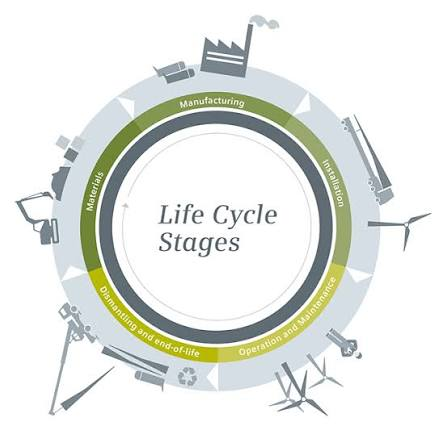
A responsible end-of-life strategy should ideally follow a hierarchy:
1. Extend the life
If the turbine remains safe and economically viable, life-extension programs can keep equipment operating.
2. Repower
Replace old turbines with newer and more efficient machines while retaining suitable infrastructure.
3. Reuse components
Some equipment may be refurbished or reused elsewhere.
4. Recycle materials
Recover steel, aluminum, copper and other valuable materials.
5. Recycle or repurpose blades
Use mechanical processing, cement co-processing, advanced recycling or direct reuse where practical.
6. Dispose only when necessary
Landfill should increasingly become a last resort rather than the default solution.
The Bottom Line
A wind turbine lifespan of 20–25 years is a reasonable general expectation, although newer projects and life-extension programs can push useful operation beyond that timeframe.
During those decades, turbines require regular inspections, blade maintenance, gearbox and generator monitoring, electrical maintenance and structural inspections.
When the turbine finally retires, most of it is not particularly difficult to recycle.
The biggest challenge is the blades.
Their combination of fiberglass or carbon fiber, resin, adhesives and core materials gives them excellent strength but makes conventional recycling difficult.
The good news is that the industry is no longer ignoring the problem.
Wind turbine blade recycling is becoming a major area of research and commercial investment, with mechanical recycling, cement kiln co-processing, blade repurposing, advanced fiber recovery and thermoplastic blade designs offering potential pathways forward.
The long-term goal should be simple: a wind turbine should not just generate renewable electricity during its working life — its materials should have a useful life after the turbine stops turning.
Frequently Asked Questions
How long does a wind turbine last?
Most wind turbines are designed for roughly 20–25 years, although some turbines can operate longer following inspections, component replacements and life-extension work. The U.S. Department of Energy cites approximately 30 years as the expected service life for some modern turbines and projects. (The Department of Energy’s Energy.gov)
How often do wind turbines need maintenance?
Maintenance schedules vary by turbine and manufacturer, but turbines receive regular inspections and servicing throughout their operating lives. Major components such as blades, bearings, gearboxes, generators and electrical systems are monitored for wear and damage.
Can wind turbine blades be recycled?
Yes, but they are much harder to recycle than metals such as steel and aluminum. Conventional blades commonly contain fiber-reinforced thermoset composites that are difficult to separate and recover.
What percentage of a wind turbine is recyclable?
Approximately 85–90% of a turbine’s mass can already be commercially recycled, according to the U.S. Department of Energy. The difficult-to-recycle portion is primarily composite material found in blades and some covers. (The Department of Energy’s Energy.gov)
Are wind turbine blades biodegradable?
No. Conventional fiberglass and resin-based composite blades are not biodegradable in the way natural materials are.
Do old wind turbine blades go to landfills?
Some still do, particularly where recycling infrastructure is unavailable or more expensive. However, recycling, repurposing and cement co-processing options are expanding.
Can old wind turbine blades be reused?
Yes. Researchers and companies have explored applications including bridges, benches, shelters, playground structures and other construction products. (The Department of Energy’s Energy.gov)
What is cement kiln co-processing?
It is a process in which processed composite blade material is used in cement manufacturing. The organic portion can provide energy in the kiln while mineral components can contribute to the cement raw material.
Will future wind turbine blades be easier to recycle?
Potentially. Researchers and manufacturers are developing thermoplastic blades and other recyclable composite designs that could make future wind turbine components easier to recover at the end of their service lives.
Is wind turbine blade waste a major environmental problem?
It is a growing waste-management challenge, particularly as large numbers of turbines installed during earlier periods of wind expansion reach retirement. However, the blade issue should be considered in context: most of the turbine’s overall mass is already recyclable, while the composite fraction is the main challenge. (The Department of Energy’s Energy.gov)
Primary keyword:
- wind turbine lifespan
- wind turbine blade recycling
- end of life wind turbine
- wind turbine maintenan
- how long does a wind turbine last
- what happens to old wind turbine blades
- can wind turbine blades be recycled
- are wind turbines recyclable
- what happens when wind turbines reach end of life
- how are wind turbine blades disposed of
- wind turbine blade recycling process
- wind turbine maintenance and lifespan
- future of wind turbine blade recycling